 |
|
Tuesday, May 5th, 2026 |
|
Author: Robert Rubinstein If you have difficulty reading this email, click here |
||||
The Global Voice of ESG & Impact Investing |
||||
|
||||
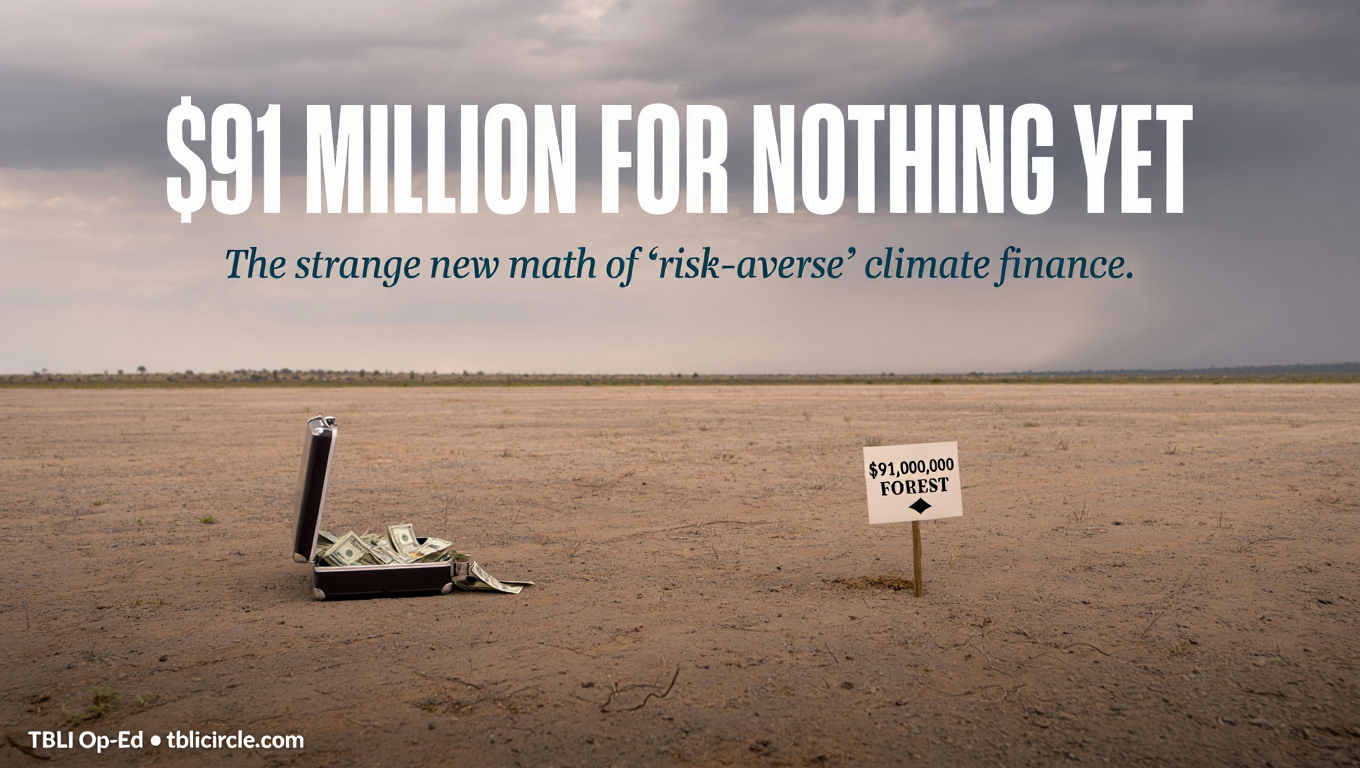 REWE AI Generated REWE AI GeneratedThe $91 Million Math Problem
|
||||
|
Less than One month away! You can check out the agenda here, a great line up of speakers:
Impact Investing Beats Crypto For NextGens Amid $83 Trillion Wealth Shift – UBSUBS Global Wealth Management has issued its first UBS Global Next Generation Report, surveying next generation wealth inheritors on their sentiment toward both wealth transfer and its inherent responsibility, ahead of the $83 trillion expected to change hands over the next two decades. UBS Global Wealth Management's latest report highlights how an estimated $83 trillion in private wealth is expected to transfer globally over the next two to three decades, making this the largest wealth transfer in modern history. As families evolve, wealth management is becoming more institutionalized, with nearly four in 10 operating through a single-family office, the report states. Traditional asset classes remain core and the appetite for newer assets is more measured, while the next generation has a keen interest in sustainability and impact investing, with nearly half building exposure to these investment themes. The next generation individuals surveyed for the report represent the full age spectrum from below 21 to above 45, with the majority being between 26 and 40-years-old. Geographically, they reflect the international footprint of global families. With 49 per cent, Europe represents the largest share of respondents, followed by North America (19 per cent), Latin America (16 per cent), Asia-Pacific (11 per cent) and Middle East and Africa (5 per cent). Impact investing outpaces crypto Impact and sustainable investing resonate more strongly than digital assets, with 37 per cent already invested in impact and ESG strategies. The surveyed next generation’s interest in impact investing is especially pronounced among women students and younger respondents. One in four also invest in private markets, and almost one in five make direct investments, often to diversify portfolios and gain exposure to non publicly-traded markets, the report reveals.
A windfarm in the US. Donald Trump talks about the glories of coal and the ugliness of ‘windmills’. Photograph: Kehan Chen/Getty Images Trump may not be a fan of clean energy but Iran war is accelerating global shift from oil and gasUnintended consequence of US president’s actions will be boon for China, the leading renewables manufacturerOperation Epic Fury has thus far achieved none of Donald Trump’s war aims, but it may well accelerate the global transition towards the clean energy he loves to hate. Last week brought the latest exchange of verbal blows in the standoff over the strait of Hormuz. Iran was “choking like a stuffed pig” on the oil it was unable to export because of the US blockade, Trump claimed. From Tehran, the supreme leader shot back that foreigners who “maliciously covet” the waterway “have no place there except at the bottom of its waters”. To the rest of the world, the exchange raised the spectre of a prolonged impasse. Meanwhile, the International Energy Agency’s energy crisis tracker now lists almost 40 countries that have taken emergency action in the face of soaring oil and gas prices, from Laos shortening the school week to three days to Nepal calling for cooking gas cylinders to be half filled. Even for high-income countries such as the UK, the impact will be painful, as the Bank of England’s latest forecasts laid bare last week. In developing countries, it may be catastrophic, as the costs of energy and fertiliser soar. Yet while the immediate outlook is bleak, this fossil fuel crisis is also hastening the inevitable global shift away from oil and gas and the toxic geopolitics they create. In the aftermath of the 1970s oil shocks, hard-hit western states sought to diminish their reliance on a resource whose supply had been shown to be contingent on the whims of the producers’ cartel Opec. That meant introducing car fuel efficiency standards, and a drive for nuclear power in Japan and France, for example, as Kate Mackenzie wrote in a recent article for the Break-down on this process of “demand destruction”. Fifty years on, low-cost, clean substitutes for many uses of fossil fuels are much more easily and cheaply available. As Mackenzie says: “About 45% of crude oil consumed worldwide is used for road transport, much of which is increasingly cheap to electrify.” Carmakers have reported sharp increases in demand for electric vehicles in the face of the Iran war: Renault’s UK boss has called it a “seismic shift”. Across continental Europe, demand in March was 51% higher than a year earlier. At government level, too, there is a renewed concern with reducing the grip of oil and gas, given the now obvious fact that free passage through the strait cannot be taken for granted.
by ESG News Editorial Team • May 4, 2026 |
||||
|
TBLI Group Herengracht 450, 1017 CA Amsterdam, The Netherlands |



.png)