The Global Voice of ESG & Impact Investing
 TBLI Radical Truth Podcast TBLI Radical Truth Podcast
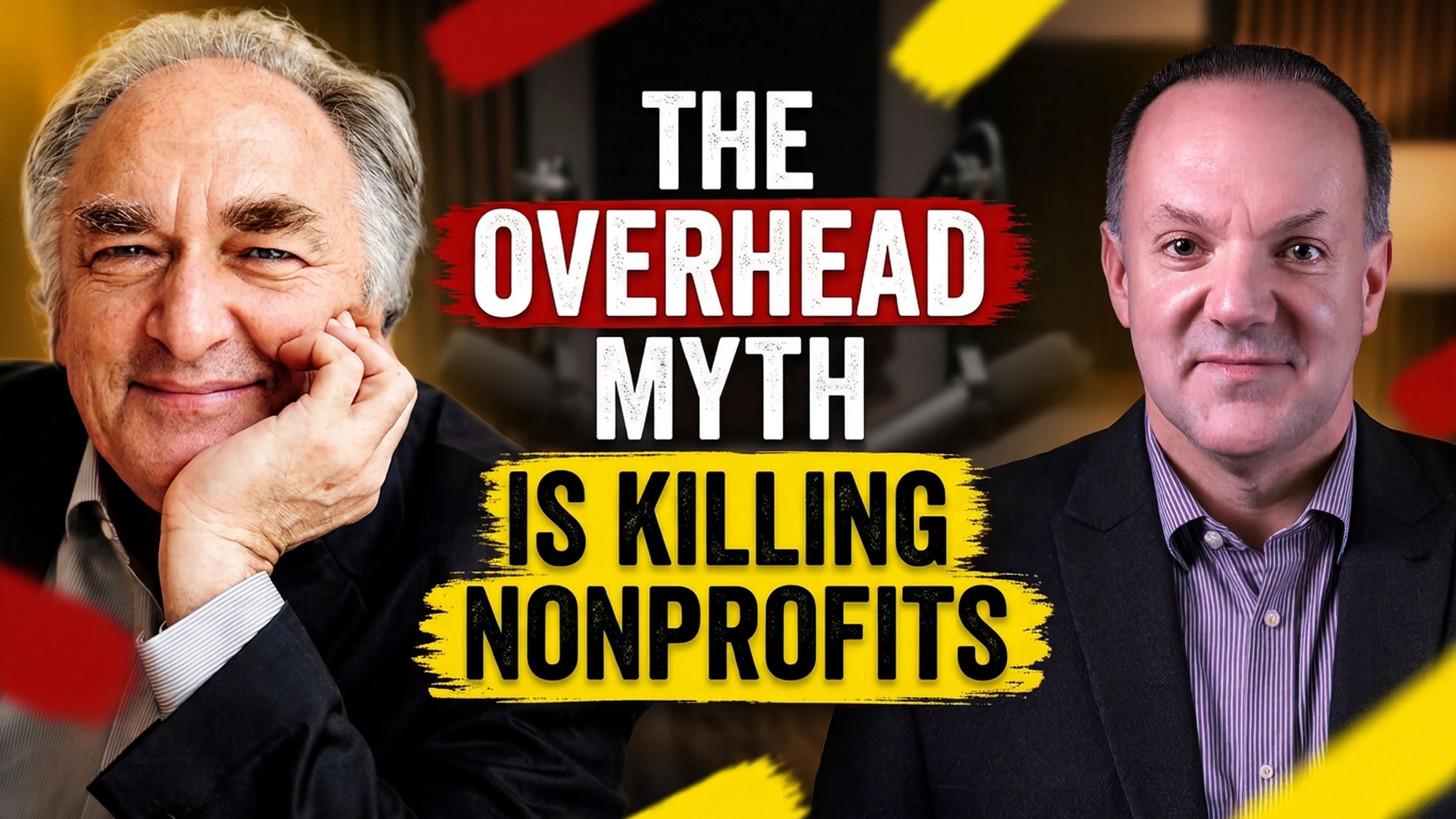
"The Overhead Myth Is Killing Nonprofits" — 21-Year Philanthropy Veteran Rick Peck
What if the nonprofits spending the most on overhead are actually the ones making the biggest difference?
That's the question we're tearing apart today. Americans gave 617 billion dollars to charity last year — and most donors still judge a nonprofit by one number: how much it spends on itself. My guest says that number is almost meaningless, and following it has starved the charities doing the most good.
I'm Robert Rubinstein, founder of TBLI Group, and this is Radical Truth — where we talk to the people actually moving capital toward a liveable future, and call out the ones just faking it. No sponsors. No pretending.
Today: Rick Peck. Twenty-one years in charitable gift planning, a decade at Dartmouth, founder of The Philanthropy Guy, host of Money to Give in over 20 countries. We get into the Uncharitable documentary's case against the overhead myth, why MacKenzie Scott's no-strings giving may outperform every traditional foundation model, and the non-cash assets — real estate, stock, even crypto — that nonprofits are leaving on the table because they're too afraid to ask.
This is Radical Truth.
For anyone serious about the history, present, and future of impact investing, this episode is essential listening.
Podcast Links

Stop networking. Start connecting.
Most events are full of people handing you business cards they'll never follow up on.
TBLI Connect is different.
The people in this room aren't there to pitch you. They're there because they're genuinely curious, deeply experienced, and building something that matters. They'll challenge your thinking, open unexpected doors, and actually remember your name next week.
This is where careers accelerate — not because someone handed you a referral, but because you found your people.
One conversation at TBLI Connect can change your trajectory.
We've seen it happen. Every. Single. Time.
👉 Join us July 31st — seats are limited and they go fast.
🔗 Register now: https://luma.com/hrkij9je
If you're serious about surrounding yourself with the right people, not just successful people, but generous ones, this is the most valuable hour you'll spend this summer.
See you there. Tag someone who needs to be in the room. ⬇️
Join the Radical Truth Community-Free
Most of what passes for "sustainable" or "impact" investing is a comfortable half-truth. We've been saying the polite version for years because the whole truth is inconvenient — and it's costing the industry its credibility.
That's the premise behind Robert Rubinstein's upcoming book, Radical Truth. Ahead of publication, TBLI Circle is opening a free space for the conversation our industry keeps avoiding: what's actually broken in how capital gets allocated, and what it will take to fix it.
Inside: early excerpts from the book, direct discussions with Robert and fellow members, and a serious community that manages appearances.
Membership is free. If you've been having this conversation in your head, come have it out loud.
[Join the Radical Truth Space →].
|

Gemini AI Generated
Audio Version
Bad Hair Days and the Bank of Small Things
Some mornings, I open my laptop and immediately regret it.
There is a headline about another billionaire funding another campaign to make sure nothing ever changes. There is a chart showing that a record number of people in wealthy countries are skipping meals or skipping medication, and usually both. There is a press release from a fund with "sustainable" in its name that has quietly redefined the word to mean "whatever we were already doing." And there is a notification telling me my post about all of this got 46 likes.
Then I catch my reflection in the black of the screen before it wakes up, and I discover that on top of everything else, I am having a bad hair day.
I want to talk about that. Not the hair. The whole thing.
The arithmetic that doesn't work
I've spent the better part of three decades arguing a fairly simple idea: that finance should work for everyone it touches, not just the people who own it. Not charity. Not greenwashing. Just honest accounting, where the costs you push onto workers, communities, soil, and air actually show up somewhere on a balance sheet instead of vanishing into a footnote.
It is not a radical idea. It is basic bookkeeping. And yet.
Meanwhile, Elon Musk pours a fortune into political machinery and then muses about funding his own party. Peter Thiel has spent years and enormous sums cultivating a politics designed to insulate capital from democracy. Mark Zuckerberg dismantled fact-checking on the platforms where a third of humanity gets its news, then flew to the inauguration. Marc Andreessen published a manifesto declaring that anyone worrying about the social consequences of technology is an enemy of progress. Jeff Bezos rewrote his newspaper's editorial mandate to serve "personal liberties and free markets" and watched the resignations follow.
These are not conspiracy theories. These are press releases. They told us.
And the arithmetic underneath is not subtle either: a handful of men now hold more usable power than most of the governments nominally supervising them, while nurses ration insulin and food banks in the richest cities on earth report queues they have never seen before.
Some days I look at that and think: what exactly am I doing, running conferences and writing posts, against that?
Amsterdam, and a Swan who owes me nothing
Here is what I actually do. I go for a walk.
There's a spot in Amsterdam I return to. I'm not going to give you a pin on a map, because half the joy is that it's mine and unbranded, and nobody is optimising it for engagement. But I go there when the noise gets too loud, and something reliably absurd happens.
A Swan floats on the water with the total confidence of a creature that has never once read a quarterly report. A stranger hauls a bicycle out of a canal, and three other strangers, none of whom know each other, stop to help without discussion. Someone's grandmother leans out of a window to shout at a cyclist and then, mid-sentence, waves at a baby. The light does the thing it does here, low and gold and completely uninterested in my mood.
And I come back energised. Every time. It's almost embarrassing how cheaply I can be repaired.
Tolkien got at it better than I will:
"Some believe it is only great power that can hold evil in check, but that is not what I have found. It is the small everyday deeds of ordinary folk that keep the darkness at bay. Small acts of kindness and love. Why Bilbo Baggins? Perhaps because I am afraid, and he gives me courage."
Perhaps because I am afraid. That's the line. Gandalf, the most powerful being in the room, admits he is frightened, and says the thing that steadies him is a small person doing small decent things.
I find that enormously comforting for reasons I'd rather not examine too closely on a professional networking site.
👉 Follow Robert Rubinstein
|
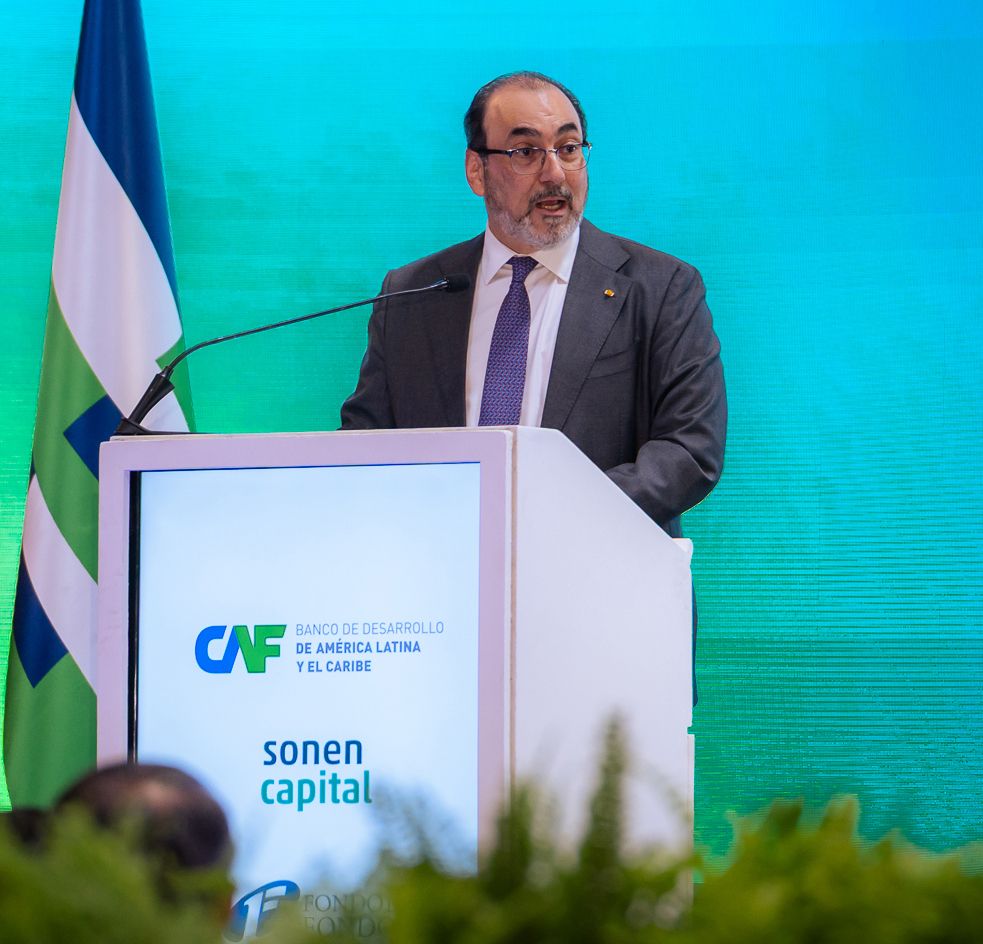
Sergio Díaz-Granados, executive president of CAF, speaking at the launch of the VELA Fund in Mexico City on Tuesday. Photo courtesy CAF
CAF launches US$150M impact fund for Caribbean, Latam
by Kejan Haynes
The Development Bank of Latin America and the Caribbean (CAF) has launched a US$150 million impact investment fund aimed at financing businesses that tackle some of the region’s biggest development challenges while generating financial returns, with 20 per cent of the fund targeted at smaller economies in the Caribbean and Central America.
The VELA Fund, unveiled in Mexico City on Tuesday, is designed to attract private capital into sectors including biodiversity, the blue economy, regenerative agriculture, poverty reduction and financial inclusion. CAF is investing US$20 million as the fund’s anchor investor and hopes to leverage that commitment into a US$150 million regional investment vehicle.
CAF executive president Sergio Díaz-Granados said Latin America and the Caribbean are at a pivotal moment as they navigate both the digital and energy transitions, but public financing alone will not be enough to meet the region’s development needs.
“We have a great need to mobilise much more capital for investments that are capable of bringing about economic, social and environmental results,” he said.
“We need to close the financing gap, and therefore we need to increase productivity and investment.”
Díaz-Granados said multilateral development banks have an important role to play, but private investment must become a much larger part of the solution.
“Public multilateral resources are crucial, but they are not enough. This is why the private sector needs to be mobilised as an essential factor for the development of the region.”
He said the VELA Fund emerged after CAF’s shareholders approved a capital increase five years ago, prompting discussions about how the bank could better leverage private investment and reduce the risks that often discourage investors from entering emerging markets.
“We’re betting on a regional impact fund structured by a multilateral development bank with coverage in 25 countries in Latin America and the Caribbean,” he said.
Read Full Article
Grist / Getty Images
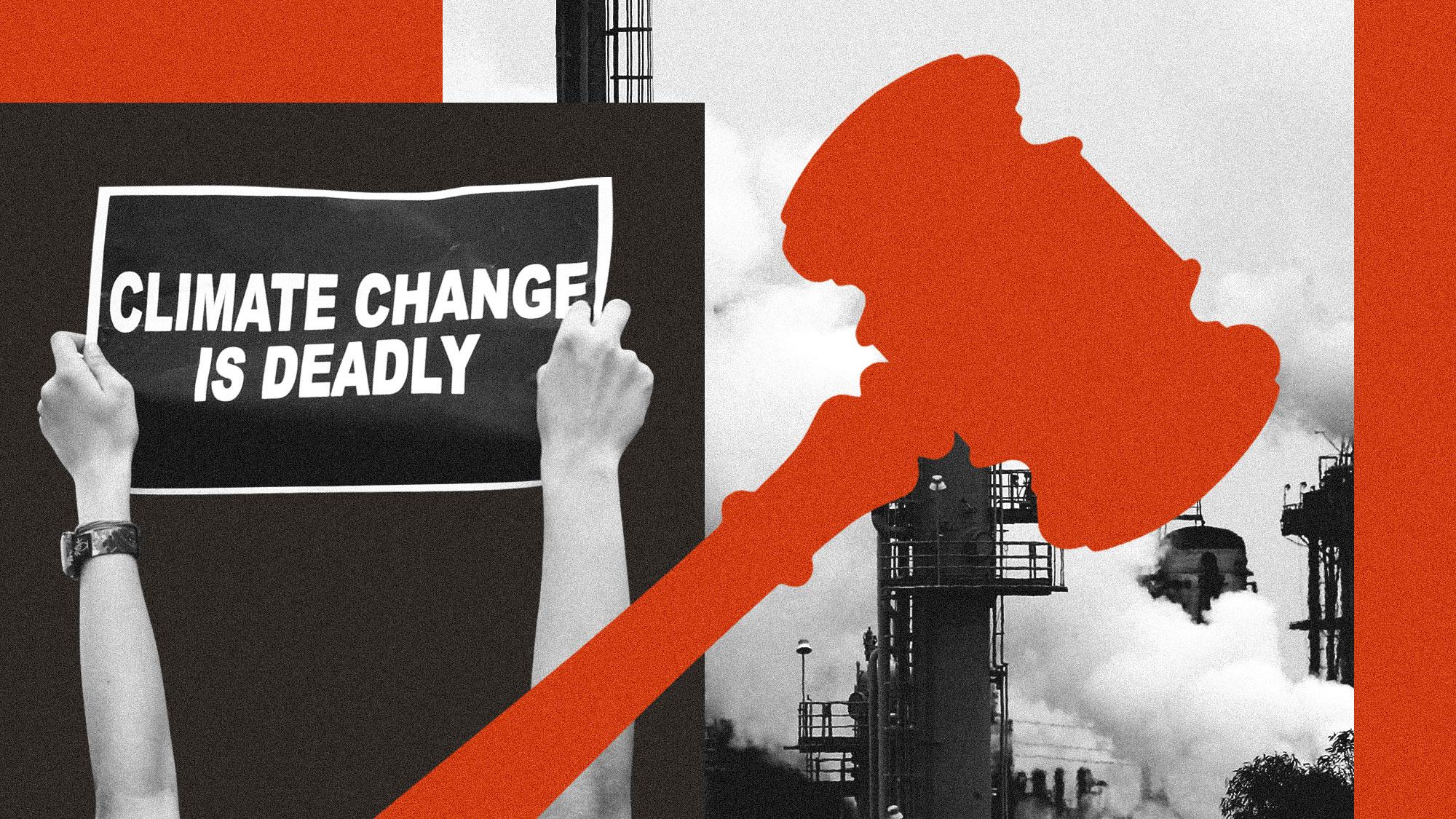
As climate lawsuits advance, the oil industry enters ‘panic mode’
Oil companies face new legal challenges, such as a recent suit for wrongful death, and older cases that are creeping toward trial.
Kate Yoder Senior Staff Writer
Could the oil industry be held responsible for fueling the extreme heat that led to a woman’s death?
That’s the question at the heart of a novel lawsuit in Washington state. Misti Leon’s mother died from overheating during the hottest day in state history in June 2021, when temperatures climbed to 108 degrees Fahrenheit. Scientists said the unusual heat dome that descended on the Pacific Northwest would have been “virtually impossible” without climate change. So last year, Leon sued Exxon Mobil, BP, Chevron, Shell, and other oil majors for wrongful death, alleging that they had known for decades that fossil fuel emissions would lead to destructive consequences, but deceived the public about it, delaying action that could have prevented her mother’s death. An estimated 1,200 people in the region perished from the heat during that simmering week in June.
Earlier this month, a King County judge ruled against the oil companies’ motions to dismiss Leon’s lawsuit, allowing it to proceed toward trial. The ruling was a signal that this kind of case has merit, said Mike Meno, the communications director at the Center for Climate Integrity, a nonprofit supporting climate accountability cases. “It’s the latest type of legal liability that the oil companies are absolutely terrified of and are going to fight like hell to try to escape,” he said.
More than a decade after investigations found that Exxon Mobil had known about the dangers of global warming since the 1970s but publicly downplayed the threat, lawsuits against oil companies have proliferated. There are nearly 40 of these cases pending across the country, according to Margaret Barry, who manages a climate litigation database at Columbia Law School’s Sabin Center. After years of delay tactics from the oil industry, at least five of these lawsuits — from Massachusetts, Vermont, Connecticut, the District of Columbia, and Honolulu — have proceeded to the discovery stage, in which both sides try to uncover evidence to bolster their case in court. That’s the last major step before a trial, when oil executives would be forced to defend their actions in front of a jury.
Read Full Article
California Cap-and-Invest Delivers $36.2B for Climate Programs
by ESG News Editorial Team
- California’s carbon market has generated $36.2 billion for climate investment, with $15.5 billion deployed across more than 600,000 projects.
- About 76% of implemented funding benefits disadvantaged and low-income communities, linking emissions policy with affordability and environmental justice.
- Updated market rules could provide $10 billion in electricity bill relief and generate another $8 billion for climate programs through 2030.
California’s carbon market has generated $36.2 billion for climate programs, according to a new state report detailing the financial and social reach of its Cap-and-Invest system.
The California Air Resources Board’s 2026 annual report found that $15.5 billion has already been implemented through 122 programs. The funding covers more than 600,000 projects across housing, transport, energy efficiency, workforce development and climate resilience.
Another $8 billion in auction proceeds could enter the state’s Greenhouse Gas Reduction Fund through 2030. Billions already raised also remain available for future implementation.
The figures place California’s carbon market among the world’s largest examples of emissions pricing being converted into public investment. They also provide a reference point for governments weighing how carbon revenues should be distributed.
Read Full Article
|