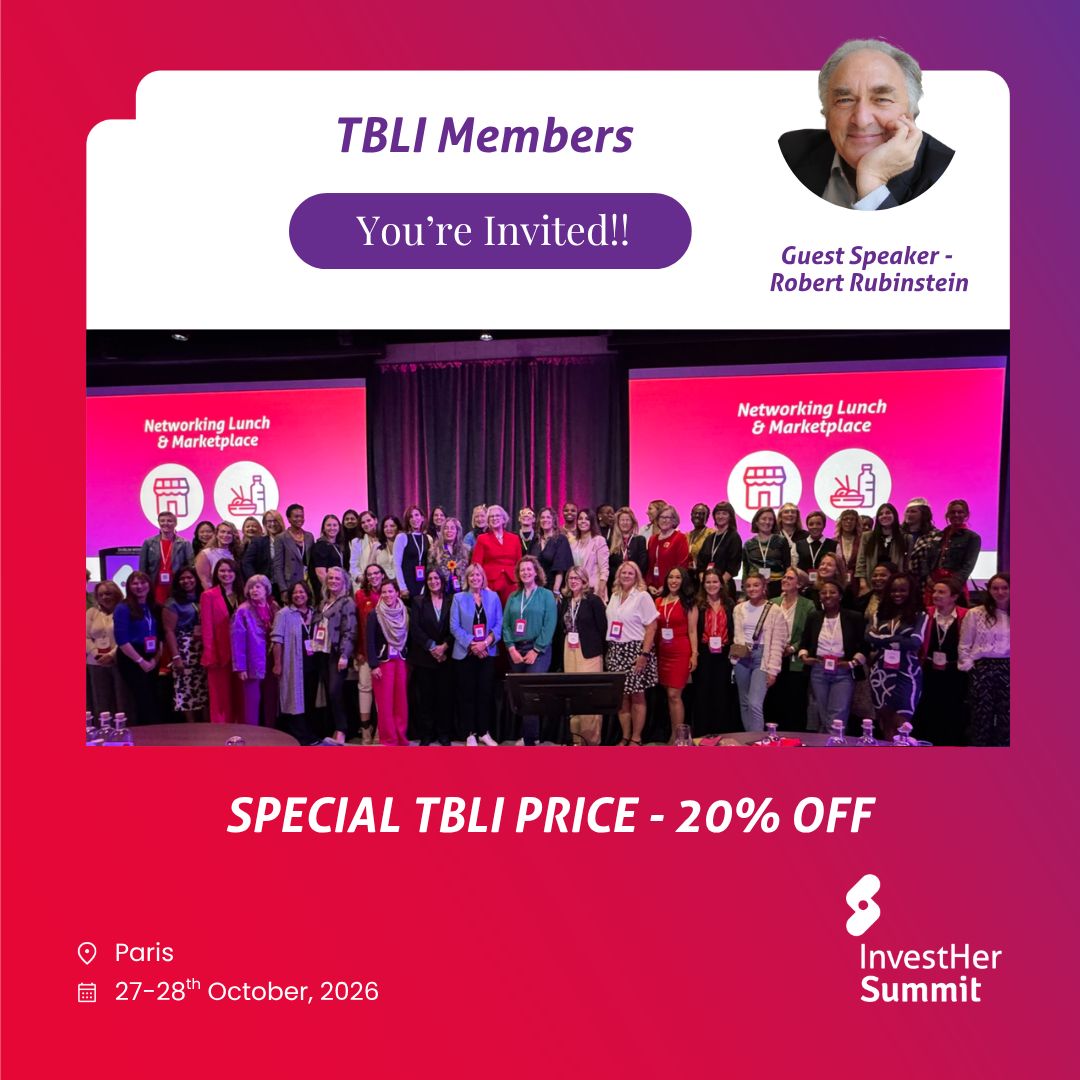
TBLI subscribers: you're invited to InvestHer Summit 2026 in Paris
Powered by AXA, in Paris on 27–28 October. Meet vetted scaling women founders in person, with Robert Rubinstein among the speakers.
Get 20% off with code TBLI26: https://bit.ly/InvestHerSummit26-Tickets
AI Generated Claude
The Industry That Runs on Whispers
Every week one of us gets the call.
It usually starts the same way. "Can I tell you something, but you didn't hear it from me?"
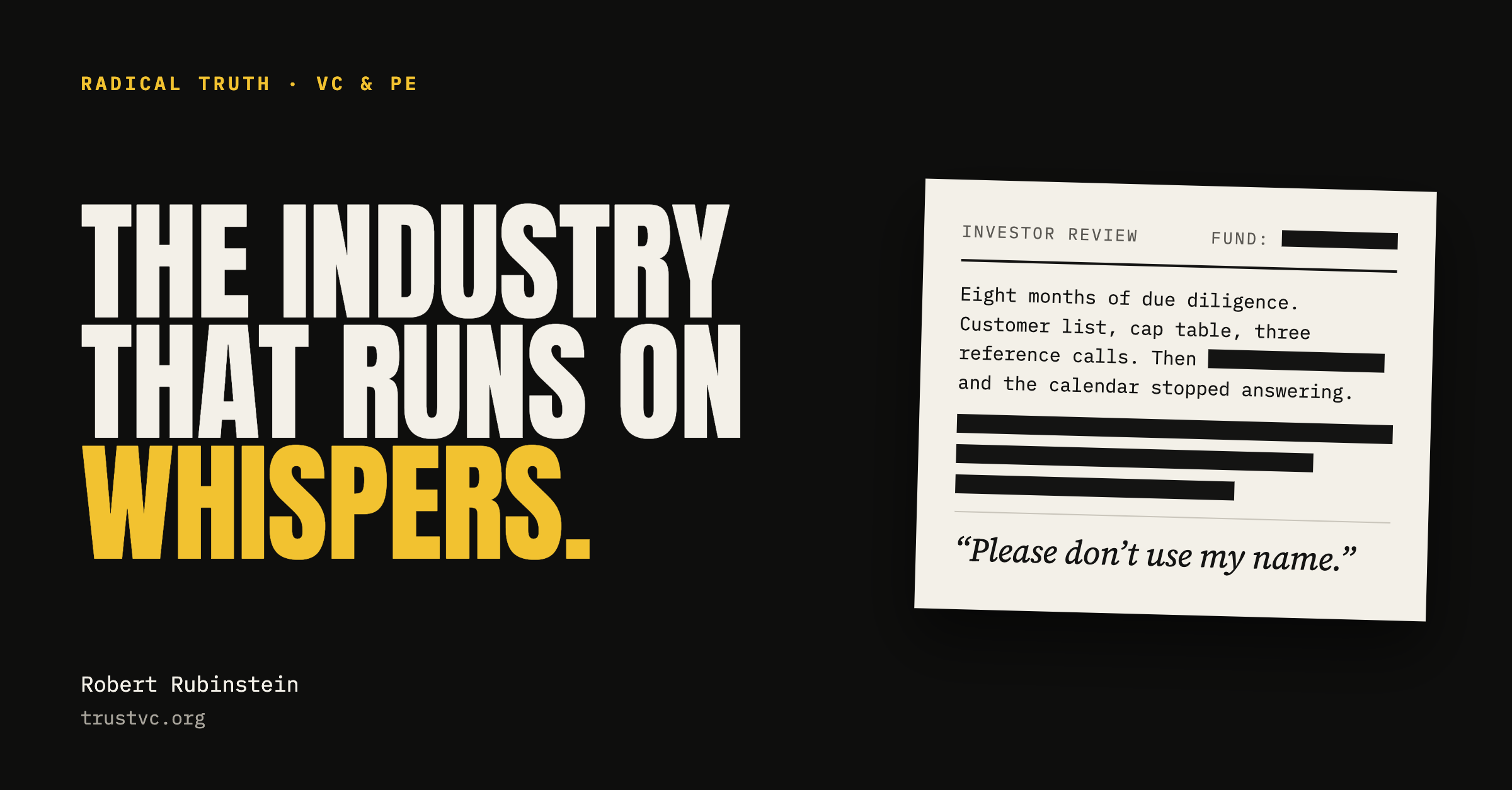
And then it comes. The fund that ran a founder through eight months of due diligence, asked for the customer list, the cap table, the pipeline, three reference calls and a site visit, and then disappeared. Not a no. Not a maybe. Just a calendar that stopped answering.
The partner who sat on a board for two years and contributed one thing: a down round, timed beautifully for his own fund.
The LP who told an emerging manager "we love the strategy, come back when you've closed your first fund," which is the venture equivalent of telling a drowning man you'll gladly throw him a rope as soon as he reaches the shore.
Then the caller says the sentence we have now heard several thousand times.
"Please don't use my name."
The Glassdoor nobody was allowed to build
You can review a hotel. You can review a plumber, a dentist, a dog groomer, a tin of beans. You can go on Glassdoor and tell the world that your manager at a mid-sized insurance company microwaves fish at his desk and takes credit for your spreadsheets.
But you cannot review the person who holds your company's future in a term sheet.
The one relationship in professional life with the most power on one side and the least information on the other, and it was the one place nobody kept score.
So we built the scoreboard. It is called trustvc.org, and it is exactly what it sounds like: a place where founders and fund managers review the VC and PE firms they have actually dealt with. The ghosting. The term sheet that changed at the last minute. The investor who answered every email within the hour and told you the truth when the truth was no.
Because that part matters too. There are excellent investors out there. They are just indistinguishable from the bad ones, because nobody writes anything down.
And then nobody posted
Here is the part we did not expect.
The same people who called us, furious, with stories that would curdle milk, would not post them. Not under their name. Not anonymously. Not with every identifying detail removed and the fund's own name the only thing left in the review.
"Robert, it's a small industry."
"Robert, they all talk to each other."
"If it gets traced back to me, I'll never raise again."
And we understand it. We are not going to stand here and pretend the fear is irrational. Venture capital is a village with a Bloomberg terminal. The same twenty people sit on the same panels, eat at the same three restaurants, and co-invest in each other's deals. A founder who gets labelled "difficult" in that village does not get a letter. She just stops getting meetings.
For an emerging manager it is worse. You are raising from the same LPs who back the funds you would be reviewing. You are trying to look like a safe pair of hands, and safe pairs of hands do not, as a rule, publish things.
So everyone is afraid. And the fear is not stupid.
It is just doing exactly what the system needs it to do.
Who silence protects
Let us be very precise about this, because it is the whole argument.
The bad investor does not need you to say anything nice about him. He does not need your endorsement, your testimonial or your logo on his website. All he needs is for you to say nothing.
Your silence is his reputation management, and he did not even have to pay for it.
Every founder who got ghosted and kept quiet sent the next founder into the same room, with the same hope, to lose the same eight months. Every emerging manager who was strung along by an LP and kept quiet made sure the LP could do it to the next one. Nobody intended it. But that is what happened, one polite silence at a time.
We have an industry where everyone knows who the bad actors are, and the only people who do not know are the ones about to meet them.
That is not a market. A market needs information. What we have is a private club with a public reputation, and the reputation is maintained by the people it mistreats.
The retaliation arithmetic
Let us do the sums, because this industry respects sums.
What does the fund actually do if it suspects a review came from you? Not much. It cannot sue you without telling the world exactly what was in the review, which is the one thing it does not want. It cannot blacklist you without explaining why. And it was already not funding you. That was the complaint.
Now the other column. What does silence cost?
It costs the next founder eight months. It costs the next emerging manager a year of travel and hope. It costs the good investors, who never get rewarded for behaving well because their behaviour is invisible. And it costs you, because you will raise again, and next time you will be walking into rooms blind, exactly like you did last time.
The risk of speaking is real and small. The cost of silence is certain and enormous. It just gets paid by someone you will never meet, which is the oldest accounting trick there is.
How to speak up without getting hurt
We are not asking anyone to be a martyr. Martyrdom has terrible returns. So here is how to do it sensibly.
Stick to facts. "We were in due diligence for seven months and never received a decision" is a fact. "They are crooks" is a lawsuit and also bad writing.
Strip the fingerprints. Leave out the exact dates, the round size, the sector detail that only you could know. Describe the behaviour, not the deal.
Wait if you need to. A review posted six months later is just as useful to the next founder and much harder to trace.
Review the good ones too. This is not a complaints department. Every positive review of an investor who behaved properly makes the site a guide, not a wall of grievances, and makes your negative review look like what it is: an honest assessment from someone who also knows how to say thank you.
The industry will not fix itself
Nothing in finance has ever improved because the powerful side woke up one morning feeling reflective.
Restaurants got cleaner when diners could read the reviews. Employers started caring about their culture when candidates could read Glassdoor before the interview. Not out of conscience. Out of consequence.
Venture capital likes to call itself the engine of disruption. It has disrupted taxis, hotels, retail, banking and the concept of owning a song. It has never been disrupted in the one thing that would change it most: being seen.
So here is the ask. Small, specific, five minutes.
Think of one investor you have dealt with in the last two years. Good or bad. Go to trustvc.org and write down what happened. Facts only. No name, no photo.
Then send this to one person who called you last year and said "you didn't hear this from me."
They did hear it from you. Now let everyone else hear it too.
|