 |
|
Tuesday, May 12th, 2026 |
|
Author: Robert Rubinstein If you have difficulty reading this email, click here |
||||
The Global Voice of ESG & Impact Investing |
||||
|
||||
 REWE AI Generated REWE AI GeneratedWhen "Conscious Investing" Silences the Conscience
|
||||
|
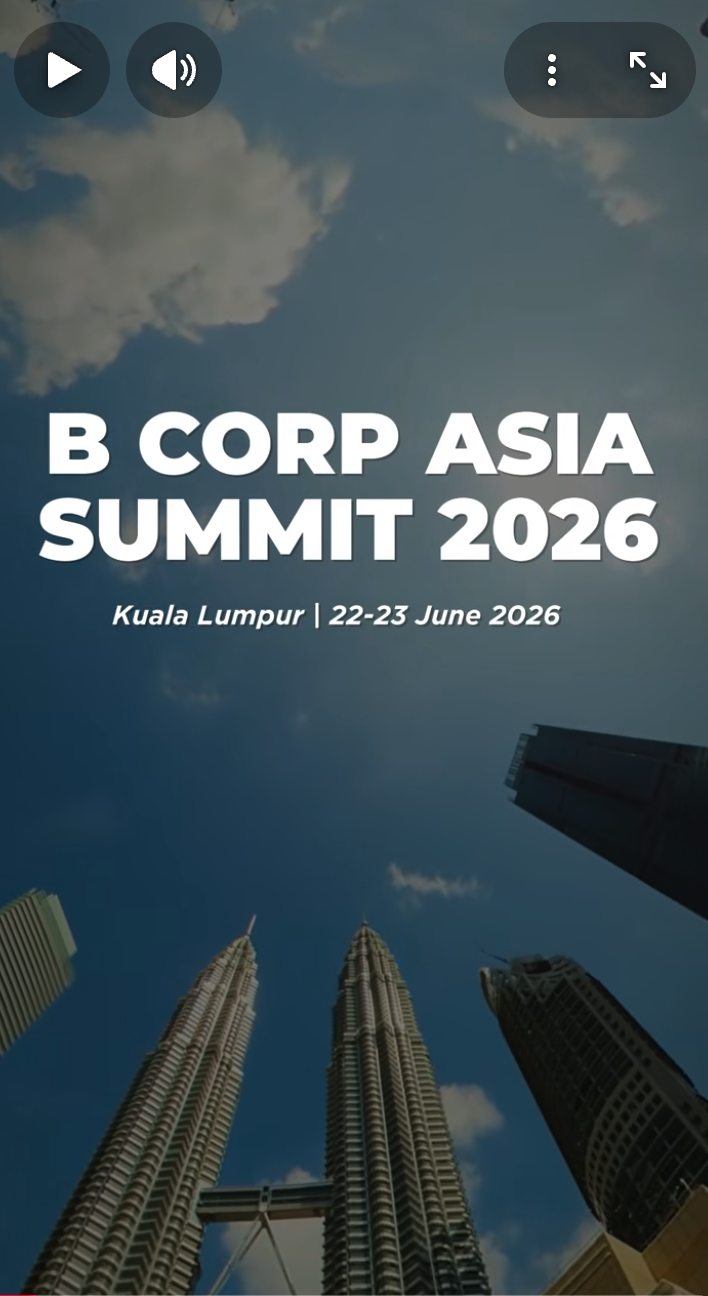
Less than One month away! You can check out the agenda here, a great line up of speakers:
B Corp Asia Summit 2026-June 22-23, 2026 There are currently more than 10,000 B Corp certified companies in more than 100 countries, employing more than 1 million workers. In Asia, there are almost 400 B Corp certified companies, with 40% in Southeast Asia.
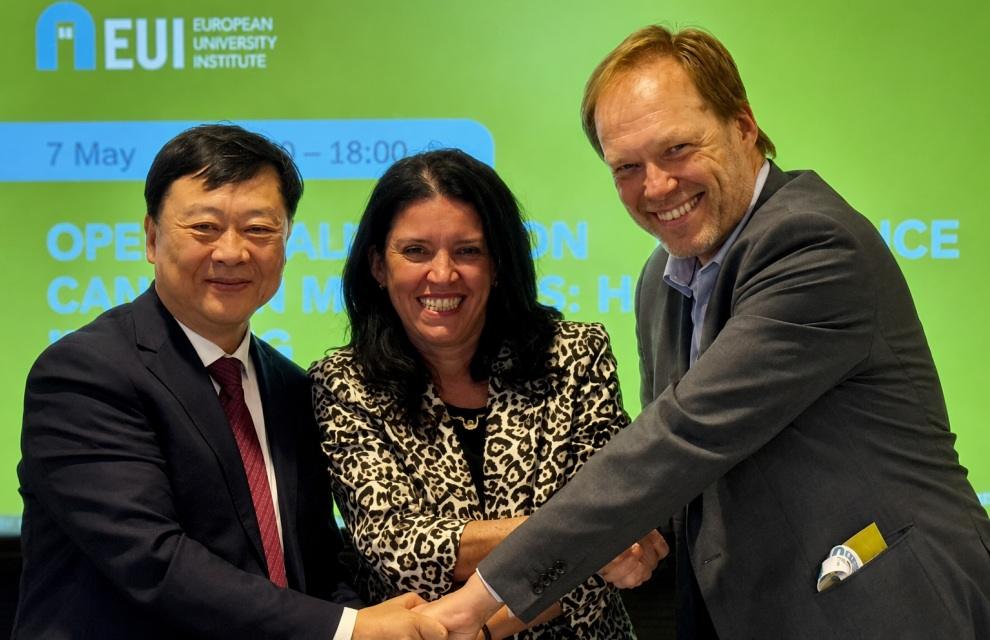
China, EU, Brazil Launch International Carbon Pricing CoalitionThe governments of China and Brazil and the European Commission announced the launch of the Open Coalition on Compliance Carbon Markets, a new international initiative aimed at strengthening global cooperation on carbon pricing. Carbon markets are among the key tools used by governments to advance decarbonization efforts, typically by setting a declining cap on emissions and requiring companies to hold allowances covering their greenhouse gas output. Companies that reduce emissions below their allowance levels can sell excess permits, while higher-emitting companies must purchase additional allowances, creating a financial incentive to cut emissions. According to the EU Commission, there are currently around 80 carbon pricing schemes in place across 50 different countries, indicating a clear benefit to international cooperation, with the new coalition seeking to enable the promotion of best practices and raise global standards, and to help advance carbon pricing as the most cost-effective tool to reduce emissions. The EU established its carbon pricing mechanism, the Emissions Trading System (ETS), in 2005, which covers GHG intensive sectors, including electricity and heat generation, oil refineries, steel, cement, paper, chemicals, and commercial aviation, among others. While the Commission is currently undergoing a review of the ETS as geopolitical forces raise energy prices and pressure energy-intensive industries, Commission President recently defended the system as an effective tool to drive reduced dependence on imported fossil fuels, accelerate the shift to cleaner energy sources and fund investments in decarbonization-focused technologies. China launched its own its national carbon emissions trading scheme (ETS) – the world’s largest – in 2021, as part of its strategy to achieve its national climate goals, which include reaching peak carbon dioxide emissions by 2030 and carbon neutrality by 2060. More recently, Brazil passed legislation in 2024 to establish its own Emissions Trading System. The new coalition is now open to countries with nationwide compliance carbon markets, such as emissions trading systems or a carbon tax, with New Zealand and Germany announced as the first to join as members. Key focus areas for the coalition’s work will include robust monitoring, reporting and verification systems, sound carbon accounting methodologies and the potential use of high integrity offsets to promote environmental integrity. A work plan for the coalition is expected to be adopted at the Carbon Market Conference taking place on 15 September 2026 in Wuhan, China. Kurt Vandenberghe, Director-General for Climate Action at the European Commission said:
Norway faces dilemma on openness in wealth fund ethical divestments, finance minister says By Gwladys Fouche OSLO, May 12 (Reuters) - When Norway’s $2.2 trillion wealth fund — the world’s largest — sells a company’s shares over ethical concerns, should it explain why? This seemingly simple question has become a dilemma for its guardians, the finance minister told Reuters, as a government commission reviews the rules that have made the fund a global benchmark for ethical investing. "It is not just about divesting, one must publish a reason," Jens Stoltenberg said in an interview. "I see that this creates some dilemmas. This is why I am glad we have a commission not only assessing whether we should make divestments, but also the reasoning that can contribute towards reinforcing the impact (of a divestment)." The sovereign wealth fund established in the 1990s is governed by ethical guidelines set by parliament that ban it from investing in companies that breach human rights or pollute the environment, among other things. Civil society groups worry that the commission, which is due to present its recommendations in the autumn, may weaken the rules to appease U.S. President Donald Trump. In November, parliament voted to pause the fund’s ethical divestments and ordered the guideline review following intense scrutiny from the United States over the fund’s divestment from U.S. company Caterpillar over the use of its bulldozers in Gaza and the occupied West Bank. Some opposition politicians have said the suspension and review were motivated by concerns over upsetting Trump, given that more than half of the fund’s assets are in the U.S. and could risk being seized by U.S. authorities. The Norwegian government strenuously denies that. |
||||
|
TBLI Group Herengracht 450, 1017 CA Amsterdam, The Netherlands |


-1.png)