 |
|
Tuesday, April 28, 2026 |
|
Author: Robert Rubinstein If you have difficulty reading this email, click here |
||||
The Global Voice of ESG & Impact Investing |
||||
|
||||
 REWE AI GeneratedThe War in Iran Is the Best Thing That Could Happen to the Climate. If We're Not Too Stupid to Notice
|
||||
|
Less than One month away! You can check out the agenda here, a great line up of speakers:
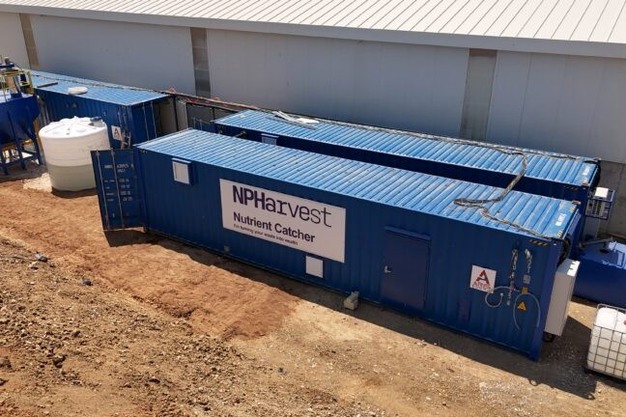
As Europe rethinks fertilizer supply, a German biogas pilot turns waste into fertilizer nutrientsFinnish cleantech company NPHarvest has launched a pilot installation at Biogas Westerbakum GmbH & Co. KG in Lower Saxony, marking its entry into Germany, Europe's largest biogas market. The demonstration unit will operate for 4 months, and is designed to continually process approximately 20 cubic meters per day of liquid digestate – the nutrient-rich byproduct left after biogas production – and recover up to approximately 26 tons per year. The project enables operators to extract usable nutrients directly from side streams, turning digestate from a management cost into a commercial resource. As Germany tightens nutrient regulations in line with EU nitrate limits, the installation shows how biogas facilities can strengthen compliance while improving asset productivity. The demo unit began operating on March 10, with performance monitored through both online data and regular laboratory analysis during the first month of operation. Initial results have also been cross-checked with an external laboratory in Oldenburg, with external measurements showing results closely aligned with NPHarvest's internal analysis. Under the EU Nitrates Directive, nitrogen application in vulnerable zones is capped at 170 kg per hectare per year, and Germany has introduced stricter fertilizer regulations to reduce nutrient surpluses and nitrate levels in groundwater. With more than 9,700 biogas plants in operation in the country, the sector is increasingly constrained by limits on digestate spreading and rising transport costs, reshaping the economics of nutrient management. At the same time, fertilizer markets remain volatile, creating demand for locally produced nutrient inputs. By recovering nitrogen and phosphorus directly from biogas side streams, NPHarvest enables operators to reduce surplus while generating a saleable product from what would otherwise represent a compliance burden. "Biogas plants were designed to produce renewable energy, but they also generate nutrient streams with substantial untapped value," said Dr. Juho Uzkurt Kaljunen, CEO of NPHarvest. "We see nutrient recovery as a structural advancement for the sector, enabling operators to enhance asset productivity without expanding their physical footprint. Germany sets the benchmark for biogas operations in Europe, and by integrating nutrient recovery into existing infrastructure, it has the opportunity to lead the next phase of the industry, where energy production and resource efficiency advance together."
Amazon Signs 685,000 Ton Carbon Credit Deal to Reduce Emissions from Rice Farming in IndiaAmazon announced that it has entered into a long-term carbon credit offtake agreement with The Good Rice Alliance (TGRA), aimed at supporting the delivery of high-integrity methane emission reductions from rice cultivation across India. Founded in 2022, Bayer-owned TGRA works with rice farmers across India to deploy sustainable agricultural practices designed to reduce methane emissions from irrigated rice production. Rice cultivation, which involves the continuous flooding of paddy fields, accounts for approximately 8–10% of global methane emissions, making it the second-largest source of agricultural methane emissions after livestock. India is the third-largest methane emitter globally and has the world’s largest rice cultivation area, supporting more than 100 million livelihoods. Under the agreement, Amazon is collaborating with TGRA as the primary buyer for the project, with its commitment covering more than 685,000 metric tons of CO2-equivalent carbon credits during the initial crediting phase. Michelle Jolly, Director of Sustainability Solutions and Services at Amazon said:
According to TGRA, emission reductions are quantified using direct, field-based methane measurements, conducted in collaboration with the International Rice Research Institute (IRRI), supported by digital monitoring tools and third-party verification under Verra’s Verified Carbon Standard (VCS) using the VM0051 methodology for improved rice management. TGRA said that the deal supports its large-scale program with more than 13,000 smallholder farmers, covering over 35,000 hectares of farmland, to reduce methane emissions through the adoption of improved water-management practices, including Alternate Wetting and Drying (AWD) and Direct Seeded Rice (DSR). Suhas Joshi, Director on Board at TGRA and Carbon Initiative Lead at Bayer South Asia said:
Fiona Harvey Environment editor |
||||
|
TBLI Group Herengracht 450, 1017 CA Amsterdam, The Netherlands |


.png)