Climate Doesn't Have a Capital Problem | Duncan Logan
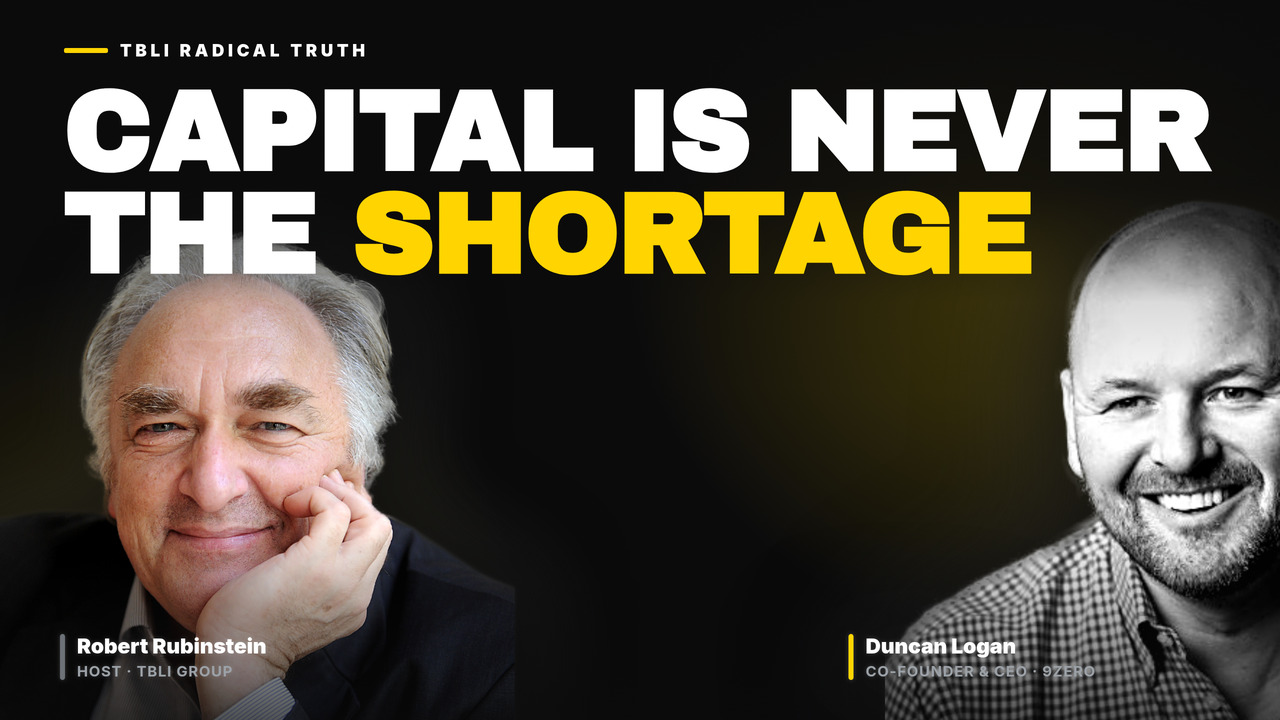
"Capital is never the shortage." Duncan Logan built the San Francisco building that produced more than 30 unicorns, including Uber and Spotify. Now he is doing it for climate. If you think climate's problem is a funding gap, this conversation argues the real shortage is density, vehicles and entrepreneurs.
Duncan Logan is a Scottish farmer's son turned derivative trader, tech founder and community builder. He founded RocketSpace, the San Francisco hub where UberCab, Spotify, Flexport and Supercell grew up, and is now co-founder and CEO of 9Zero, a climate innovation hub with sites in San Francisco and Seattle and a 600-person waitlist in New York. In this conversation with Robert Rubinstein he makes the capitalist case for climate: no sacrifice, no moral lectures, just cheaper, better, faster alternatives and a physical place where founders, scientists and investors collide. He explains why he shares every investor contact he collects, why he refuses venture capital for his own company, and what kind of capital product the climate economy is actually missing. You will leave with a different diagnosis of why climate startups stall.
Most finance podcasts protect the industry. Radical Truth interrogates it.
I'm Robert Rubinstein. For 30 years TBLI Group has been the world's leading ESG and impact investing network. Every week on this show, one unfiltered conversation with someone actually moving capital toward a liveable future, and no polite silence about the ones only claiming to. No sponsors. No pretending.
If you book meetings, please show up. Someone is counting on you.
Bring a colleague. The more people join, the better the matches.
Robert Rubinstein
Founder, TBLI Group
TBLI Open mic: 60 seconds of fame November 30 at 17:00 CET
TBLI is hosting an open mic and networking event. Showcase your talents, share ideas, or make announcements. You have 60 seconds to engage the audience. Connect and express yourself. Don't miss out!
Next week I’ll be in Zurich for the Prestel & Partner Family Office Forum at The Dolder Grand, 10 to 11 November.
More than 100 Swiss and international family offices and UHNWIs in one room. That’s a lot of capital that could fund the future instead of paying for its collapse.
I’m speaking twice:
🔹 Panel: Creating Money While Doing Good
What family offices can do to redefine purposeful capital.
With @Andrea Gori (Founder, illuminem) and @Prof. Julia Finkeissen (Principal, Private Single Family Office).
🔹 Plenary: The “Muskonomy” and the Death of ESG: What Next?
With @Tariq Fancy (Lecturer, Stanford GSB; former Global CIO for Sustainable Investing, BlackRock), in conversation with @Matthias Knab (Founder, Opalesque).
Tariq and I agree on one thing: ESG as it’s been sold was never going to save us. The real question is what replaces it, and whether family offices, who answer to generations and not quarters, will lead or keep waiting.
A limited number of paid passes are available for people who provide services or investment opportunities. Every application is reviewed individually.
If you’re attending, let’s meet. If you’re not, message me and I’ll share what comes out of the room
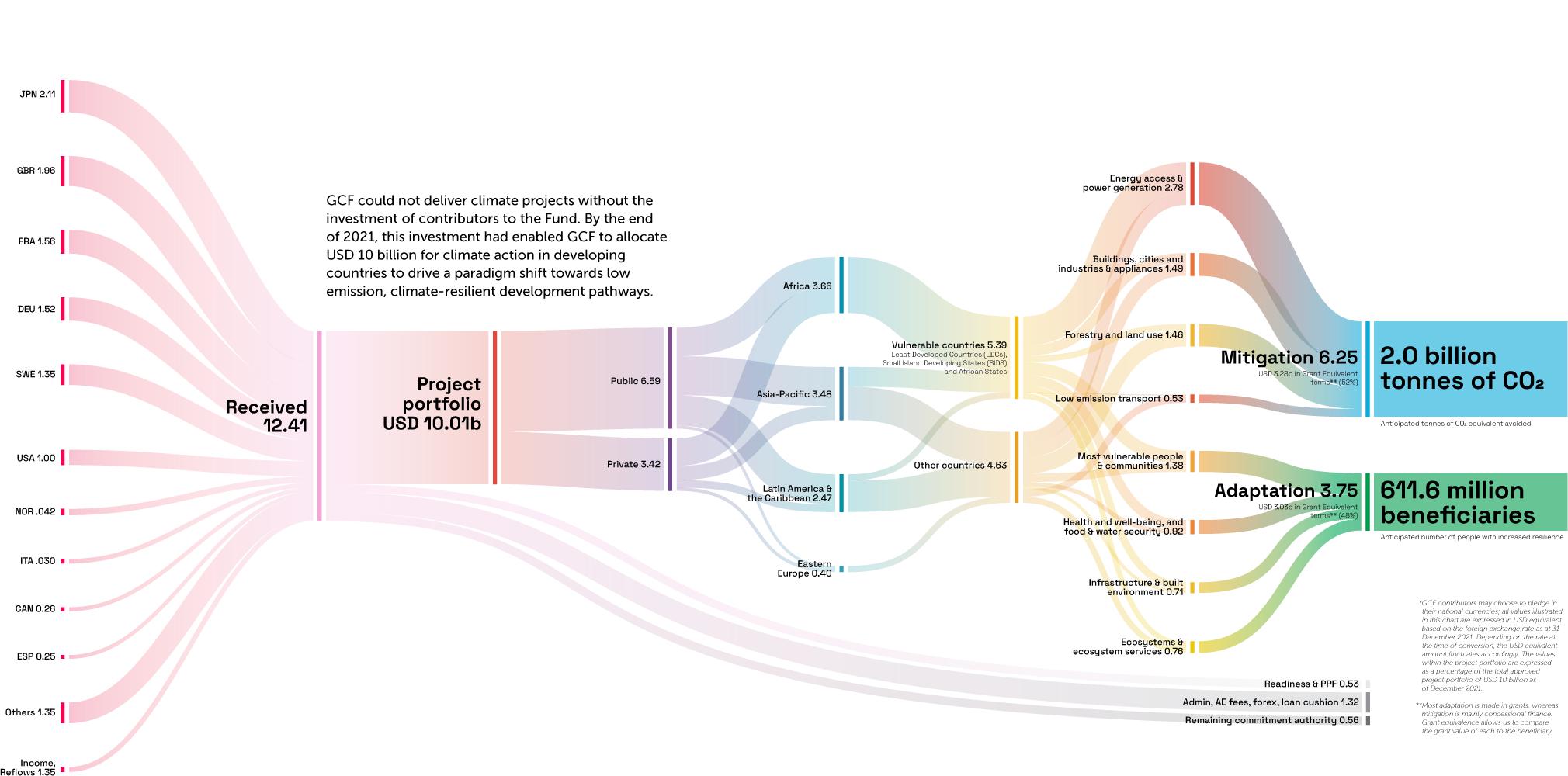
Green Climate Fund approves record near $2 billion funding
$1.97 billion approved across 21 projects at board meet
Takes total funding for the year to a record $3.2 billion
New policy to scale up non-state investments, Duarte says
The Green Climate Fund approved record funding for projects at its latest board meeting and aims to scale up the amount of private capital it can mobilise for every dollar it invests, its executive director told Reuters on Thursday.
The world's biggest multilateral climate investment fund approved $1.97 billion for 21 projects, taking total funding in the year to a record $3.2 billion, Mafalda Duarte said, including $682 million for six private-sector initiatives. Read Full Article
World still off track on most targets agreed in 2022
Countries agree 'Yerevan Pathway' to accelerate action
LONDON, Oct 31 (Reuters) - Governments at a UN conference that ended on Saturday have agreed to step up efforts to protect global biodiversity after talks ran through the night, although the finance to deliver it remains elusive.
The two-week COP17 conference in Armenia's capital came against a fractious political backdrop, and as the world prepares for fresh climate talks in Turkey starting November 9.
The talks in Yerevan oversaw the first global review of the Global Biodiversity Framework agreed in Montreal four years ago. While progress had been made, delegates agreed it was not enough, with the world off track on almost all of its targets.
After intense talks, governments adopted a decision dubbed the Yerevan Pathway, agreeing faster action on areas such as reducing harmful subsidies, increasing finance for developing countries, and aligning national spending with biodiversity goals.
They acknowledged that action so far had been insufficient, and set out priorities to accelerate efforts through to 2030.
"At a time when multilateralism is under pressure, COP17 has shown that international cooperation can still deliver," said Anita de Horde, executive director of the Finance for Biodiversity Foundation.
"The real success of COP17 will be measured by what governments implement before COP18," she said, which delegates agreed would be held in the Ecuadorean capital, Quito, in 2028.
Development finance offers a practical pathway to nature recovery and biodiversity gains
New joint briefing note, launched at COP17, highlights how Multilateral Development Banks (MDBs) can use existing due diligence processes to support nature recovery and biodiversity gains.
The world's leading multilateral development banks (MDBs) launched a joint briefing note highlighting how development finance can go beyond avoiding environmental harm and actively contribute to biodiversity conservation, restoration and enhancement.
The publication, Identifying Opportunities to Support Biodiversity Objectives Through MDB Operations, was unveiled at the seventeenth meeting of the Conference of the Parties to the UN Convention on Biological Diversity (CBD COP17) in Yerevan, Armenia.
Drawing on decades of experience in biodiversity risk management and environmental and social due diligence, the note demonstrates how the same processes used to identify and manage biodiversity risks can also help identify opportunities to conserve, restore and enhance nature. It sets out practical approaches through which development banks and their clients can integrate biodiversity considerations into project design and implementation, helping development investments contribute to nature recovery. British International Investment, the UK’s development finance institution, has also endorsed the approach, the first national development finance institution to do so, with the initiative open to others that wish to join.
The note presents three complementary pathways for achieving biodiversity gains: shaping project pipelines to support biodiversity objectives; leveraging environmental and social due diligence to identify opportunities for positive outcomes for nature; and promoting landscape- and system-level approaches that address broader environmental challenges.