|
|
Author: Robert Rubinstein |
Your weekly guide to Sustainable Investment |
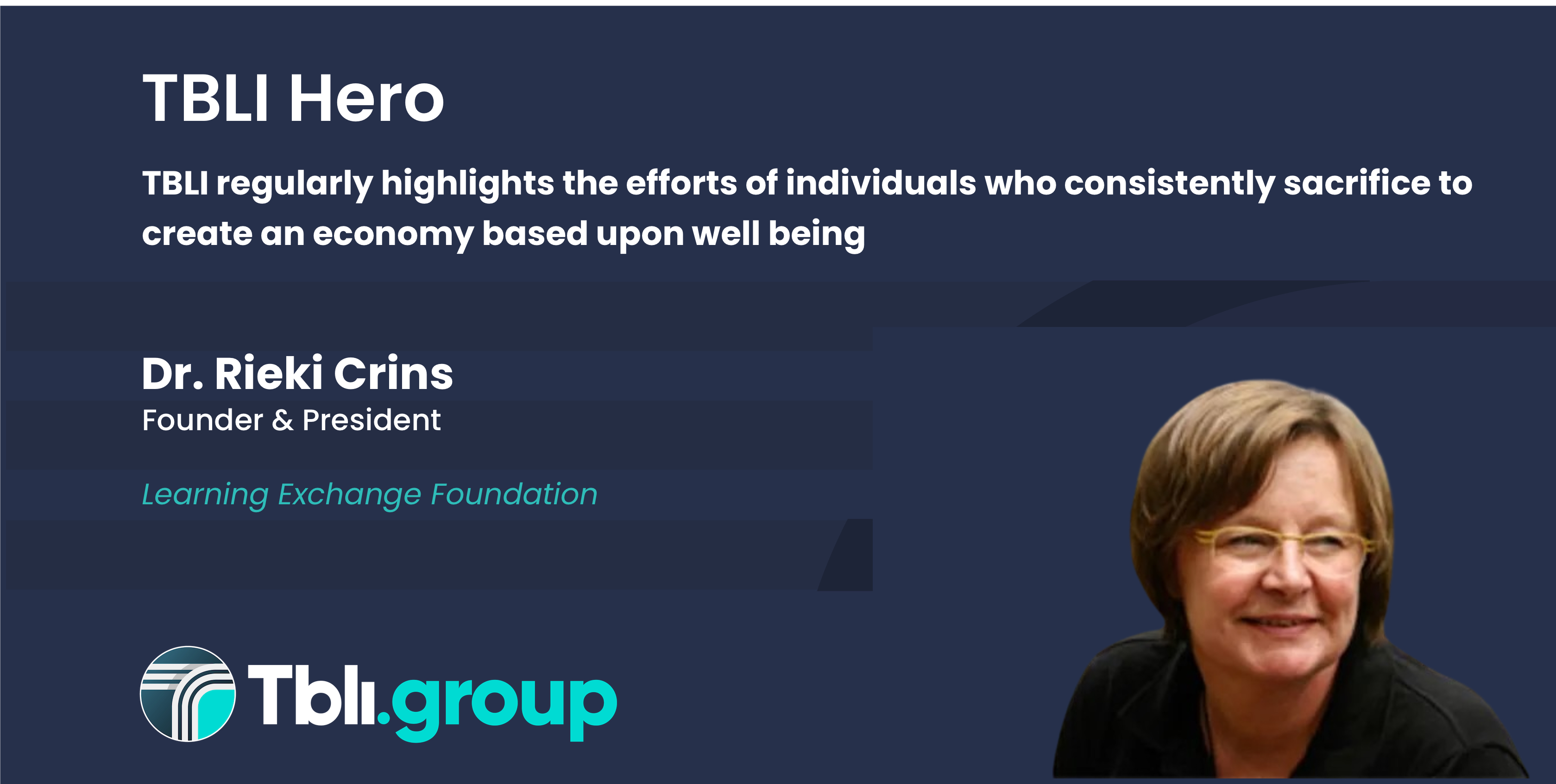 Dr. Rieki Crins: The Unsung Architect of TBLI's MissionBehind every visionary movement stands a force that few recognize but without whom nothing would exist. Dr. Rieki Crins co-founded TBLI Group alongside Robert Rubinstein in 1999, working at the coal face throughout the early period of getting TBLI started and proving instrumental in making TBLI a success and a household name. She is not merely a contributor to TBLI's story—she is one of its essential foundations. While Robert Rubinstein has rightfully earned recognition as the driving force behind TBLI Group's mission to transform the financial system, it is Dr. Crins who has been there every step of the way, working tirelessly alongside him to build an organization that dared to do what most didn't want to do: create an inclusive, values-based economy through triple bottom line investing. She served as conference manager for TBLI Group, organizing conferences throughout Europe and Asia—the very events that established TBLI as a global leader in sustainable investing. The Woman Who Made It Possible Dr. Crins brings an extraordinary breadth of expertise to everything she touches. A cultural anthropologist who obtained her PhD on Gender and Sustainability in Bhutan in 2008, she has lectured at prestigious institutions including Oxford University, University of Amsterdam, and the Siam Society in Bangkok. But her brilliance extends far beyond academia. She is an author, researcher, social entrepreneur, and humanitarian who follows her heart with an authenticity that is increasingly rare in our world. Throughout the often bumpy ride of trying to change the financial system, she worked with Robert at the coal face, becoming instrumental in making TBLI a success. Her commitment was not about recognition or glory—it was about mission, values, and the unwavering belief that finance could be a force for good. Beyond TBLI: A Legacy of Impact Dr. Crins's impact extends well beyond the conference rooms and boardrooms of the financial world. She founded the Learning Exchange Foundation in 2009 and created the Bongde Institute of Hospitality and Tourism in Bhutan, which opened in March 2015. This project represents her vision of melding true sustainability with cultural preservation, creating jobs and opportunity in one of the world's most remote regions. The school survived the COVID-19 pandemic and continues training young Bhutanese people, now run entirely by locals—a testament to her commitment to genuine, lasting impact rather than superficial intervention. The Recognition She Deserves Robert Rubinstein himself has said it best: "She doesn't get the recognition that she richly deserves." This must change. Without Dr. Rieki Crins, there would be no TBLI as we know it. Her strategic thinking, tireless work ethic, cultural intelligence, and unwavering moral compass helped shape every aspect of TBLI's mission and execution. She is a true TBLI hero—not because she sought the title, but because she earned it through decades of dedication to changing how the world thinks about investment, sustainability, and human dignity. Robert Rubinstein's remarkable achievements with TBLI Group stand on the foundation that Dr. Crins helped build, brick by brick, conference by conference, relationship by relationship. A Call to Action It is time for the TBLI community and the broader sustainable investment world to recognize Dr. Rieki Crins not as a footnote, but as a cornerstone. Her contributions deserve celebration, her vision deserves acknowledgment, and her tireless work deserves our deepest gratitude. Thank you, Dr. Crins, for being the force that made it all possible. You are indeed a TBLI hero in every sense of the word. Most important, you are a true mensch, with no filter, a food artist and most important my best friend. Thank you. |
|

|
 The Impact Mafia: How the Elite Invented a Way to Feel Good While Doing NothingRobert RubinsteinThis is an adaptation from the upcoming book, "Radical Truth." Think your network needs to hear this? Share it. Let's start a real conversation. You ever notice how rich people have invented an entirely new way to feel good about themselves while doing absolutely nothing? It’s called “impact investing.” Beautiful term, isn’t it? Two words that individually make sense but together create the perfect smokescreen for what’s really going on. Imagine a room full of people wearing $5,000 suits and $20,000 watches, sipping champagne., The conversation centers on how they’re going to “save the world” with their money. Welcome to the Impact Mafia. The Birth of a Beautiful ScamRemember the good old days when rich people just admitted they were greedy bastards? “Yeah, I want more money because I like mansions and yachts.” At least there was some honesty there. But somewhere in the early 2000s, someone brilliant came up with a fantastic idea: “What if we could make even MORE money while convincing everyone—including ourselves—that we’re actually saints?” And thus, impact investing was born. Call it what it is: lipstick on a leveraged grenade; or regular investing, but with a veneer of sanctimony. The Impact Mafia didn’t just appear overnight. It evolved, like some kind of financial parasite that discovered it could live longer if it convinced its host it was actually beneficial. First, there was philanthropy—just giving money away. But that had a fatal flaw: you didn’t get the money back. Then came ESG investing—considering Environmental, Social, and Governance factors in investment decisions. But that was hardly a subject that would generate attention at cocktail parties. So the final form emerged: impact investing. It’s the perfect win-win situation. What could be better than making investments that supposedly have a measurable positive impact on society or the environment, while increasing corporate value . You can feel like Mother Teresa while acting like Gordon Gekko. The Networking BalletHere’s how the Impact Mafia works. First, you need a network. Not just any network—an EXCLUSIVE network. These networks have fancy names: “The Global Impact Alliance,” “Transformative Capital Coalition,” “Future Positive Investors, GIIN (Global Impact Investing Network), Nexus, The Impact Office, The Impact, Creo, Toniic, PYM, Twist, and many others. ” They sound like superhero teams, but they function more like country clubs. The first rule of Impact Club? Tell EVERYONE about Impact Club. The networking events are something to behold. Picture this: a beautiful resort in some exotic location—Davos, perhaps, or a private island in the Caribbean. The carbon footprint just to get everyone there could heat a small town for winter, but don’t worry—they’ve “offset” it by paying someone not to cut down trees they weren’t going to cut down anyway. At these events, the Impact Mafia members engage in an elaborate mating dance. They float around the room, dropping phrases like “catalytic capital,” “blended finance,” and “theory of change.” like they’re sprinkling holy water on the uninitiated. At the end of the festivities, they exchange business cards and promise to “circle back” about “synergistic opportunities.” The Three Step Method: Talk, Talk, and More TalkThe Impact Mafia has perfected a three step process:
They’ve created an entire industry around TALKING about impact investing. Conferences, white papers, podcasts, TED talks, books, consulting firms, university centers, awards ceremonies. They’ve built more infrastructure around talking about impact investing than actual infrastructure for the people they claim to be helping! And the beauty of it? Talking feels like doing something. After a passionate panel discussion about “unlocking capital for climate solutions,” they genuinely believe they’ve moved the needle. “We raised awareness!” they’ll tell you, as if awareness pays the bills for people living without electricity. The Catch-22: After You! No, After You!But here’s where the true genius of the Impact Mafia reveals itself: the perfect Mexican standoff where nobody has to actually invest. “I’d love to invest in your clean water project for rural communities! Have any of the other members invested yet?” “Not yet, but they’re all very interested!” “Great! Let me know when they commit, and I’ll definitely consider it seriously!” Translation: “I’m not going first, sucker.” It’s the ultimate game of financial chicken. Everyone wants the social credit for being an “impact investor,” but nobody wants to make the first move. Because what if—and here’s the terrifying thought that keeps the Impact Mafia up at night—what if they actually LOSE MONEY on a deal? So they’ve developed this brilliant system: only invest if someone else already has. But since everyone operates on this principle, almost nothing gets funded, and they can all blame each other for the lack of action. “I was ready to write the check! But you know how it is, we needed to see some validation from the rest of the network…” Meanwhile, the entrepreneurs with actual solutions? They’re doing endless roadshows, pitching the same impact investors over and over, caught in an endless loop of “very interesting, keep us updated.” #PostGrowth #BeyondGrowth #RadicalTruth #EconomicTransformation #Degrowth #WellbeingEconomy #NewEconomy 👉 Follow Robert Rubinstein for more This is an adaptation from the upcoming book, "Radical Truth." Think your network needs to hear this? Share it. Let's start a real conversation. |
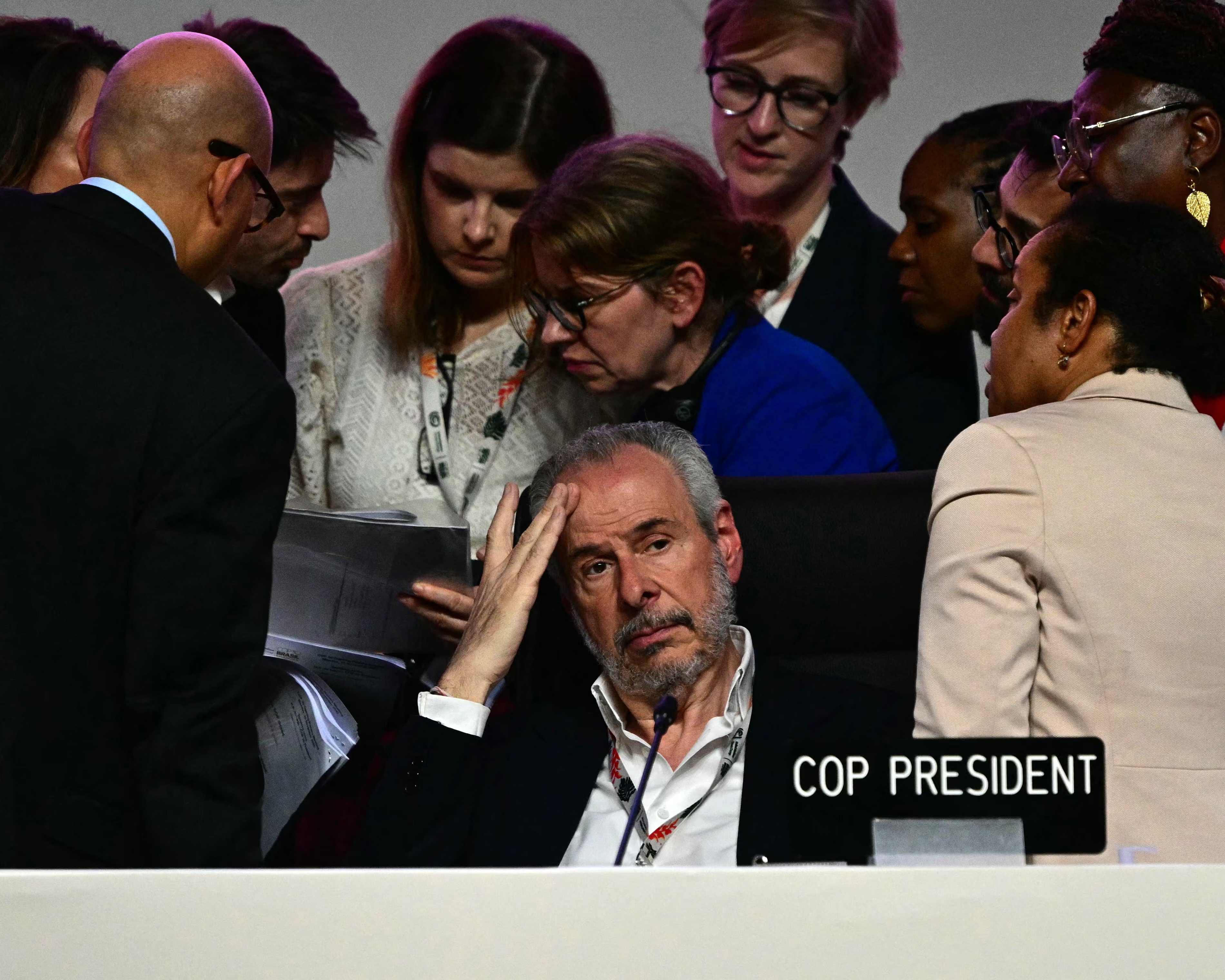
‘Fossil fuel giants finally in the crosshairs’: Cop30 avoids total failure with last-ditch dealIt took some oblique wording, but Saudi Arabia made a last-minute decision to sign deal that marks departure for Cop
|
Impact investors welcome COP30 finance accelerator to drive farmland restorationNine countries have backed the Brazil-led RAIZ accelerator that aims to galvanise public and private sector investment for the restoration of degraded farmland. 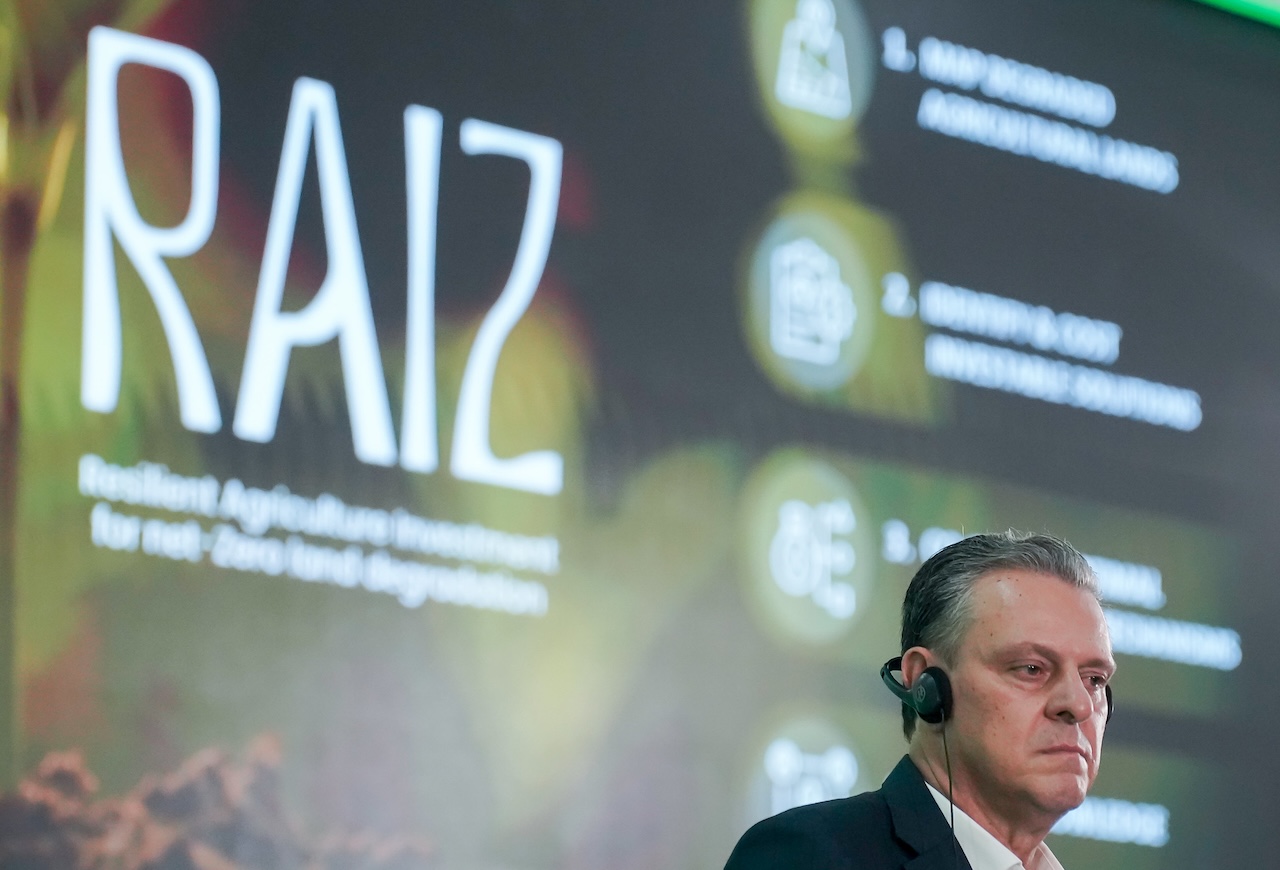
Last week, nine countries announced they would back the launch of the ‘Resilient Agriculture Investment for Net-Zero Land Degradation’ (RAIZ) accelerator that will assist participating governments to unlock and strategically allocate public and private investment for the restoration of degraded agricultural land at scale. The announcement was made at a ministerial meeting at the COP30 climate summit in Belém, where the Brazil-led initiative received the support of the governments of Australia, Canada, Germany, Japan, the Kingdom of Saudi Arabia, New Zealand, Norway, Peru and the UK. The accelerator, which is modelled on the Green Way and Eco Invest initiative in Brazil, aims to address the widescale degradation of the world’s farmland to strengthen food security, tackle climate breakdown, and protect biodiversity. It is designed as a technical assistance facility to help governments and financial partners co-design tailored financing solutions at national level and will be hosted by the Brazilian Ministry of Agriculture and Livestock (MAPA) in partnership with several international organisations, including the Food and Land Use Coalition (FOLU). Morgan Gillespy, executive director of FOLU, told Impact Investor that RAIZ will support countries that express interest in receiving the RAIZ service offering. “We will continue to liaise with interested countries and directly engage those with significant rates of farmland degradation and potential for restoration to explore opportunities for collaboration,” he said, explaining that the objective is to support six countries, representing around 30% of degraded farmland, by 2030. Asked by this publication whether the initiative was a positive signal for impact investors, Agustín Vitórica, co-founder and co-CEO of GAWA Capital, the Madrid-based impact investor, said: “An initiative like RAIZ sends a strong signal to the impact investing market that restoring degraded agricultural land is now a political priority and a compelling opportunity for impact investors, rather than a niche topic.” Paul McMahon, managing partner at natural real assets investor SLM Partners, also welcomed the initiative but told Impact Investor that the challenge will be in seeing how this type of high-level, inter-governmental initiative translates into action on the ground. “There is often a big gap between the noble aspirations of UN conventions and the realities of farming and land use across the world,” he said.
|
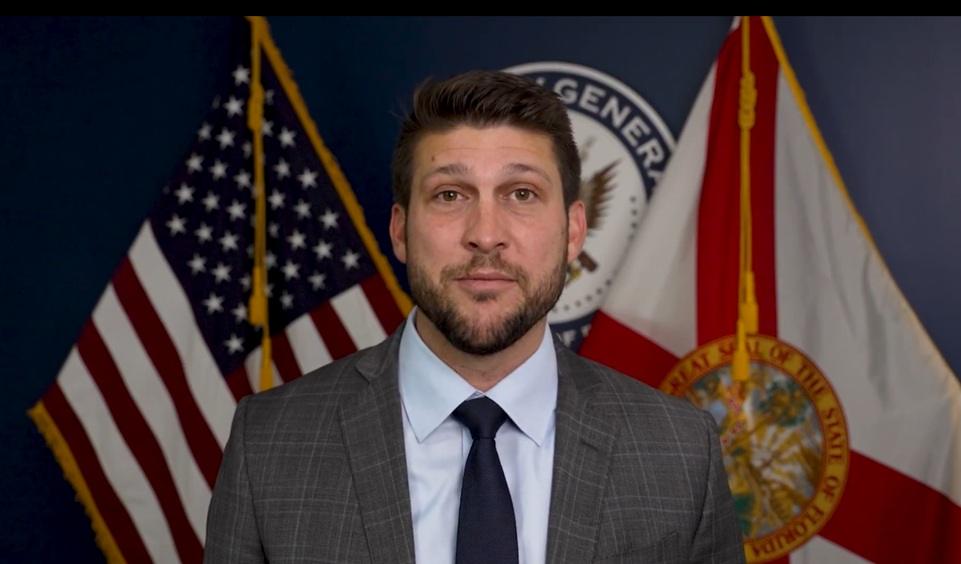
Florida AG Sues Glass Lewis, ISS for Pushing “ESG Agenda” in Proxy Voting Recommendations
Florida Attorney General James Uthmeier announced the filing of a new legal action against proxy advisory firms Glass Lewis and Institutional Shareholder Services (ISS), claiming that the firms violated consumer protection and antitrust laws by jointly pushing an “ESG agenda” through their activities. The new lawsuit forms the latest in a series of actions by anti-ESG politicians in the U.S., which has increasingly focused on the proxy advisory firms in the past few months. In September, for example, Texas AG Ken Paxton launched an investigation into the companies for allegedly “issuing voting recommendations that advance radical political agendas rather than sound financial principles,” and SEC Chair Paul Atkins recently warned of plans to examine and propose actions focused on the role of proxy advisory firms over the “weaponization of shareholder proposals by politicized shareholder activists.” In a statement announcing new suit, the Florida AG alleges that the proxy firms “misled Florida consumers, abused their dominance over the shareholder-voting market, and weaponized their influence to impose an ideological agenda on American companies and Florida retirees.” Uthmeier said:
|