|
|
Author: Robert Rubinstein |
Your weekly guide to Sustainable Investment |
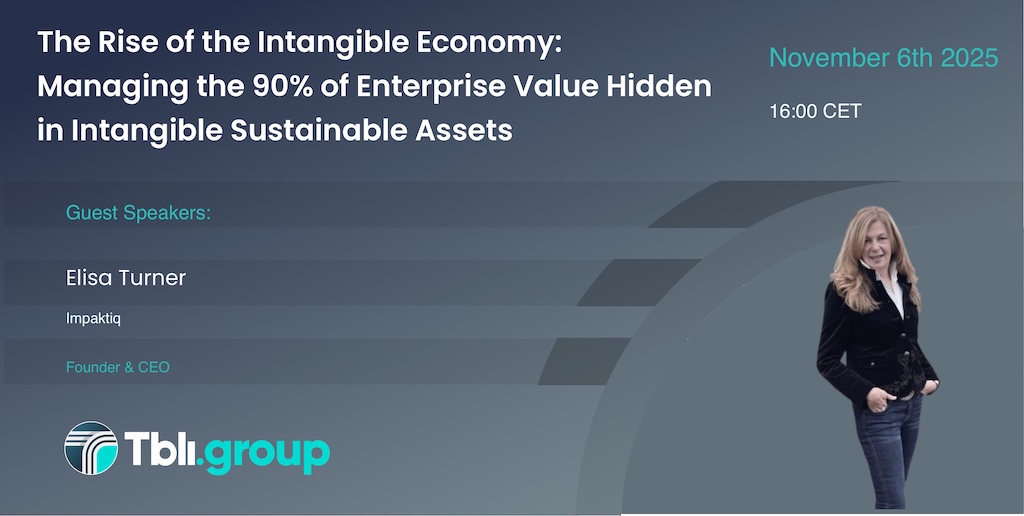 Exclusive Masterclass: Quantifying Intangible Enterprise Value Nov 6th at 16:00 CET:
|
|

|
 Your Screen Time Is Someone Else's Paycheck: A Brutally Honest Look at the Distraction EconomyLet me hit you with an uncomfortable truth: You're probably reading this on a device that's currently destroying your capacity for the very thing that could save you—sustained attention. The average person now spends over seven hours daily staring at screens. That's more time than we sleep. More time than we spend with actual humans. And here's the kicker: we're doing it voluntarily. The Perfect Crime Nobody NoticedThe architects of the attention economy figured out something brilliant: meaningful change requires focus, and focus is exactly what they could strip from us without us even noticing. Think about it. When was the last time you went an entire day without checking your phone? An entire hour? Be honest with yourself here—that's the first step to radical truth. We've convinced ourselves that scrolling through other people's curated highlight reels is "staying connected." That reading outrage headlines is "being informed." That changing our profile picture is "taking a stand." It's not. It's participation in our own distraction. The $7 Coffee ConHere's where it gets really perverse: We've been sold the idea that our consumer choices are our political choices. Buy the right coffee, wear the right yoga pants, drive the right car—and boom, you're part of the solution. Except you're not. You're part of a brilliantly designed system that converts legitimate grievances about the world into consumer preferences, then profits from selling you "solutions" that never threaten the status quo. That ethically-sourced latte? The barista serving it might be working three jobs to afford rent. The profits flow to executives lobbying against the very regulations that would address the problems their marketing claims to solve. We're trying to consume our way out of problems created by overconsumption. It's like fighting fire with artisanal gasoline. From Movements to MomentsIn 1963, Martin Luther King Jr. didn't check his engagement metrics mid-speech. Rosa Parks didn't sit down because it would make a viral TikTok. Yet today, we measure social movements by their viral reach, as if visibility equals change. As if awareness is the same as action. Modern activism follows a predictable cycle:
It's activism as entertainment. Social justice with the structure of a sitcom—each episode self-contained, no real continuity required. The civil rights movement succeeded because it combined awareness with concrete demands, sustained pressure, strategic action, and actual sacrifice. Those people didn't just post about injustice—they built organizations that lasted beyond the news cycle. The Great SubstitutionWe've become experts at accepting digital approximations of real experiences:
We've collectively decided the menu is the same as the meal. The tech companies love this. They promise connection but deliver engagement. They promise empowerment but deliver dependence. They built advertising delivery systems disguised as platforms for human connection. Facebook doesn't optimize for meaningful relationships—it optimizes for keeping you scrolling past ads. Instagram doesn't exist to help you appreciate beauty—it exists to trigger comparison and inadequacy, which drives engagement. The Doom/Dumb CycleWe've perfected two methods of wasting our lives while feeling engaged: Doom scrolling: Compulsively consuming bad news, feeling informed and concerned while doing absolutely nothing about any of it. Dumb scrolling: Mindlessly consuming vapid content, feeling entertained and connected while experiencing neither. They work together in a perverse cycle. Doom scrolling overwhelms you with unsolvable problems, making you anxious. When that's unbearable, you switch to dumb scrolling for relief. When that feels empty, back to doom scrolling to feel serious again. It's the perfect system for maintaining the status quo. You feel like you're paying attention (doom) and practicing self-care (dumb), but you're actually just oscillating between two forms of passivity. What Actually MattersHere's the radical truth: The world doesn't need more of your attention—it needs your intention. It doesn't need your awareness—it needs your action. Real change still requires:
No algorithm can replace that. No amount of likes, shares, or viral moments can substitute for actual organizing. Breaking free isn't about abandoning digital tools entirely. It's about honest recognition: Am I using this tool, or is it using me? Is this energizing me for meaningful action, or depleting my capacity for it? Am I genuinely engaged, or merely entertained? The Way ForwardNext time you feel that familiar itch to check your phone, to scroll through another hour of your finite life, try something radical: Put it down. Form a genuine connection. Have a real experience. Do something that won't get likes or go viral. It might not be photographable. But it might be the beginning of reclaiming not just your attention, but your life. And if enough of us did that? We might start reclaiming our collective world from those who've been quite happy to let us scroll it all away. Your screen time is literally someone else's business model. The question is: What are you going to do about it? The uncomfortable truths are the ones worth discussing. What's your relationship with your screen time? I'm genuinely curious—and I mean the kind of conversation that can't be reduced to a like or emoji reaction. 👉 Follow Robert Rubinstein for more This is an adaptation from the upcoming book, "Radical Truth." Think your network needs to hear this? Share it. Let's start a real conversation. |
|

|
EU Invests $3B to Accelerate Net-Zero Technologies Across 18 Countriesby ESG News • November 3, 2025
Brussels Pushes Deep Decarbonization Across EuropeThe European Commission has allocated €2.9 billion ($3.1 billion) from the EU’s Innovation Fund to 61 large-scale net-zero technology projects across 18 countries, in one of the bloc’s most significant investments to date in industrial decarbonization. The funding—sourced from revenues generated under the EU Emissions Trading System (EU ETS)—was awarded through the Innovation Fund’s first dedicated Net-Zero Technologies call, launched in December 2024. The program targets sectors that are hard to abate, including energy-intensive industries, cleantech manufacturing, industrial carbon management, and net-zero mobility. According to the Commission, the selected projects are expected to prevent 221 million tonnes of CO₂ equivalent during their first decade of operation—roughly the annual emissions of 9.9 million average European cars. Scope and Sectoral ReachThe 61 winning projects cut across 19 industrial sectors, covering renewable energy and storage, sustainable building materials, advanced battery production, and circular carbon solutions. Collectively, they represent the EU’s broadest deployment yet of innovation-driven emissions reduction technologies. By tapping proceeds from the EU ETS—Europe’s primary carbon pricing mechanism—the Innovation Fund directly channels carbon revenues into climate-positive technologies. This financial model aims to reinforce the EU’s 2050 climate neutrality goal and support the bloc’s interim 2040 target, which calls for a 90% reduction in greenhouse gas emissions compared to 1990 levels. |