🎯 WHAT YOU'LL LEARN: ✅ ESG Social Practitioner's Guide to the Basics ✅ Why Lenders' Technical Advisors Face Resistance ✅ Which Development Finance Institutions Prioritize ESG ✅ Real-World ESG Implementation in Southeast Asia
📌 ABOUT THIS EPISODE:
Welcome to TBLI Talk, where knowledge inspires and we explore practical insights from ESG frontline practitioners in international development and sustainable finance.
We're joined by Anthony Zola, a leading authority on development economics and ESG implementation in Southeast Asia's Greater Mekong Subregion. Anthony has led policy research and technical assistance projects for the Asian Development Bank (ADB), World Bank, UN agencies, bilateral donors, and private sector clients, specializing in agricultural policy, social protection, involuntary resettlement, and ESG compliance.
KEY TOPICS:
🔹 ESG Social Practitioner Essentials - Ground-level insights on implementing environmental, social, and governance standards in emerging markets
🔹 The Technical Advisor Challenge - Why lenders' ESG advisors face resistance and how to bridge compliance requirements with local realities
🔹 Development Finance & ESG - Which multilateral banks and donors genuinely prioritize ESG versus box-checking exercises
Essential viewing for ESG professionals, development finance practitioners, social safeguards specialists, and anyone working on World Bank, ADB, or UN development projects.
ABOUT TBLI Radical Truth features frontline practitioners sharing practical knowledge on ESG integration, sustainable finance, and international development.
Tired of being the only one in the room who cares about non-extractive finance?
You're not alone. You just haven't met your people yet.
TBLI Virtual Mixer | March 27 | 16:00-17:30 CET
AI matches you with impact investors and entrepreneurs who:
✅ Share resources instead of hoarding them
✅ Believe collaboration > competition
✅ Measure success beyond IRR
✅ Actually mean "stakeholder value"
90 minutes with people who finally get it.
The ones building finance that doesn't require extraction. The ones who share, not take. The ones who've been looking for you too.
See which VCs consistently:
🚩 Ghost after months of diligence
🚩 Change terms overnight
🚩 Go silent post-investment
✅ Respond promptly
✅ Honor commitments
✅ Actually add value
The hunger for finance that builds—rather than extracts—is at a tipping point.
You can feel it.
In every conversation with founders tired of extractive VCs. In every LP asking about real impact. In every fund manager measuring more than IRR.
The question is: Will 2026 be the year you ride that wave?
TBLI Circle is where that energy becomes permanent:
→ Monthly connection with peers experiencing their best years → 25 years of impact capital relationships → A community where you don't have to explain yourself → Everyone already speaks your language
No greenwashing. No tire-kickers. No dead-end connections.
Just the people building what comes next.
This is your moment.
Make 2026 the year you look back on as the turning point.
👉 Join the circle:tblicircle.com 👉 TBLICircle.com-2 week trial period→
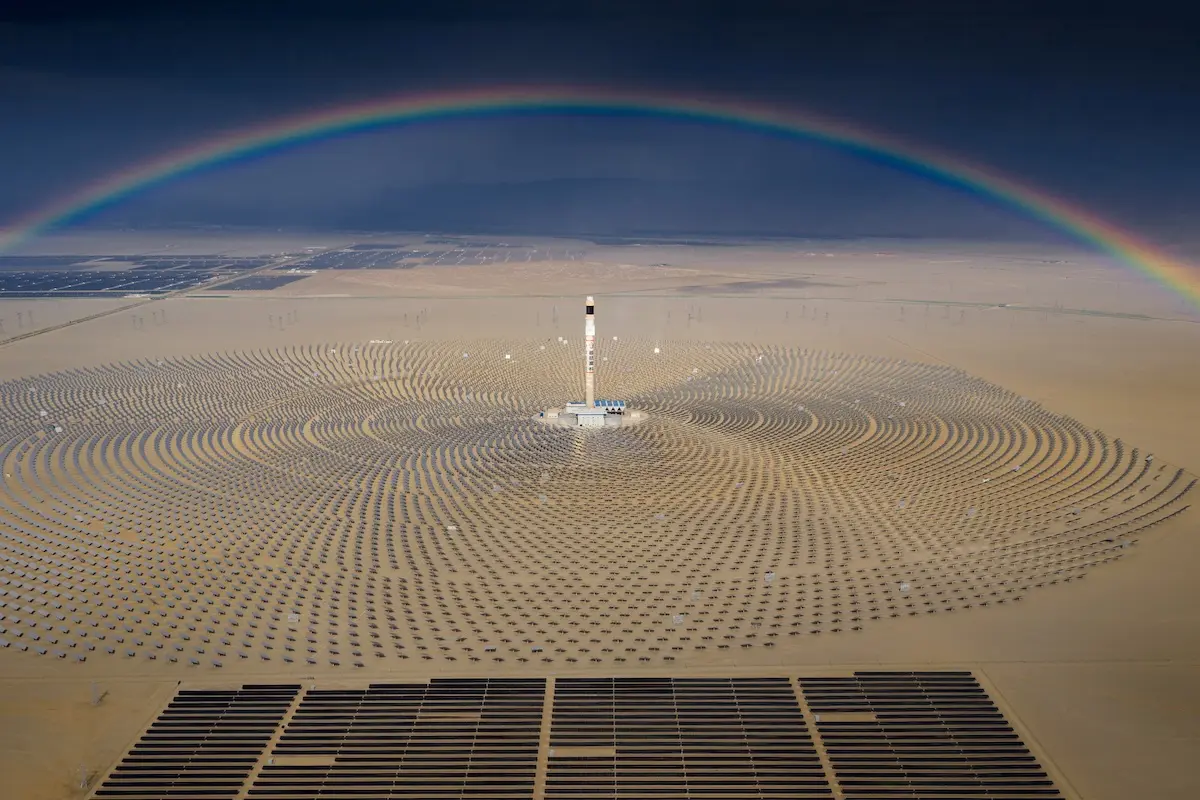
A solar power station in Dunhuang, Gansu Province. Weimin Chu
China’s Fossil Fuel Emissions Dropped Last Year as Solar Boomed
In China, the world’s leading carbon emitter, a massive buildout of solar power is beginning to push fossil fuels into decline. Last year China saw its emissions drop, even as demand for energy rose.
Emissions from energy and industry dropped by 0.3 percent in 2025, while consumption of energy rose by 3.5 percent, according to official statistics. Last year, renewables supplied 40 percent of power in China, up from 37 percent the previous year, with solar accounting for most of the growth. The added renewable power more than met the uptick in demand, and as a result, coal power fell slightly.
“This is an encouraging signal, as it suggests that the sort of large-scale energy transition which China has been investing heavily in has begun to translate into measurable outcomes,” said Duo Chan, a climate scientist at the University of Southampton. “Whilst one year of lower emissions does not mean that the climate challenge is solved, the scale of China’s deployment of renewables can lead us to hope that this may be the start of a sustained decline in its emissions.”
Analysts believe that China is planning for further declines in coal power. As renewables ramp up, it has begun retrofitting its fleet of coal plants to serve as a complement to wind and solar, rather than as a source of baseload power. Increasingly, coal generators will act as “peaker” plants, meeting spikes in power demand or gaps in the supply of wind and solar.
Along with the recent drop in coal power, an ongoing slump in construction has led to a decline in cement production, further pushing down emissions. And according to recent analysis from Carbon Brief, transport emissions likely also declined last year as China continued its shift to electric vehicles. Carbon Brief found that China’s carbon emissions have been either flat or falling for nearly two years, raising the prospect that it has finally passed “peak” emissions.
Meanwhile, in the U.S., renewables are continuing to gain ground, even as the Trump administration slashes support for clean energy and dismantles regulations on the burning of fossil fuels. Last year, U.S. utilities generated a record amount of clean energy, Bloomberg reported, and this year 93 percent of new power capacity will come from wind, solar, and batteries, according to a government estimate.
Office buildings in Tokyo, Japan. Image: Nopparuj Lamaikul on Unsplash
Asia leads global shift toward sustainable investing, survey finds
Nearly four in five regional asset owners integrate sustainability factors, outpacing Europe and North America as climate risks and supportive policies drive adoption, acccording to FTSE Russell survey.
Asset owners in Asia-Pacific are increasingly embracing sustainable investment strategies, outpacing peers in Europe and North America as climate concerns intensify and supportive regulatory developments gather pace, according to FTSE Russell’s 2025 global survey.
The FTSE Russell Sustainable Investment Asset Owner Survey is an annual global study of institutional investors – such as pension funds, insurers, sovereign wealth funds and other asset owners – on how they incorporate sustainability and climate factors into investment decisions, providing a snapshot of global trends, priorities and challenges in sustainable investing.
Some 79 per cent of Asia-Pacific respondents said they are implementing sustainability considerations in some form, compared with 74 per cent in Europe and 71 per cent in North America, the survey of 415 asset owners across 24 countries found. The region accounted for 31 per cent of participants, slightly more than North America’s 29 per cent.
Historically, Asia lagged Western markets due to weaker regulatory frameworks and a focus on industrial growth. But large-scale clean energy investments in China, Japan’s Green Transformation Strategy that aims to mobilise over JPY150 trillion (US$1 trillion) toward carbon neutrality by 2050, and new disclosure regimes in financial hubs such as Singapore and Hong Kong have shifted investor attitudes.
Asia’s leadership is also evident in debt markets. Regional green bond issuance reached US$180 billion in 2025, up 29 per cent from 2024. China issued its first sovereign green bond listed in London, while Japan has introduced sovereign transition bonds, with US$3.6 billion issued so far.
Globally, climate change remains the top concern. Around 85 per cent of asset owners placed themselves in the “most concerned” category about climate risk, compared with 76 per cent a year earlier.
Overall, 80 per cent of respondents are incorporating sustainability or climate considerations into strategic asset allocation, and 73 per cent are implementing sustainable investment products in portfolios – a level that has remained steady despite a backlash against sustainable finance.
Financial performance and risk management were cited as the primary motivations for sustainable investment, by 56 per cent and 54 per cent of respondents respectively. About one in four asset owners are still assessing whether to adopt such strategies, with concerns about greenwashing, data quality and regulation acting as barriers.
Regional trends diverge sharply. Europe’s market appears to be plateauing after years of rapid growth, with two-thirds of funds already classified under the European Union’s sustainable fund rules. Investors there increasingly view complex regulation as a constraint, with 34 per cent saying it hinders market growth compared with 20 per cent who see it as supportive.
In the United States, sustainable investment adoption lags other regions, with 67 per cent of asset owners pursuing such strategies. Environmental, social and goverance (ESG) has become politicised in recent years, although concern about climate risk remains high among investors.
Despite regional differences, the study found growing convergence in investor behaviour worldwide. Many asset owners are focusing on strategies that can enhance returns or reduce risk, rather than pursuing sustainability objectives for their own sake.
Participants included pension funds, insurers, sovereign wealth funds, endowments and family offices. Nearly a quarter managed assets of US$100 billion or more.
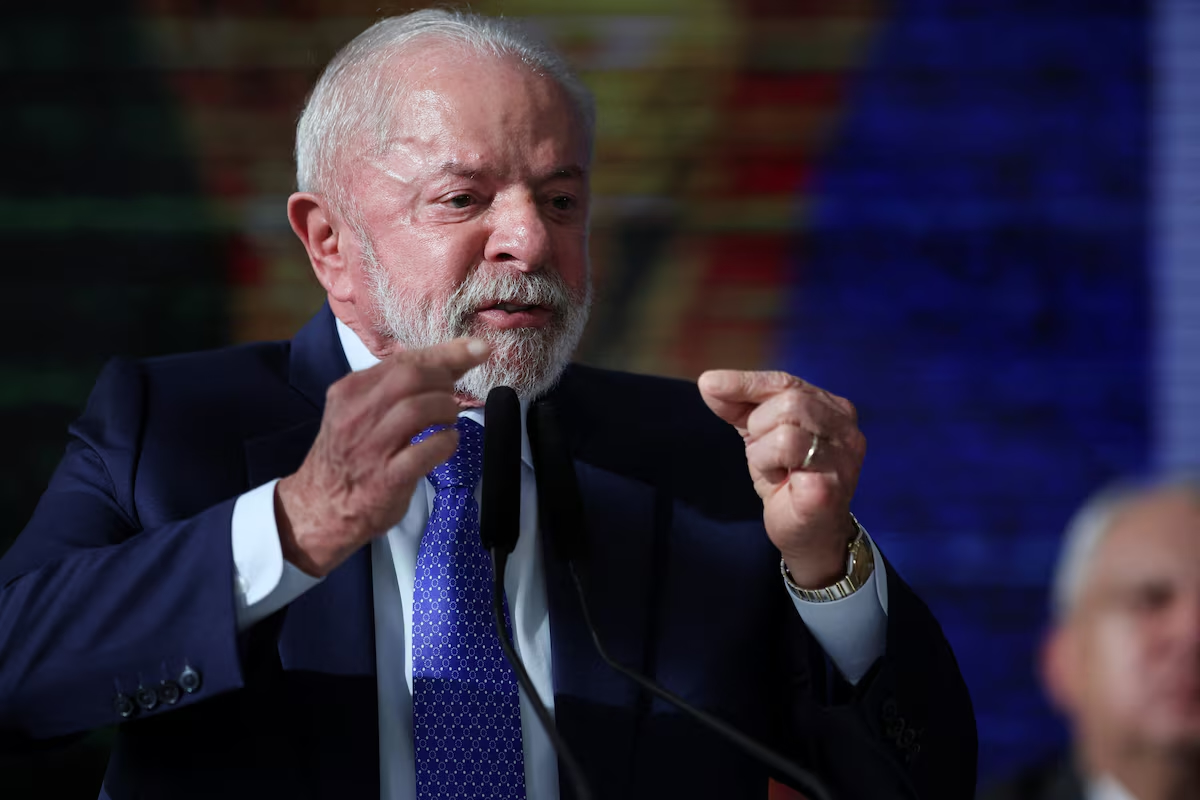
Brazil's President Luiz Inacio Lula da Silva speaks during the ceremony presenting the FIFA World Cup Trophy at the Planalto Palace in Brasilia, Brazil February 26, 2026. REUTERS/Mateus Bonomi Purchase Licensing Rights
Brazil to mobilize nearly $50 billion in sustainable investments under Lula's current term
Brazil's government expects to mobilize more than 250 billion reais ($48.4 billion) in sustainable investments during President Luiz Inacio Lula da Silva's current four-year term, with 2026 centered on consolidating initiatives already underway, former international affairs secretary Tatiana Rosito said.
Rosito, who left her post at the Finance Ministry on Monday to become the World Bank's director for China, Korea and Mongolia starting in July, said Brazil has assembled a broad suite of financial instruments showcased during its leadership of the G20, BRICS and COP30.
The priority now, she added, is delivering results and drawing capital rather than crafting new tools.
According to Rosito, Brazil's recent policy push has helped restore its standing as a major global player, with peers viewing Latin America's largest economy as shifting from rhetoric to delivery.
Key efforts include creating national ecological transformation guidelines, issuing sovereign sustainable bonds abroad and launching EcoInvest, a program that uses public funds to attract private investment into green projects.
Rosito also pointed to the Brazil Investment Platform for Climate and Ecological Transformation (BIP), which lists sustainable projects seeking financing.
After Brazil unveiled the platform during its 2024 G20 presidency, the country helped develop a hub of similar initiatives under its COP presidency last year to spur cooperation on sustainable and climate finance among Global South countries.
More than 15 nations, including Colombia, Nigeria and South Africa, have since announced plans for their own platforms, Rosito said.
"I don't see many people viewing this as an ecosystem, but it is," she said, describing Brazil's sustainable finance push as an innovative system built largely from scratch that is enabling concrete investments and supporting strategic emerging sectors.
Rosito said the sustainable development agenda has been "all but erased" from discussions in parts of the international forum circuit, particularly the G20 under this year's U.S. presidency, and argued that Brazil and its partners must continue to speak out in favor of keeping the issue in focus.
She will be succeeded at the Finance Ministry by Mathias Alencastro, previously an adviser to Finance Minister Fernando Haddad, as Reuters first reported on Friday.
($1 = 5.1680 reais)