On 20 May in Brussels, Fleur Rossdale will present the Fleur Rossdale Foundation and its DCCI School Awards — using storytelling and performance to connect young people with real-world climate solutions.
An evening focused on the shift from extractive systems to regenerative thinking, and the role of education in leading that change.
Read Full Article
5m tonnes of CO2 emitted in just 14 days of US war on Iran, analysis finds
Exclusive: War in the Middle East is draining the global carbon budget faster than 84 countries combined
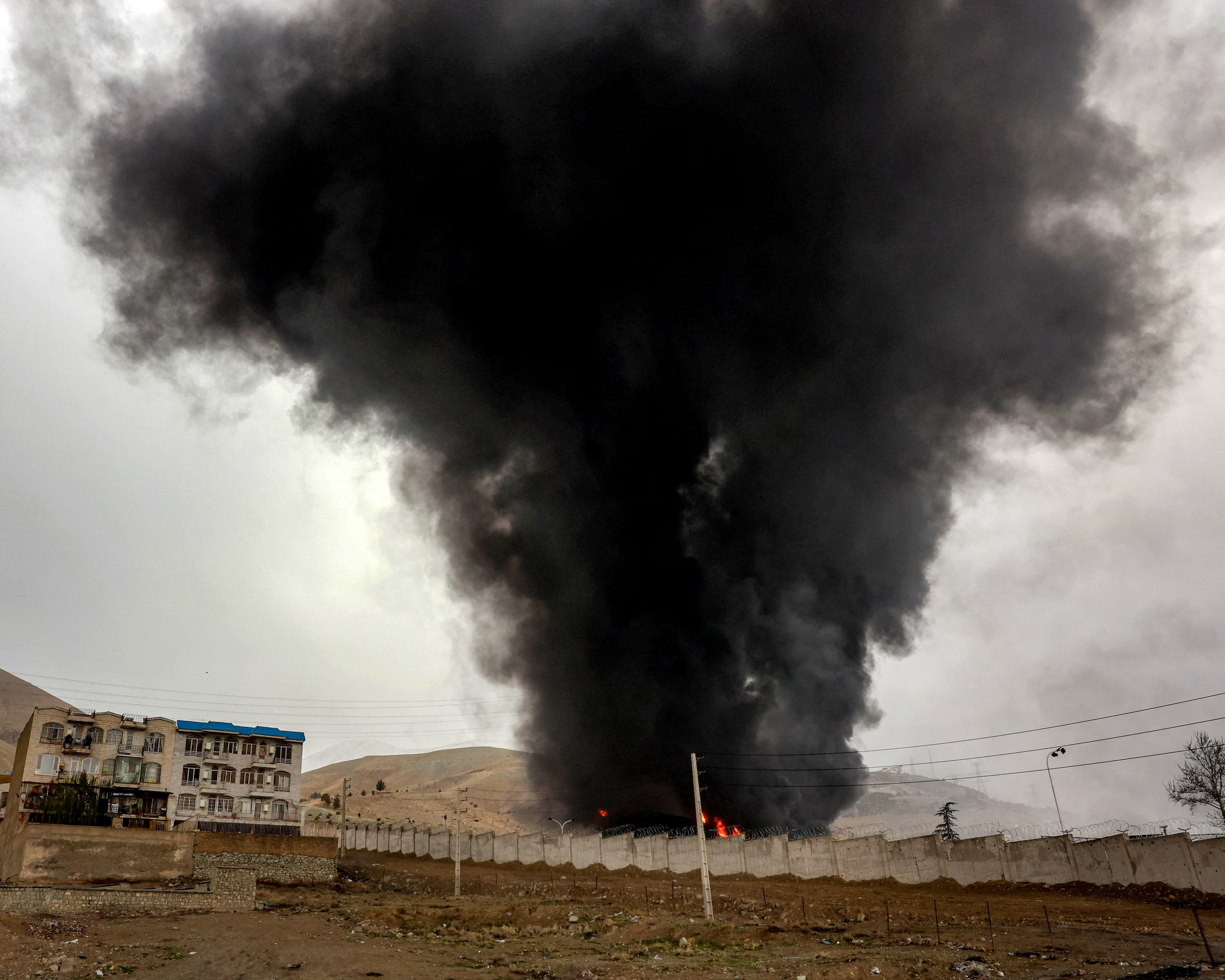
Shahran oil refinery in north-west Tehran on 8 March after an overnight airstrike. Photograph: AFP/Getty Images
Damien Gayle
Sat 21 Mar 2026 13.00 CET
The US-Israel war on Iran is a disaster for the climate, according to an analysis that finds it is draining the global carbon budget faster than 84 countries combined.
As warplanes, drones and missiles kill thousands of people, level infrastructure and turn the Middle East into a gigantic environmental sacrifice zone, the first analysis of the climate cost has found the conflict led to 5m tonnes of greenhouse gas emissions in its first 14 days.
The analysis, shared exclusively with the Guardian, adds another layer on to reporting of the catastrophic environmental harm being caused by attacks on fossil fuel infrastructure, military bases, civilian areas and ships at sea.
“Every missile strike is another downpayment on a hotter, more unstable planet, and none of it makes anyone safer,” said Patrick Bigger, a research director at the Climate and Community Institute and a co-author of the analysis.
“Every refinery fire and tanker strike is a reminder that fossil‑fuelled geopolitics is incompatible with a livable planet. This war shows, yet again, that the fastest way to supercharge the climate crisis is to let fossil fuel interests dictate foreign policy.”
The US-Israeli axis claims to have bombed thousands of targets inside Iran, and Israel has hit hundreds more targets in Lebanon. Reports from inside both countries show extensive destruction of infrastructure.
Destroyed buildings constitute the largest element of the estimated carbon cost. Based on reports by the Iranian Red Crescent humanitarian organisation that about 20,000 civilian buildings have been damaged by the conflict, the analysis estimates the total emissions from this sector to be 2.4m tonnes of CO2 equivalent (tCO2e).
Fuel is the second biggest element, with US heavy bombers flying from as far away as the west of England to carry out raids over Iran. The analysis estimates between 150m and 270m litres of fuel were consumed by aircraft and support vessels and vehicles in the first 14 days, producing a total emission of 529,000 tCO2e.
One of the most shocking images of the war has been the dark clouds and black rain that fell over Tehran after Israel bombed four major fuel storage depots surrounding the city, setting millions of litres of fuel ablaze. The analysis estimates that between 2.5m and 5.9m barrels of oil have been burned in that attack and similar strikes – including Iranian retaliations on its Gulf neighbours – emitting an estimated 1.88m tCO2e.
In the first 14 days, the US lost four aircraft, while Iran lost 28 aircraft, 21 naval vessels and about 300 missile launchers. This destroyed military hardware is estimated to account for embodied carbon emissions of 172,000 tCO2e.
There are also the bombs, missiles and drones themselves, the use of which has been extensive on all sides. Based on claims that in the first 14 days the US and Israel had bombed more than 6,000 targets inside Iran, while Iran had fired back about 1,000 missiles and 2,000 drones, plus an estimated 1,900 interceptors fired to defend against them, the analysis estimated that munitions contributed about 55,000 tCO2e in emissions.
In total, the first two weeks of the conflict led to emissions of 5,055,016 tCO2e, equivalent to 131,430,416 tCO2e in a year – roughly the same as a medium-size, fossil fuel-intensive economy such as Kuwait. But it is also the same as the 84 lowest emitting countries combined.
Read Full Article




.jpg)
.jpg)
.jpg)