Welcome to TBLi Radical Truth Podcast, where knowledge inspires and we explore transformative leadership models bridging social enterprise, impact investing, and sustainable development finance across global markets. 🎙️ ABOUT THIS EPISODEIn this episode, we're joined by Henri van Eeghen, Former CEO of New Energy Nexus—the world's leading organization supporting clean energy entrepreneurs and climate tech startups globally. With extensive international experience transforming traditional development organizations into financially sustainable social enterprises, Henri previously served as CEO of both KIT Royal Tropical Institute and Synergos Institute, Chief Operating Officer of Cordaid (the Netherlands' largest NGO), and held senior roles at Mercy Corps and the Van Eeghen Group family business.
KEY TOPICS COVERED: ✅ Transforming NGOs into financially sustainable social enterprises
✅ Clean energy entrepreneurship and climate tech incubators
✅ Radical transparency in development finance
✅ Results-based financing and blended finance models
✅ Supporting climate entrepreneurs in emerging markets
✅ Energy transition and renewable energy deployment
✅ Impact investing in fragile states and developing countries
✅ Shifting power to local leaders in international development
WHAT YOU'LL LEARN:Henri reveals groundbreaking strategies for transforming century-old aid organizations into agile social enterprises with radical transparency and financial sustainability. From pioneering results-based healthcare financing and impact investment funds with Cordaid, to building collaborative philanthropic networks with Synergos, Henri demonstrates how private sector partnerships, innovative financial models, and sustainable business practices accelerate renewable energy deployment and support climate entrepreneurs in emerging markets.Discover how to create pathways from traditional development funding to self-sustaining social impact organizations aligned with the UN Sustainable Development Goals (SDGs).
TBLi Radical Truth Podcast brings you visionary leaders in clean energy finance, social entrepreneurship, and sustainable development who are building scalable models for climate action and impact investment.
Let's begin our conversation with Henri van Eeghen on clean energy entrepreneurship, transforming NGOs into social enterprises, and financing the climate transition.
You're one relationship away from transforming how you work.
But you won't find it at traditional networking events where everyone's extracting, not connecting.
TBLI Virtual Mixer is different.
Feb 27 | 16:00-17:30 CET
Our AI matches you with impact investors and entrepreneurs who:
✅ Share resources, not hoard them
✅ Collaborate instead of compete
✅ Believe in abundance over scarcity
✅ Build together, not against each other
Real outcomes from past mixers:
"I finally found people who think like me."
"These became my trusted co-investors and friends."
"The community I didn't know I was missing."
This is where you find your people.
The ones who get it. The ones who share your values. The ones building non-extractive finance.
You can keep networking alone.
Or join the people who understand that the right relationships change everything.
90 minutes. Values-aligned connections. No extraction.
They're not chasing billion-dollar valuations. They're solving billion-dollar problems.
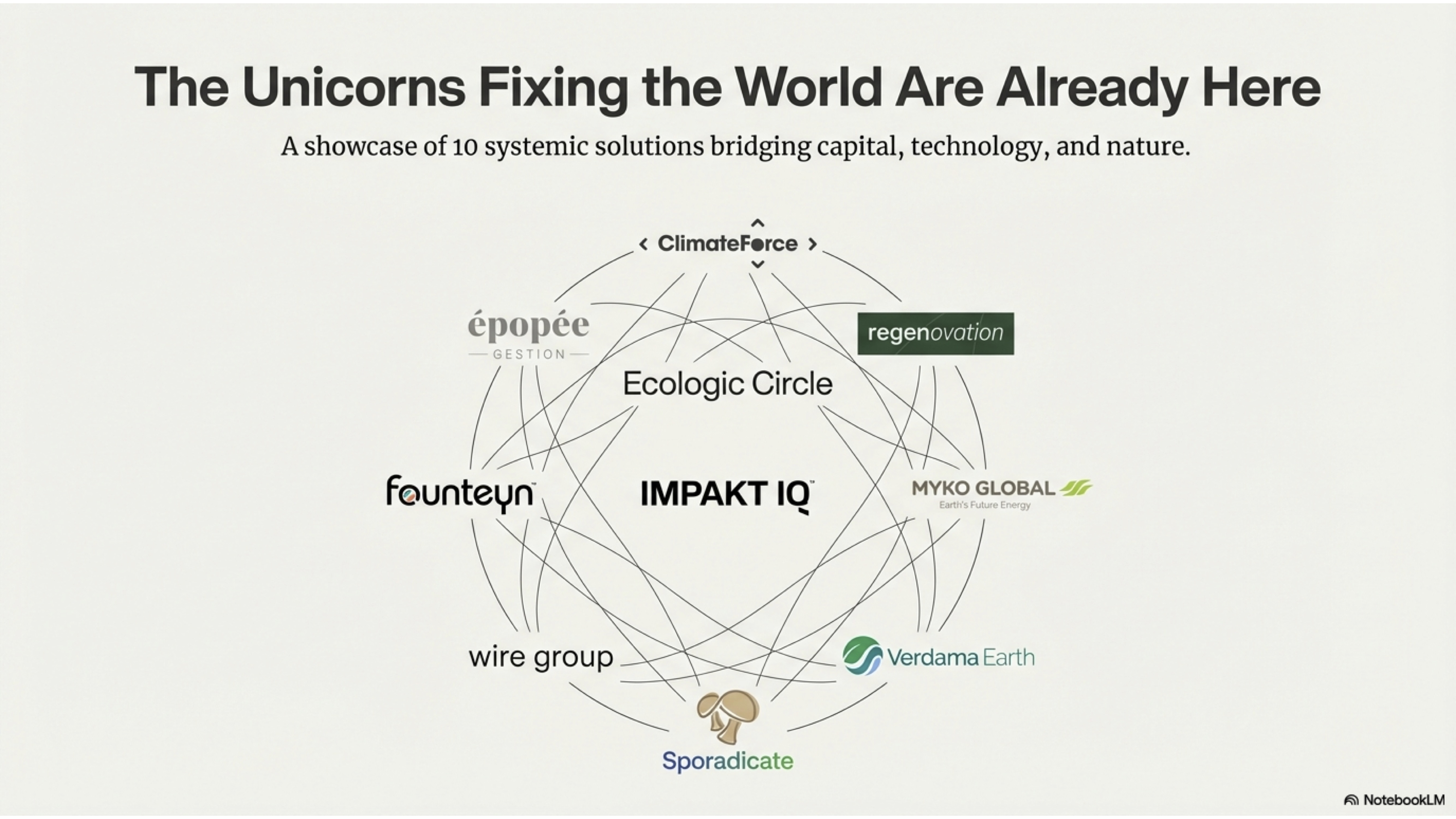
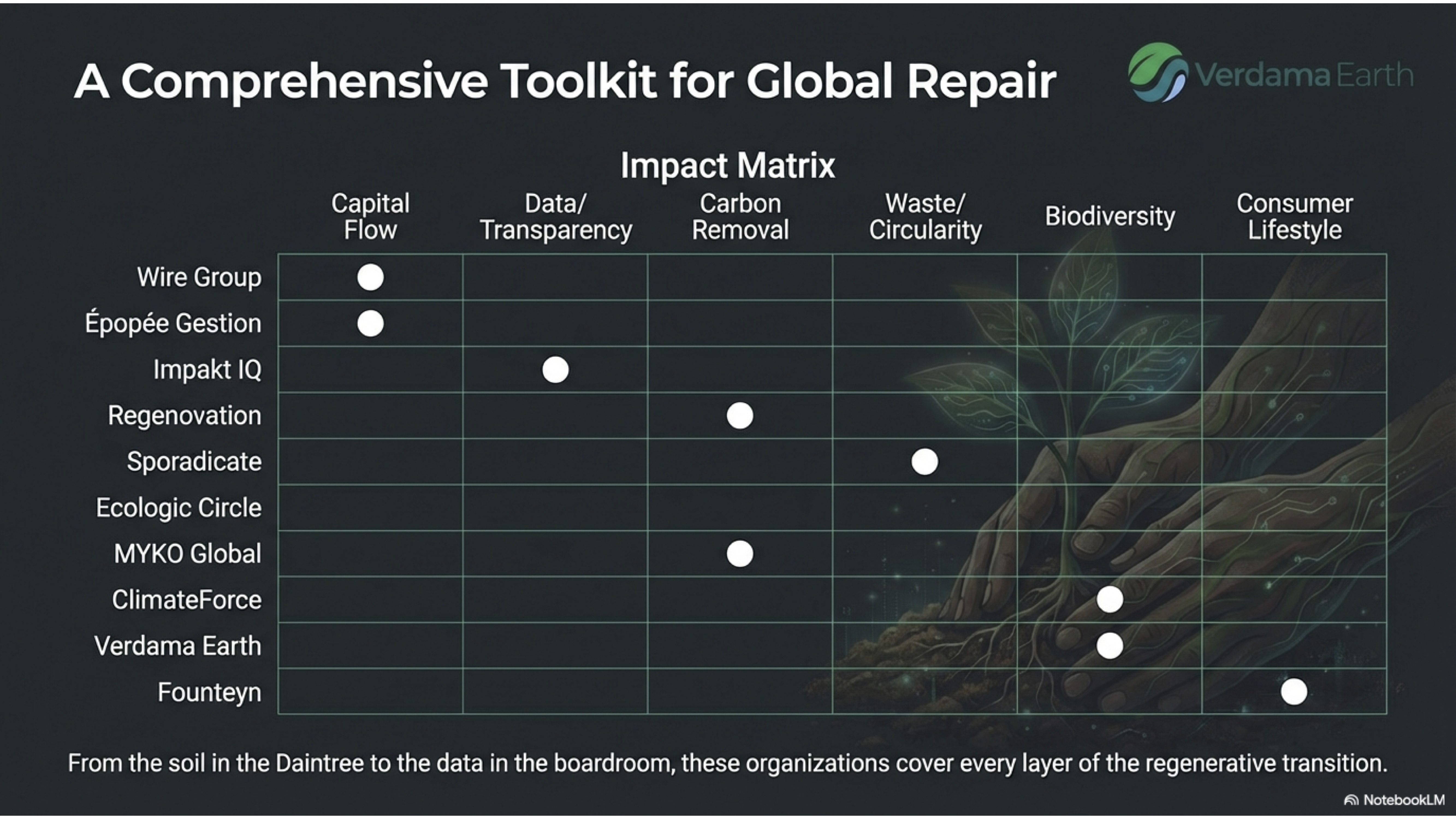
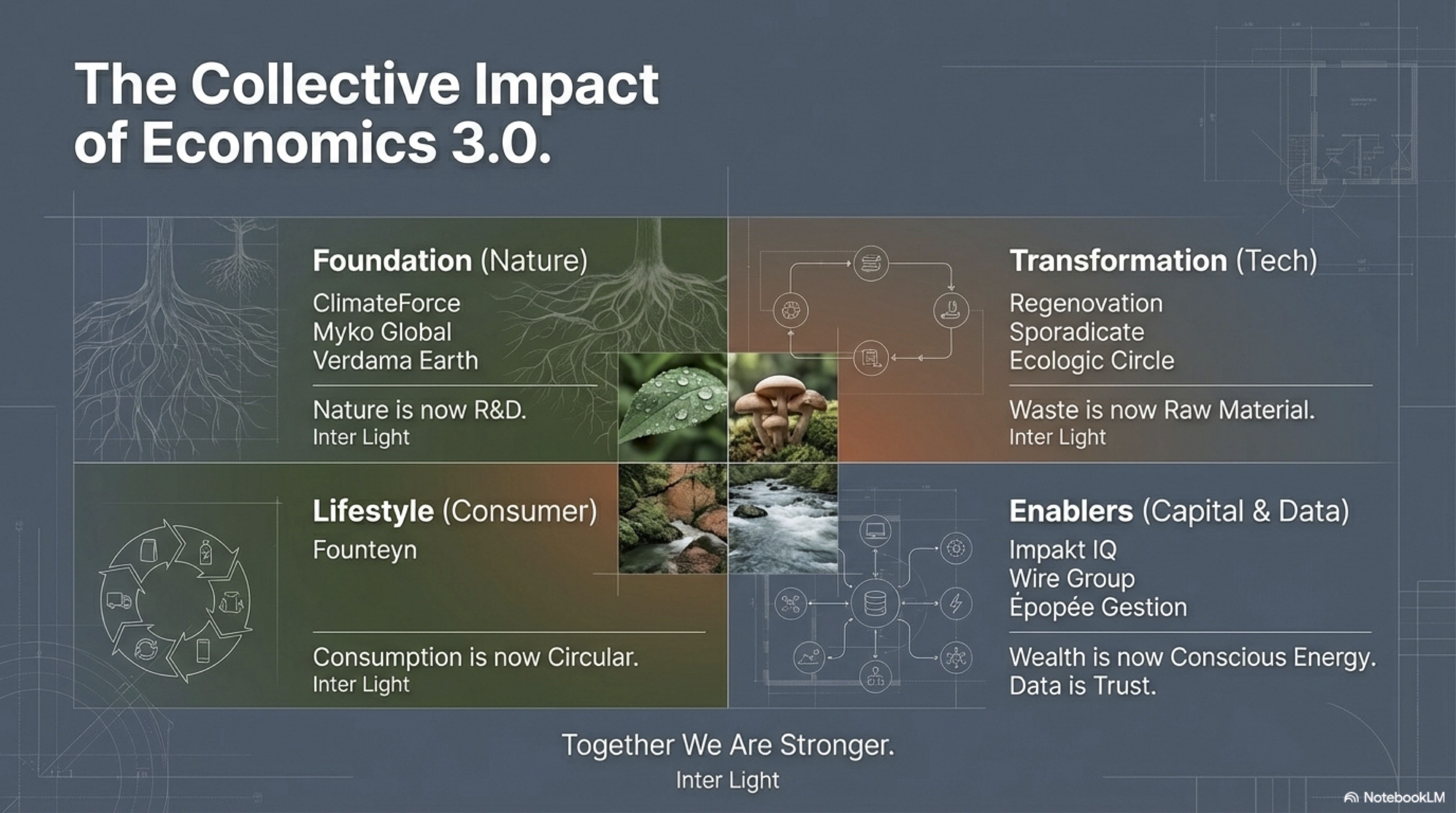
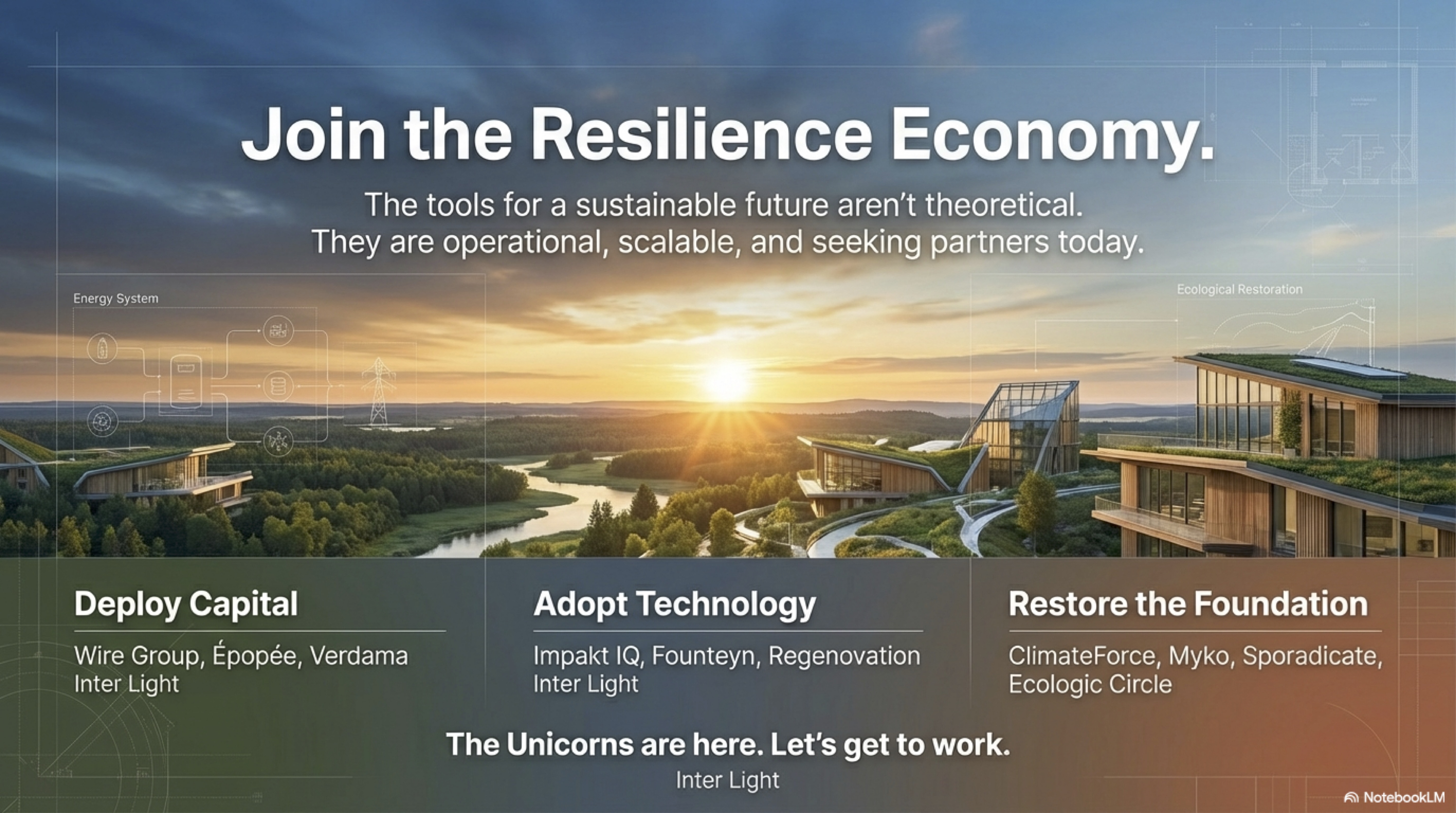
The next generation of billion-dollar companies won't just disrupt markets — they'll restore them. These 10 ventures represent the convergence of exceptional financial returns and genuine planetary healing. This is what the future of capital looks like.
While Silicon Valley obsesses over the next app to disrupt lunch delivery, a different breed of company is quietly building the future we actually need. These aren't unicorns in the traditional sense—they're something rarer: businesses that create value without extraction, solve problems without creating new ones, and prove that profit and planetary healing aren't mutually exclusive.
Many say they can't find true impactful companies or funds. Where are they looking? There are many solutions. TBLI Group has no problem in finding and assisting these true impactful companies and funds.
The Top 10 Impact Champions
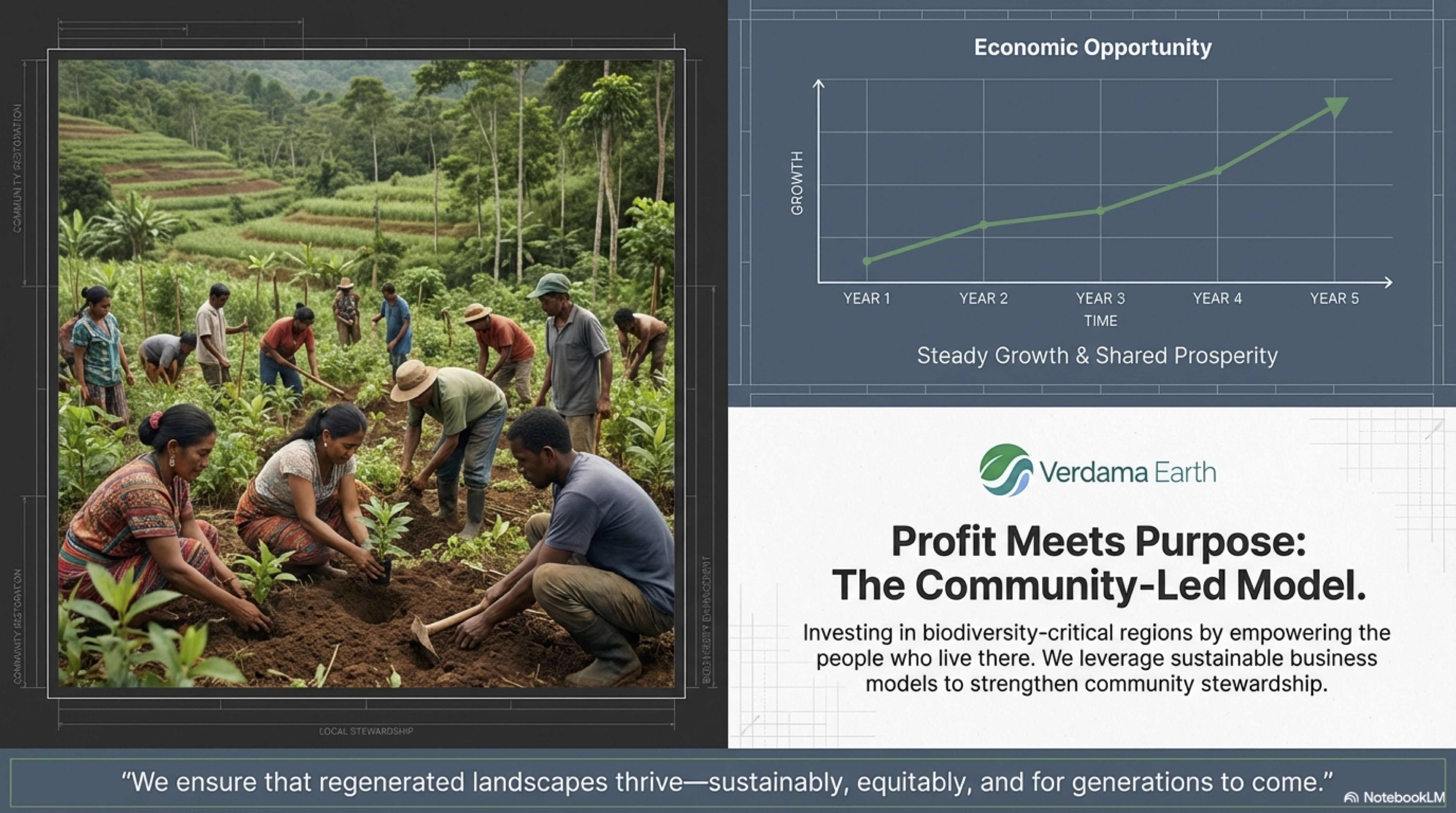
01 | Verdama Earth"The Planet's Balance Sheet, Finally in the Green"
Verdama Earth is rewriting the relationship between land, life, and financial value. Operating at the intersection of regenerative agriculture, biodiversity, and institutional investment, Verdama turns ecological health into one of the most compelling asset classes of our time.
Founteyn reimagines how resources move through communities and ecosystems. Like water finding its level, this platform ensures impact capital reaches exactly where transformation is most needed — and most profitable.
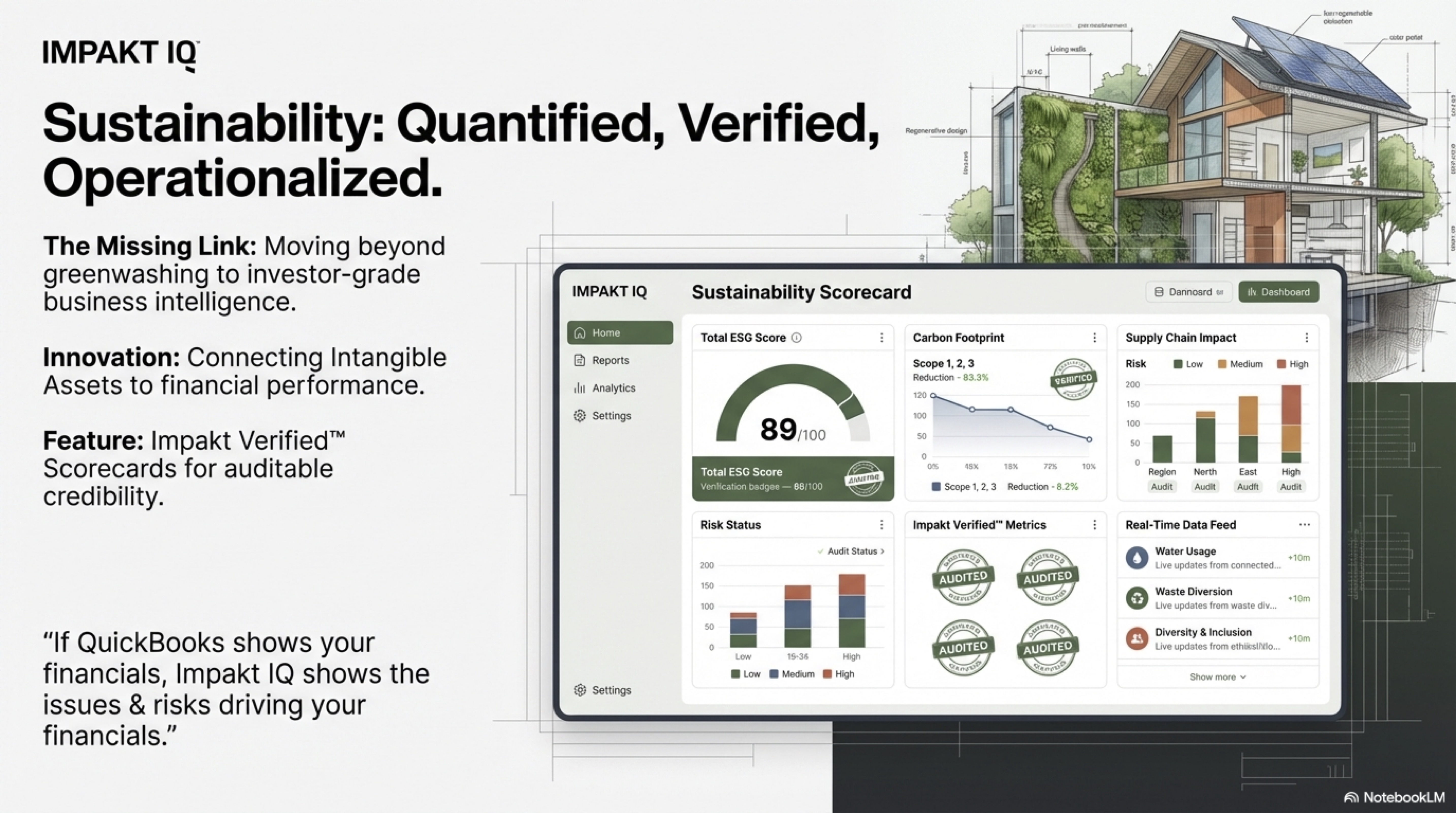
03 | IMPAKT IQ"Measuring What Markets Have Always Missed"
You can't manage what you can't measure. IMPAKT IQ brings rigorous intelligence to impact investing, giving institutions and fund managers the data backbone to make decisions that are both financially sound and genuinely world-changing.
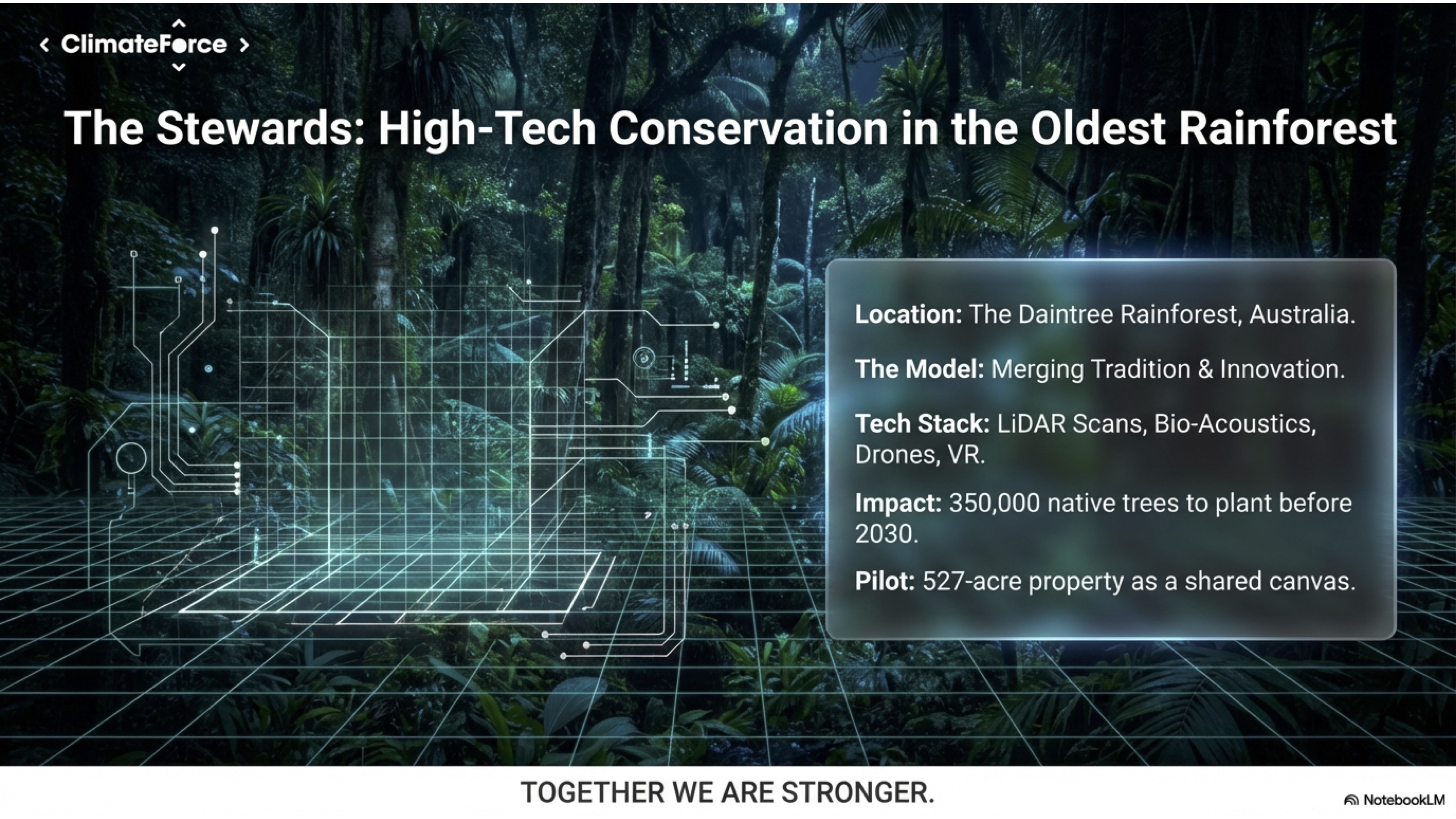
04 | ClimateForce"The Infrastructure of a Livable Planet"
ClimateForce doesn't just measure the climate crisis — it mobilizes the response. Built for scale, speed, and systems change, this is the operating system for the net-zero economy every corporation, city, and fund will need to run on.
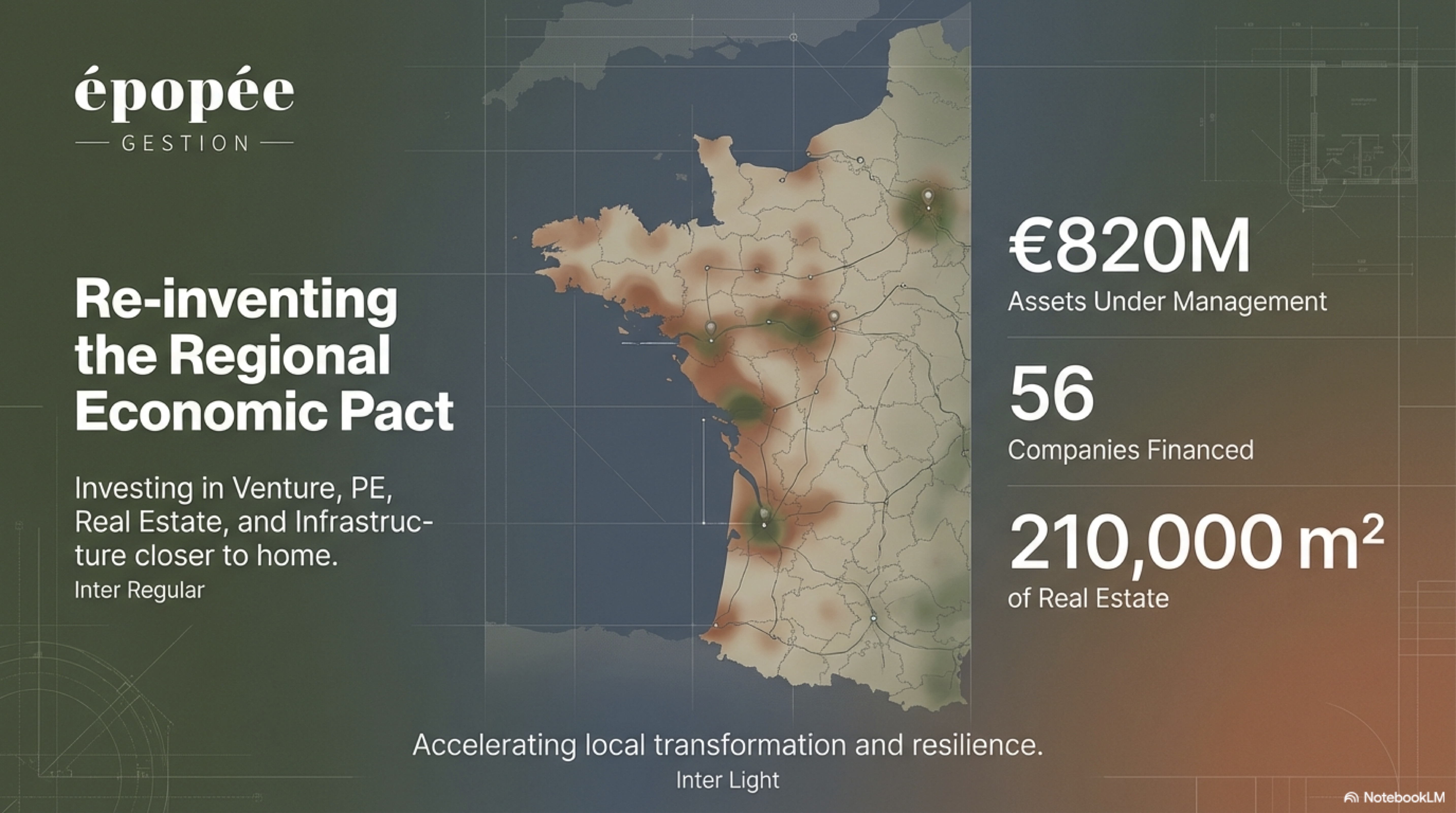
Great transformations require great conviction. Épopée Gestion — meaning "epic tale" in French — backs founders with the courage to build long, build deep, and build for a world worth inheriting. This is impact investing with narrative, nuance, and nerve.
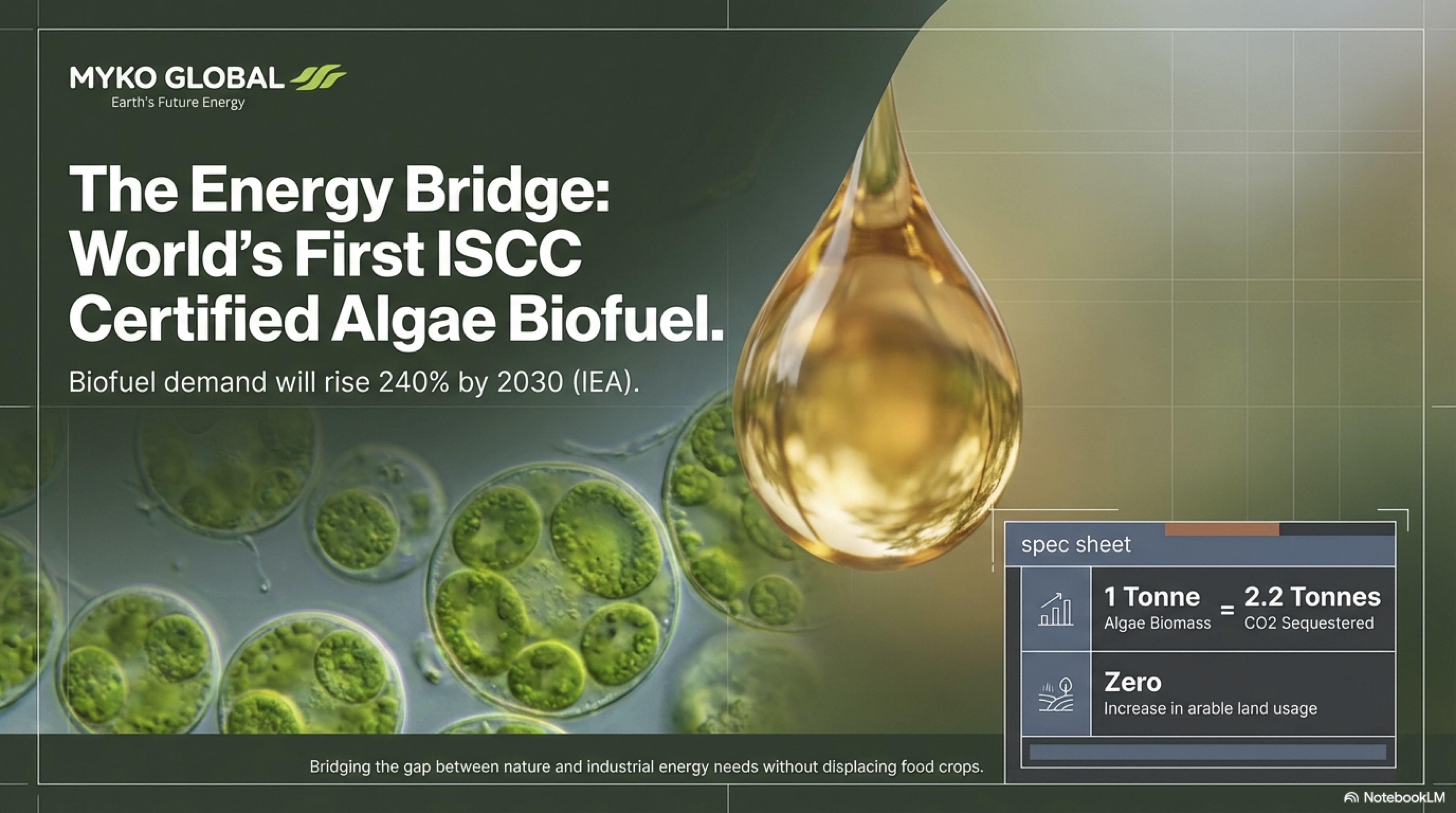
06 | MYKO GLOBAL"Nature's Most Ancient Network, Powering Tomorrow's Economy"Myko Global draws its inspiration from the mycelium networks that have sustained life on Earth for half a billion years. By harnessing nature's own energy intelligence, they are building the clean energy infrastructure of the next century.
07 | Ecologic Circle"Turning Smoke Into Solutions, Ash Into Assets"
Every season, millions of acres of rice crop stubble across Asia are set ablaze — pumping greenhouse gases into the atmosphere while destroying the very soil that feeds billions. Ecologic Circle reverses this with elegant simplicity: converting crop residues into market-ready products that decarbonize agriculture and replace plastic at scale. Farmer livelihoods rise. Fires stop. Soil breathes again. This is the circular economy not as philosophy — but as precision business.
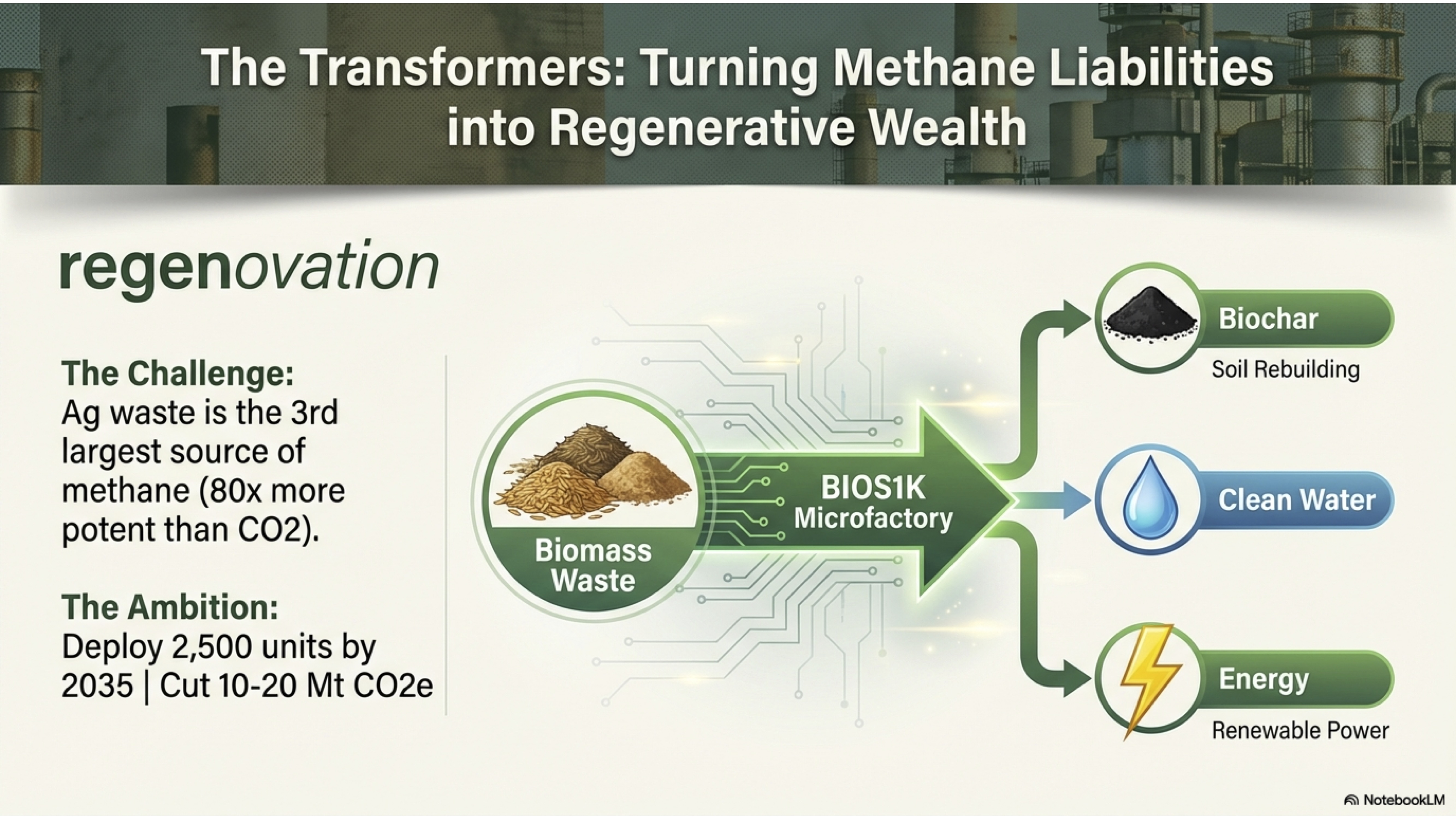
Regeneration and innovation have finally merged into one word — and one business model. Regenovation is pioneering the regenerative economy where restoring soil, communities, and ecosystems is not the cost of doing business. It IS the business.
09 | wire group"Connecting the Capital That Changes Everything"
Wire Group is the quiet connective tissue behind some of the most consequential impact deals being made today. Where others see silos, Wire sees circuitry — linking investors, innovators, and institutions into a living network of purposeful finance. 10 | Sporadicate"Seeding Ecosystems. Scaling Abundance."
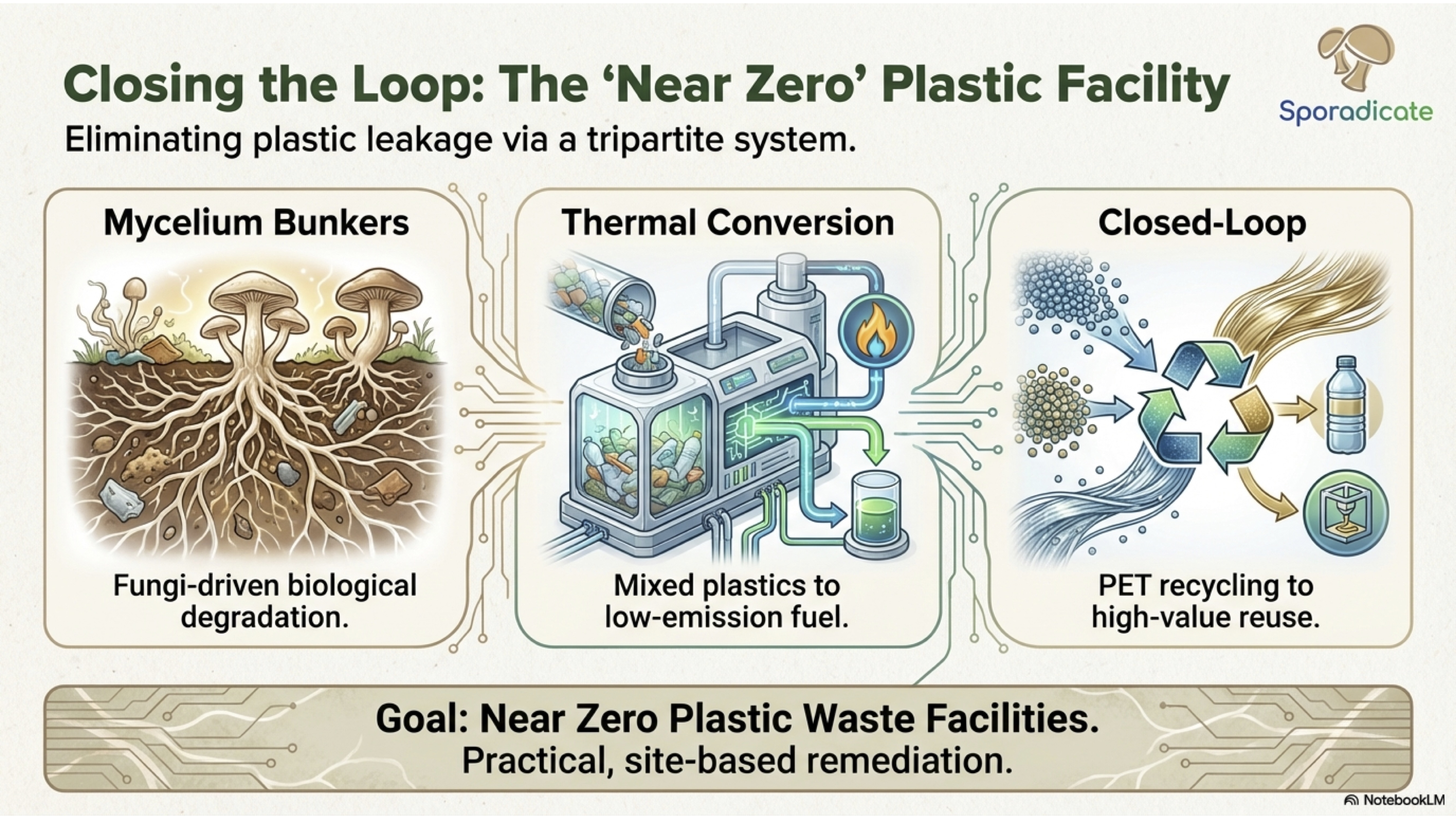
Inspired by the intelligence of spores — nature's most resilient and far-reaching distribution system — Sporadicate is building the networks that allow regenerative solutions to spread, root, and flourish at global scale.
These are not charities with business models. They are businesses with a conscience — and the financial fundamentals to match. The question is whether your portfolio reflects that.
99 Stories of Progress from the Year of the Wood Snake from Fix The News
Angus Harvey and his brilliant team at Fix The News consistently bring us joyful and uplifting news. Here is a comprehensive collection of positive global developments across health, sustainability, wildlife conservation, renewable energy, and scientific breakthroughs that challenge doom-scrolling narratives and demonstrate humanity's capacity for care, collaboration, and transformative problem-solving.
1. Disease Elimination-It takes years of dedication and multi-agency coordination to eliminate a disease, and yet 17 countries hit that milestone in 2025 - the most in one year ever. Trachoma bit the dust in Egypt, Mauritania, Senegal, Burundi, Fiji. The first-ever ‘triple elimination’ by the Maldives. Brazil became the first country of over 100 million to stop mother-to-child transmission of HIV. The list goes on.
2. Disease Reduction-Deaths from the world's deadliest infectious disease, tuberculosis (down 29% since 2015) may be set for a continued decline with the introduction, in 80 countries, of mobile x-ray units linked to an AI program. Signs of tuberculosis are highlighted in vivid, heat map-like scans, revealing cases that would otherwise go unseen.
3. Disease Prevention-Having declared 2024 the 'highest-ever impact year for immunisation' The Gavi Alliance maintained impressive momentum throughout 2025: $9 billion secured to immunise 500 million children by 2030, and an extra $90 million freed up for their focus on malaria, with a negotiated 25% price cut in the R21 vaccine.
4. Disaster Response-What do Ebola outbreaks and natural disasters have in common? We're ready for them. In the first half of 2025, 94% fewer people died in weather-related disasters compared to the historical six-month average. And in September an Ebola outbreak in the Democratic Republic of the Congo was isolated and sequenced in just 24 hours.
5. Cleaner Air-Are we entering the clean-air-ocene? Global concentrations of sulphur dioxide, nitrogen oxides, carbon monoxide and organic carbon are all falling. The EU has been smashing clean-air pledges ahead of schedule. And the average citizen now lives 2.9 years longer in China thanks to air-quality reforms.
6. A New Era of Global Health-“For the first time in our species’ history, infectious disease is not the dominant threat," proclaimed The Lancet in October in a sweeping analysis revealing a new era of global health. Deaths from TB, diarrhoea and HIV have plunged by between 20% and 49% since 2010.
7. Feeling Safe-"Do you feel safe walking alone at night in the city or area where you live?" Gallup has asked globally since 2006. Their 2025 report cited the highest positive response yet. Yes: 73%. Asia-Pacific, Western Europe, Latin America, Caribbean and sub-Saharan Africa all showed an uptick.
8. Poverty Reduction--Millions of people across the world are escaping poverty. Last year UNICEF reported 95 million fewer children living in poverty since 2014, and India declared the 60-million-strong state of Kerala free of extreme poverty. Mexico, Nepal, Iraq - just three of 12+ other countries recording impressive drops.
9. Better Living in Brazil-33 million Brazilians went to bed hungry just three years ago - now it’s off the hunger map. Social cash transfers have played a decisive role in lifting 6.5 million out of poverty since 2022, and poverty reduction in turn has driven a 60% drop in teenage births in the country since 2000.
10. Less Violence-Last year World Bank data revealed a 25% fall in the global homicide rate since 2000. In the US the murder rate fell to its lowest level in 70 years. Nevertheless, media splurges coverage on terrorism and murder, leaving the real killers - heart disease and cancer - in the shadows.
11. Child Welfare-Laws banning child marriage have proliferated across Asia, Africa and Latin America over the past year, and the 70+ list of countries banning corporal punishment grew longer, with the addition of the Czech Republic and Thailand. Meanwhile the global under-five mortality rate has fallen by over 50% since 1990.
12. Record Harvests-Population growing, soil depleting, a gnawing sense that global famine is just a few failed harvests away. But what does the data say? Record levels of wheat, rice and soybean production. Same for pears and lemons. Coffee and corn set for record highs in 2025-26. The global larder is well-stocked.
13. Rice Breakthroughs-2025 gave us three rice production breakthroughs with huge potential impact for this primary global staple: a Chilean cultivation innovation that cuts water use in half; discovery of a gene in a hardy Indian variety that skyrockets heat tolerance; a new strain that reduces methane emissions by 70%.
14. Smart Tech-We're meeting the challenges of a changing climate in extraordinary ways. Last year, 38 million farmers across India received 30 days’ notice of the arrival of the monsoon, accurately predicted by machine learning. In Nigeria, smart irrigation is delivering consistent flows despite unpredictable rains.
15. Simple Tech-'Smart’ tech isn't always about algorithms. In Chile's Atacama - the planet’s driest desert - fog nets are harvesting coastal mist to supply 1,400 litres of water daily for production, and a simple mix of yeast, sugar and water that attracts predator insects is fast becoming cotton's low impact pesticide.
16. Free Meals for Kids-We’re seeing a growing global focus on nourishing young minds and bodies with national school meal programmes now serving 466 million children worldwide, up by 80 million since 2020. Most impressive? Indonesia’s plan to feed all 80 million of its schoolkids, which kicked off last year.
17. Water, Sanitation Access-In August the WHO and UNICEF served up a bucket of welfare wins. The decade from 2015 saw one of the fastest expansions of basic services ever recorded: 961 million people gained safe drinking water, 1.2 billion gained safe sanitation, 1.5 billion gained access to basic hygiene. Health and dignity on the rise.
18. Electricity Access-“Keeping the lights on” is tricky if you’ve never had access to electricity. Fortunately the number of humans in that category dropped by 292 million in the last decade, despite a corresponding global population rise of 760 million. Kenya, Nepal, Mozambique all significantly increased access in the last year.
19. Solar Health-Solar energy, a major facilitator of humanity's increased access to electricity, is also playing a pivotal role in remote health. Solarisation in Zambia, Ethiopia, Uganda, Malawi and Pakistan is enabling 24 hour patient care and providing the consistent 2 to 8 degrees Celsius required for vaccine storage.
20. Solar Food-As they soak up the sun, solar panels provide an unanticipated service to agriculture: shade. Strawberry growers taking advantage of 'agrivoltaics' are reporting 18% increase in yields, and South Korea has incorporated the growing of cabbages around solar arrays into their food security strategy.
21. Education Access-UNESCO reported a global surge in girls’ access to education. And support is growing for the Convention on the Rights of the Child - the most widely accepted human rights treaty globally - to expand its education guarantee to obligate free schooling from pre-primary through to secondary.
22. Free Transport-What’s the benefit of giving someone a free ride? Iowa City scrapped bus fares in 2023. The result: 2.9 million fewer kms driven by residents, 24,000-tonnes less CO₂ emitted, and an economic breather for all. Aiming for similar metrics, Ireland has introduced free public transport for under nines.
23. Teeming with Turtles-Northwest Africa Loggerheads, Mexican Kemp’s Ridleys, Indian Olive Ridleys, Pacific Green Turtles, all demonstrating exponential increase thanks to conservation efforts. And successful reintroduction of freshwater turtles to their former haunts in Brazil and Poland. It’s turtles all the way up.
24. Returning Fish-Waterways are welcoming back their former inhabitants: salmon swim in England's Don River and the headwaters of the Klamath for the first time in 100+ years. Bluefin tuna surge back to Cornish waters. Lake sturgeon evade extinction's net, resuming their keystone role in the Mississippi Basin.
25. Rat-Free Islands-There's no shortage of rats on Planet Earth, but some species need that shortage in order to take wing again. Endangered Palau Ground Doves and Tongan Herald Petrels are just two of countless bird species that are on the rise after successful rat eradication on islands and atolls across the Pacific.
26. Cranes vs Storks-Cranes and storks are fighting it out in the dramatic turnaround championships. Black-necked cranes, China, record numbers. White stork nestlings, Denmark, same. Common cranes return to Scotland after 300 years. Captive-bred adjutant storks revive wild colonies in Cambodia. Who's winning? Everyone.
27. Reviving Raptors-White-tailed Golden Harpy! Not a bizarre insult, but names of eagles that have returned to their former habitats in England, Scotland and Brazil. Like Cheshire's rebounding barn owl, and the revived Red Kite of northern Spain, they owe their resurrection to years of dedication by passionate humans.
28. Dragons & Frogs-25 Blue Dragons. 100 Dusky Gopher Frogs in a single pond. Macabre potion ingredients? Nope. The remaining members of these two species before conservation efforts turned their numbers around. 7 Red and Yellows? Captive-bred tree-frogs successfully making their way in Australia's Gondwana Rainforest.
29. Christmas Crabs-Return of the Red Crab - a Christmas Story. The famed march of the millions, an annual stream of red crabs across Christmas Island, was nearly eradicated by the invasive Yellow Crazy Ant. Now restored by the introduction of the Malaysian Micro-wasp. Is this conservation? Maybe not, but it worked.
30. Healthy Herds-Herds are returning to the great grasslands. Saiga antelope on Central Asia's Golden Steppe grew from just 30,000 in 2006 to nearly 4 million today. The 39 Milu deer reintroduced into China's Dafeng Milu Reserve in 1986 now number 8,500. European bison: from 54 in the 1920s to 10,000 roaming today.
31. Bears & Wolves-Golden Jackals 46%. Eurasian Wolves 35%. Brown Bears 17%. Wolverines 16%. Trumping them all - Iberian Lynx 1,900%. Sports team betting odds? No, increased numbers of Europe's wild predators since 2016, marking their stunning comeback. Wolves, bears and pumas are also steadily on the rise in the US.
32. Cats Bounce Back-Snow leopards in Himachal Pradesh, asiatic lions in Gujarat, jaguars in Mexico, Argentina, Brazil, tigers the world over. Populations of these big cats in the wild are all increasing. The 60% rise in tiger numbers since 2010 brings long hoped-for confirmation that global recovery is within reach.
33. Dogs to the Rescue-Dogs. Far from extinct, but due a special mention for their services to other animals. In South Africa and Zimbabwe Welsh-trained police dogs are successfully tracking Rhino-hunting poachers. And in the Pacific Northwest, sniffer dogs on boats are helping monitor endangered southern resident orcas.
34. High Seas Treaty-Uniting the world in protection of the oceans beyond national boundaries, the High Seas Treaty started last year with just 14 of the 60 ratifications needed to bring it into force. By May that number doubled. It hit 50 in June. The magic moment: September 19th, Morocco the 60th to ratify. Huzzah!
35. Marine Protected Areas-French Polynesia's 2025 announcement of 5 million km² of marine protection (the world's largest) was a big splash in a global shower of such agreements made by a roll call of countries from Spain to Samoa. A huge expansion of sanctuary for fragile reefs, seagrass meadows and all species of swimmers.
36. Indigenous Marine Protected Areas-In September plans were announced for the Melanesian Ocean Reserve, the world’s first Indigenous-led marine protected area stretching across the Solomon Islands, Papua New Guinea, Vanuatu and New Caledonia. It will bring a marine area the size of the Amazon rainforest under Indigenous governance.
37. Preventing Overfishing-Does marine protection actually prevent illegal fishing? A new global study tracked ships with advanced satellite technology has answered that question with a resounding 'Yes'. This aligns with news that marine agreements have all but eradicated overfishing in the territorial waters of the US.
38. Reef Relief-There's hope in the water for our planet's beleaguered reefs. A team in the Maldives has pioneered a portable coral hatchery, rearing more than 3 million larvae and successfully deploying more than 10,000 juvenile corals. The project offers exciting restorative promise for reefs across the Pacific.
39. Booming Stocks-England's coastline saw bottlenose dolphins calving last year for the first time in decades and grey seal populations hitting record numbers. Greece's Mediterranean monk seals have dived off the 'critically endangered' list. Humpback whales off Eastern Australia’s coast now exceed pre-whaling numbers.
40. Shark Protection-The movie Jaws may have locked the eternal terror of the shark in the human psyche, but these exquisite ancient fish have a lot more to fear from us humans. Fortunately 2025 saw the unveiling of a global shark “de-extinction” programme and extra protections in Mexico's waters and the Indian Ocean.
41. Bottom Trawling Bans-The unpleasant-sounding practice of bottom trawling is an unseen scourge of seafloor ecosystems. Happily 2025 saw a wave of bans in national protected waters from Sweden to Australia and an international resolution to end bottom trawling on the underwater biodiversity hotspots known as seamounts.
42. Less Litter-Ocean Cleanup has now removed 20 million kg of plastic from the world's waters since 2013. They also have a new goal: one third less plastic outflow from the world's 30 most polluted rivers by 2030. Meanwhile the EU and Australia reported a drop in marine litter of around 30% over the past decade.
43. Better Ships-The first ever binding targets for global shipping emissions were signed in April. They will no doubt be aided by vessels like China's Gezhouba, a fully electric 13,000 tonne cargo ship launched in October. And we have less to fear from oil tankers: data shows a 97% drop in spills since the 1970s.
44. Deep Sea Wonders-2025 revealed new wonders in the deep: first-ever footage of the elusive colossal squid; whole new ‘chemosynthetic' ecosystems that survive beyond the reach of sunlight; iridescent armoured worms and carnivorous "Death-ball" sponges - two of the 30 new species spotted in the Southern Ocean depths
45. More Power than Coal-Remember this: history was made in 2025. Renewables produced more power than coal globally for the first time ever. Wait, what about the 603 TWh rise in global electricity demand? How are we keeping pace with that? Solar and wind surpassed it, generating 635 TWh in the first nine months of the year.
46. The Sun is the One-Renewables are winning as a team, but solar is definitely king. We are now putting up 1GW of solar panels every 15 hours (roughly the same GW as one coal-fired plant). 2025's first-half-of-year installations were up 64% on 2024. Alternative no more, solar is transforming the global energy system.
47. Solar Innovations-Solar is surfacing in all shapes and sizes: vertical solar floating on a Bavarian quarry lake, offering storm resistance and benefits to aquatic life; shade-giving solar now required by law over South Korean carparks; a solar park 7 times the size of Manhattan spanning the world's highest plateau.
48. Solar’s Other Benefits-As solar spreads, we're discovering the ecological benefits of the panels themselves: solar-over-canal systems combating drought in California; British bumblebees finding refuge in wildflower-sown solar farms; shade from solar arrays boosting soil and vegetation health in China's Talatan Desert.
49. Market Rules-Renewables are winning the money game. Solar and battery prices are on a joint downward spiral as the cost of fossil fuel generation continues to rise. Clean energy roles also accounted for 82% of all new American energy jobs last year, expanding three times faster than the overall workforce.
50. Transformative Batteries-Round-the-clock power was the fossil fuel trump card that solar could never beat. Today sun-soaked cities like Las Vegas and Muscat, Oman can hit that steady power mark year round. And with batteries rapidly improving as their prices plummet, the solar-battery combo is now reshaping grid planning.
51. China’s Historic First-Ωn the global climate story, China is the main-stage event. For years they've been in a race to eclipse their titanic emissions with green energy proliferation, both at home and abroad. And then last year a historic first: China's carbon emissions began falling even as power demand grew. Hope.
52. India Surges Forward-Last year India surged from behind the pack to overtake Germany as the world's third-largest generator of wind and solar electricity. This year record installations of renewables and reductions in coal power secured their Paris pledge of 50% clean power capacity, five years ahead of schedule.
53. Less Fossils & Costs-Coal was surpassed by wind-plus-solar in the US in May, by solar alone in Australia five months later. The UK, having doubled solar energy generation in the first half of the year, then banned new oil and gas exploration, and reported wind power's £104 billion slice off UK energy costs since 2010.
54. Africa Soaks up the Sun-After 30 African heads of state agreed on expanded access to reliable, affordable, sustainable electricity, the first half of 2025 saw a record 15GW import of solar. The continent's green energy transition subsequently received a double boost: $4.2 billion in philanthropic funds; $15 billion from the EU.
55. Global South Gains-The Global South is now leading the clean-energy revolution as risks of fossil-fuel dependence increase. Alongside the rapid rise of renewables in Africa, 2025 saw Iran commit $2.3 billion to solar expansion, and Oman double its share of renewables in its bid to become a global green-steel hub.
56. Forest Protection-2025: a big year for forest protection - from the creation of "The World’s Largest Forest Reserve" (540,000 km² stretching across the Congo) to the $6.6 billion raised for November's launch of the Tropical Forest Forever Fund, a public-private purse that pays countries to protect their forests.
57. Declining Deforestation-The FAO released a new report showing that global deforestation has been declining for the last 30 years, and forest restoration is on the up. 49 countries now have 2030 forest-restoration targets covering 1.77 million km², including Brazil, whose plan funds Indigenous communities to restore 12 million hectares of the Amazon's "arc of deforestation".
58. Amazon Protections-Hope for the ‘Earth’s Lungs’ grew in 2025. Colombia declared its entire Amazon biome, 42% of its territory, a reserve for ‘renewable natural resources’. Peru protected half its northern Amazon carbon in a new reserve. Brazil, Bolivia, Columbia and Suriname all enacted bold new forest protections.
59. Indigenous Governance in the Amazon-Indigenous governance is becoming central to conservation across South America. For example, last year In Ecuador and Colombia land rights wins by the Kichwa secured thousands of hectares of primary rainforest from logging and mining, and landmark rulings protected the lands of uncontacted tribes.
60. Indigenous Governance in Canada-A milestone in returning governance of land to its original caretakers, Canada's deal with 21 Indigenous governments in July protected an area larger than Germany. And March saw British Columbia's Supreme Court side against a logging giant to grant authority over ancient forests to the Haida Nation.
61. New National Parks-So many new national parks in 2025, amongst them: Argentina's Patagonia Azul Provincial Park, Australia's Great Koala National Park, Chhayanath National Park (Nepal's 13th) and Poland's Lower Oder Valley National Park, a wetland-rich reserve hosting 237 bird species and more than 460 plant species.
62. Chinese Park Proliferation-Having created its first national park just four years ago, China announced a plan in June to achieve a network of 49 parks covering 1.1 million km² by 2035. Priorities of the plan include ecological connectivity, Indigenous rights, and protection for species like pandas, tigers, and snow leopards.
63. International Collaboration-When precious landscapes spread across national boundaries, conservation calls for next-level collaborations. Mexico, Guatemala and Belize responded to that call last year with the creation of the 57,000 km² Great Mayan Forest bio-cultural corridor, protecting habitat for jaguars and scarlet macaws.
64. Pangolin Reprieves-A double reprieve for the Pangolin last year: West Africa's strongest wildlife law to date passed in Nigeria; China's removal of the scaled marvel from their official medicine guide. Meanwhile new data shows China's 2018 ivory ban led to a roughly 50% fall in elephant poaching across 43 countries.
65. Humans in Nature-From Solomon Islanders' defence of their untouched forests to small farmers restoring land up to 20 times more effectively than NGOs, 2025 gave us further proof that - contrary to old top-down 'wilderness' ideologies - biodiversity improves where humans actively engage with the land as custodians.
66. Rewilding Revolution-2025 showed us that the rewilding revolution isn't just a boon for non-humans: we saw beavers providing flood-protection, a Sierra Leone chimpanzee reserve securing human water supply, ecosystem renewal reviving abandoned Spanish towns, and wetlands-restoration healing Ukraine's front-line fighters.