Welcome to TBLI Radical Truth, where knowledge inspires and we explore the untold stories behind the world's most influential platforms for sustainable finance, ESG, and global economic leadership.
In this episode, we're joined by Barbara Erskine, media and communications strategist who served as Director and Executive Board Member of the World Economic Forum for 10 years (1990-2000), where she led media outreach and transformed Davos into the world's most prestigious annual gathering of global leaders, CEOs, heads of state, and impact investors.
BARBARA ERSKINE'S CAREER HIGHLIGHTS:
Director & Executive Board Member, World Economic Forum (1990-2000)
European Editor, Wired Magazine
Former "right-hand" to Flora Lewis, Foreign Affairs Columnist, New York Times Paris Bureau
Media and communications specialist for French government and international organizations
KEY TOPICS COVERED:
🔹 The WEF Transformation (1990-2000) - How a small Swiss mountaintop meeting evolved into the world's most influential annual gathering for business, government, and civil society leaders discussing ESG, sustainable capitalism, and global challenges
🔹 Behind the Scenes at Davos - Insider stories of how the World Economic Forum operates, builds consensus among global elites, and shapes conversations around stakeholder capitalism, climate action, and sustainable development
🔹 Building Strategic Media Relationships - Proven strategies for establishing targeted media connections, launching global initiatives, crafting compelling messages, and securing lasting attention for impact-driven projects
🔹 The Power of Positioning - How strategic communications transformed the World Economic Forum from regional business conference to the defining platform for global economic dialogue and ESG leadership
ABOUT TBLI Radical Truth features frontline practitioners sharing practical knowledge on ESG integration, sustainable finance, and international development.
Tired of being the only one in the room who cares about non-extractive finance?
You're not alone. You just haven't met your people yet.
TBLI Virtual Mixer | March 27 | 16:00-17:30 CET
AI matches you with impact investors and entrepreneurs who:
✅ Share resources instead of hoarding them
✅ Believe collaboration > competition
✅ Measure success beyond IRR
✅ Actually mean "stakeholder value"
90 minutes with people who finally get it.
The ones building finance that doesn't require extraction. The ones who share, not take. The ones who've been looking for you too.
A story about memory, impact investing, and the audacity of "Chelsea Hartnett"
Let me tell you about the last couple of weeks. It started with nostalgia, took a sharp detour through LinkedIn fraud, and ended with me rediscovering that I apparently built something rather significant — which I had completely forgotten about. Classic.
It began with reconnecting with old friends. People I've known since practically the dawn of TBLI. We're talking veterans — private banking, family offices, sustainability — the kind of people who remember when "impact investing" was considered either radical, naive, or both. (Spoiler: we were both, and we were right.)
Over dinner, I was moaning about being stuck on several chapters of my book, Radical Truth. Specifically, the parts about how TBLI had been instrumental in reshaping the industry's thinking around sustainability and capital. The problem? I'd gone completely blank. Writer's block, but make it existential.
My friends stared at me the way doctors stare at someone who can't remember their own name.
"Have you… tried looking it up?"
Reader, I had not.
So I did. And I was gobsmacked. Never thought I would use that word. Project after project, initiative after initiative, client lists that read like a who's who of global finance. I had apparently been rather busy for several decades and then simply… filed it away in the mental drawer labelled "things from before." The chapters basically wrote themselves after that. Nothing like archaeological evidence of your own life to break writer's block.
But wait. Enter: Chelsea Hartnett.(If that is, in fact, her name. Which it is not.)
There I was, minding my own business, when a message arrived. A US recruitment firm. Two Dutch banks. Advisory board position. Impact investing thought leader needed. Well. Obviously, I responded.
Chelsea reviewed my CV and delivered her verdict with impressive confidence: it needed work. Not just any work — I needed a PRW. A Certified Professional Resume Writer. Executive board standards, blah, blah. I was poyfikt, as we said in Brooklyn, but would never make the cut with the resume I sent.
Now, I have been in this industry long enough to know when something smells off. But I'll confess: for a brief, humbling moment, I thought — maybe she has a point.
She did not have a point. She did not work for the recruitment firm. There was no advisory board. There were no Dutch banks. There was only Chelsea, a LinkedIn account, and what I can only assume is an extremely tedious business model.
Irritating? Absolutely. A waste of my time? Yes. But here's the thing about lemons.
Chelsea's fictional critique sent me back to that archive. All those forgotten TBLI projects. And I thought: actually, this resume does need updating — not because Chelsea said so, but because I forgot to put half my career in it.
So in a roundabout, deeply inefficient, slightly maddening way — reconnecting with old friends who reminded me of TBLI's legacy, plus one LinkedIn fraudster with a fake job — have together produced more momentum on my book and my CV than six months of good intentions.
The lesson? Sometimes inspiration arrives gift-wrapped. Sometimes it arrives disguised as a scam.
Either way: thank you. Genuinely. Even you, Chelsea.
👉 Follow Robert Rubinstein
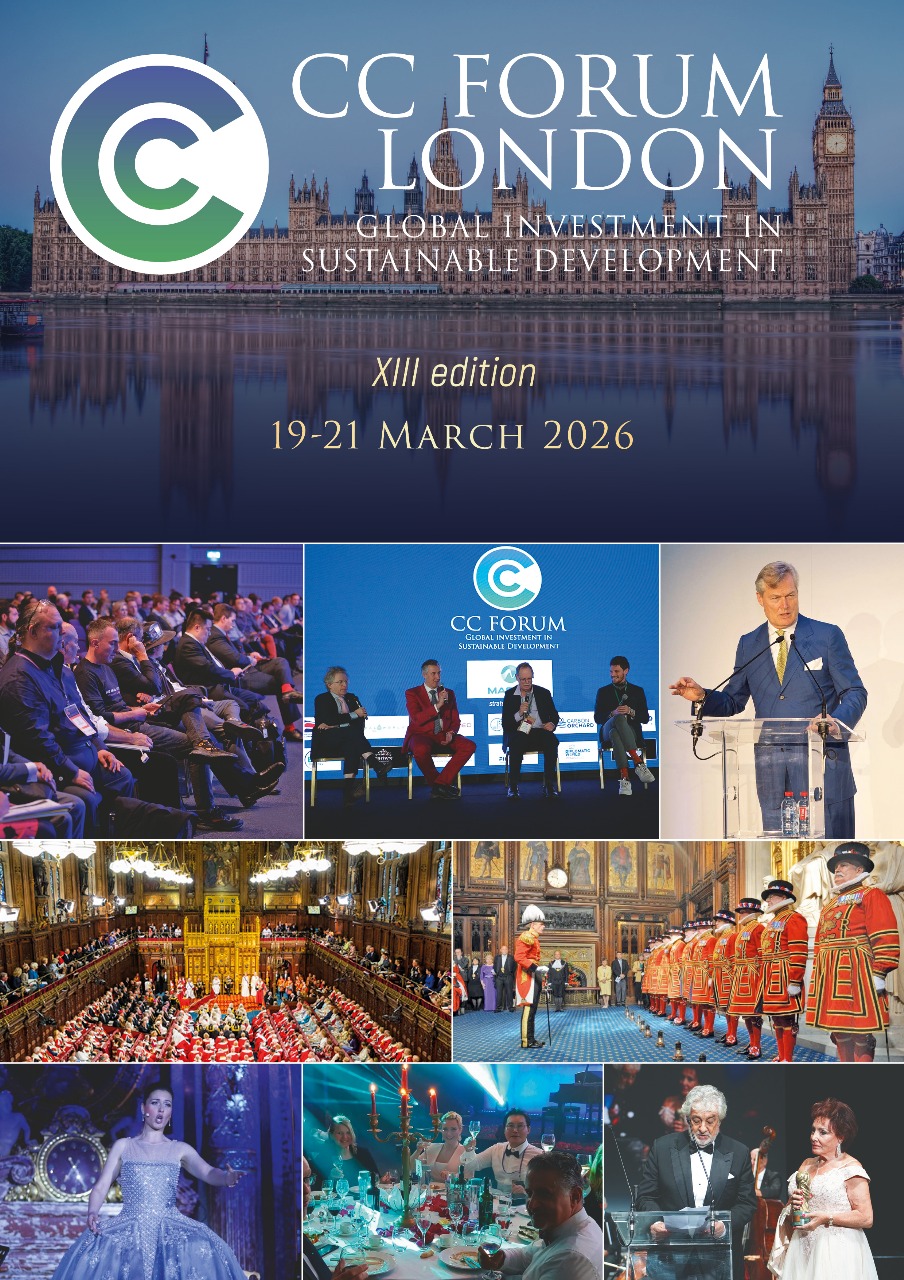
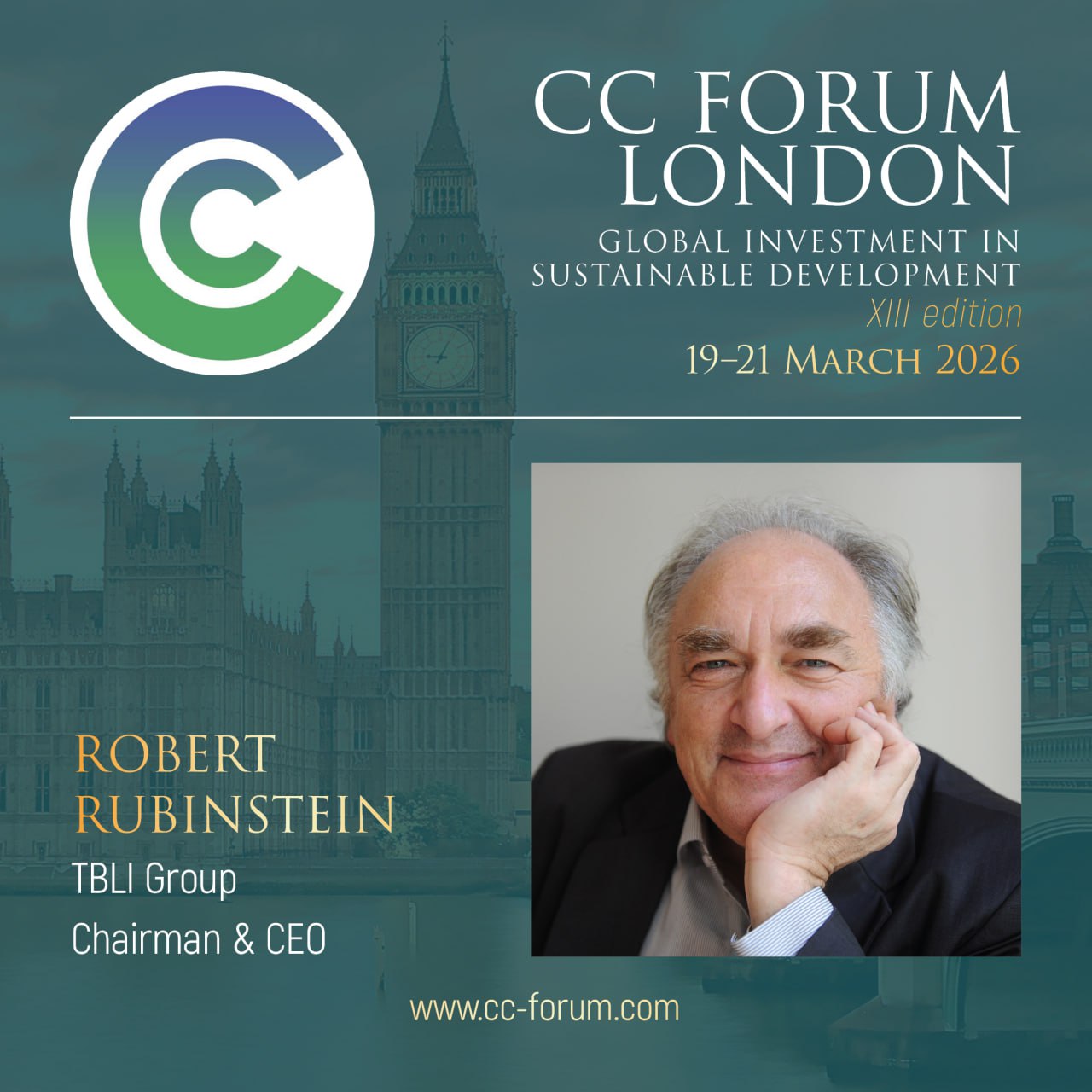
CC Forum "Investment in Sustainable Development" is returning to London on 19-21 March with its XIII global edition and will convene investors, business leaders, founders, dignitaries and visionaries committed to accelerating the transition towards a sustainable inclusive economy. www.cc-forum.com
I will be a keynote speaker there. Please join us
You can book your passes to attend CC Forum London by clicking this link:
and utilising the following dedicated discount codes:
TBLI15EXEC (access to the conference only)
TBLI15VIP (access to all the VIP events across the three days of the forum)
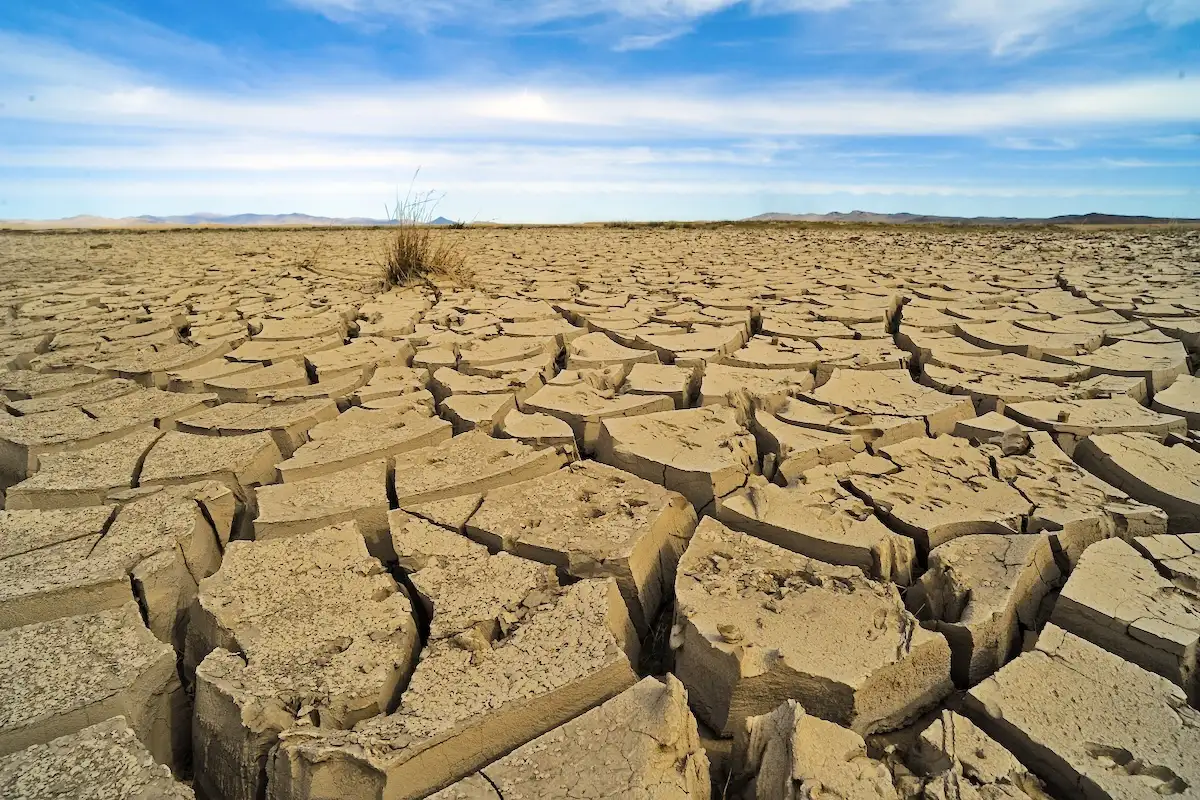
The Earth is warming at the fastest rate on record as emissions hit new highs and critical carbon sinks break down.
Carbon dioxide levels are at the highest point in at least 2 million years. While humans continue to pump ever greater amounts of carbon into the atmosphere by burning fossil fuels, the ability of the planet to soak up our emissions is weakening. Degraded by fire and drought, forests that were once carbon sinks are now becoming sources of emissions.
At the same time, a drop in aerosol pollution from coal generators and cargo ships is further driving up temperatures. Aerosols reflect sunlight, with a cooling effect. By cleaning up this pollution, countries have further hastened warming.
From 1970 until 2015, the planet heated up at a rate of 0.2 degrees C per decade. But over the last 10 years, temperatures rose by an unprecedented 0.35 degrees C, according to a new study published in Geophysical Research Letters.
Researchers controlled for the effects of volcanic eruptions, changes in solar output, and El Niño, finding that the recent acceleration in warming is not an aberration caused by natural swings in temperature but is consistent with the predictions of climate models.
Together, the past three years measured 1.5 degrees C warmer than the preindustrial era, putting the world at least temporarily in breach of a key target of the Paris Agreement. While the planet has not officially surpassed the Paris goal, which will be judged according to the average temperature over 20 years, overshoot is imminent. Beyond 1.5 degrees, scientists see a grave risk that the Earth will cross key tipping points, from the dieback of the Amazon rainforest to the thawing of Arctic permafrost, that would further accelerate warming.
“Stopping this trend is in our hands,” the new study concludes. “In the current political climate, however, it is quite possible that warming may continue its fast pace or even accelerate further.” At the current rate, they say, the world will breach the Paris target by around 2030.
The London Stock Exchange Group (LSEG) announced today the launch of LSEG Sustainability Ratings and Data, a new suite of ESG scores and sustainability analytics, aimed at enabling investors and financial institutions to measure how effectively companies manage material ESG risks and opportunities to support capital allocation decisions, benchmarking and engagement.
According to LSEG, the new solutions are being launched to help financial institutions meet the growing need to embed ESG considerations into automated and AI-powered workflows to meet sustainability reporting and regulatory needs, with the new ESG scores aligned with leading global sustainability frameworks and regulations such as ISSB, GRI, SASB and ESRS.
Rather than incorporating analyst judgement, LSEG said that the new ESG scores rely on rules based methodology and inputs, incorporating a set of 220 standardized indicators, and a “sustainability-first materiality matrix” which combine a redesigned industry classification with a double materiality approach at a business segment level. The dataset covers more than 16,000 companies, and over 1 million fixed income instruments, with metrics based on more than 2,000 underlying data points.
The scores rate companies on a scale of 0 to 5, assessing management of material ESG risks and opportunities across 12 themes, including climate transition, energy & resource use, biodiversity, water use, waste & pollution, labor relations, health & safety, human rights & community, board & engagement, shareholder rights, conduct & anti-corruption and tax transparency & accounting.
The new suite also includes ESG Scores Plus, which also incorporates controversies, sovereign ESG risk and positive environmental impact signals such as green revenues and sustainable financing, to extend analysis beyond traditional ESG assessments.
Elena Philipova, Director, Sustainability Solutions at LSEG, said:
“Our customers are consistently looking for sustainability insights they can explain, justify and integrate across the investment, lending and advisory lifecycle. By uniting 25 years of sustainable finance expertise, with datasets trusted by the global financial industry, we’re giving financial institutions the clarity and confidence to meet regulatory expectations, support transition-aligned capital allocations and build AI-ready ESG workflows.”