TBLI Radical Truth: Reimagining Organization with Professor Martin Parker
Welcome to the TBLI Radical Truth Podcast, where knowledge inspires and we explore the ideas, models, and strategies reshaping how organizations create meaningful, sustainable impact.
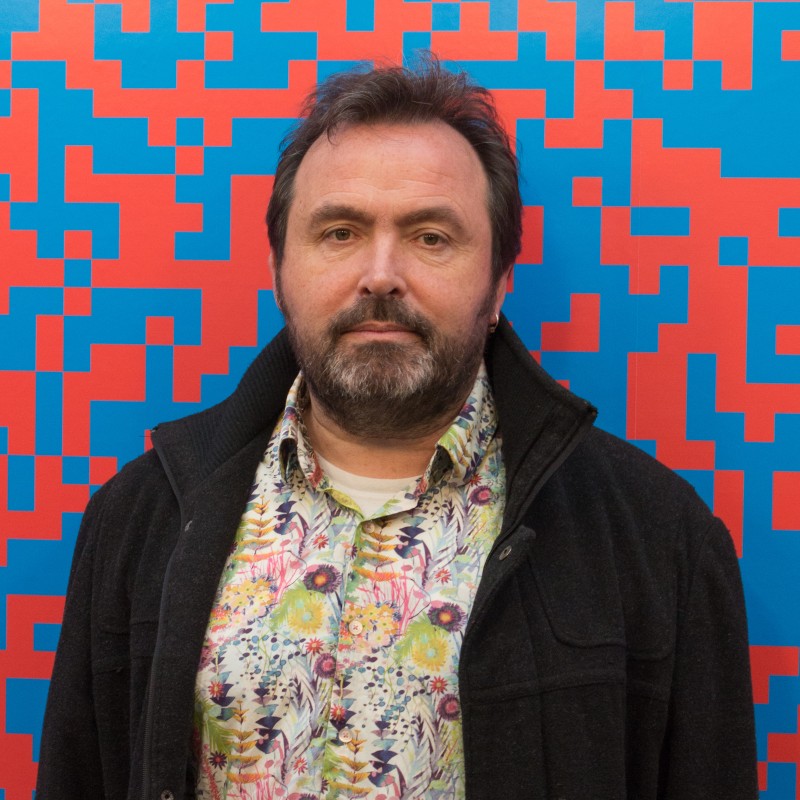
In this episode, we’re joined by Professor Martin Parker—scholar, author, and one of Europe’s most influential voices challenging the foundations of contemporary management education.
In “Reimagining Organization,” Martin takes us inside the hidden assumptions of Business Schools—how they promote narrow managerial thinking, reproduce neoliberal capitalism, and overlook powerful alternatives such as worker cooperatives, democratic enterprises, and inclusive economic models. He lays out a compelling case for shifting from traditional schools of management to schools for organizing that teach students to build fairer, more resilient, and more sustainable institutions.
Drawing on his leadership of the Bristol Inclusive Economy Initiative, Martin offers clear, practical insights on how universities can help drive low-carbon transitions, social inclusion, and ethical economic development.
The TBLI Radical Truth Podcast brings you conversations that challenge conventional wisdom and spotlight tools for building more equitable, responsible, and future-ready systems.
Let’s begin our conversation with Professor Martin Parker.
Stop hunting for allies. Find them instantly at the TBLI Virtual Mixer!
We're bringing together authentic, non-extractive leaders passionate about climate action and ESG. It's high-speed, high-impact networking powered by TBLI's matchmaking.
Text: Tired of vague term sheets, misaligned incentives, and culture over promise? trustvc.org is dedicated to fostering a VC ecosystem where founders can build without fear.
We champion the principles that guarantee you transparency, respect, and a genuine partnership. When investors commit to the TrustVC standard, they commit to honesty, clarity, and ethical behavior—every single time.
Demand better governance from your capital. Find the investors committed to the trust standard.
🔗 Learn how to vet VCs and join the founder-first movement at trustvc.org.
The biggest transitions in life—a major career pivot, a personal evolution, or a deeper dive into impact—are too complex to navigate alone.
If you’re seeking a change, the last thing you need is generic advice or transactional networking. You need clarity, specialized resources, and authentic allies.
tblicircle.com is the only focused community designed specifically for professionals and individuals in motion. We cut through the noise to deliver maximum value:
✅ Clarity & Direction: Gain actionable strategies from people who have successfully navigated similar shifts.
✅ Authentic Connection: Join a judgment-free space where peers share real challenges and true insights, fostering genuine mentorship.
✅ Values-Aligned Network: Connect with ESG, Impact, and purpose-driven professionals—your real tribe.
Forget isolating uncertainty. Invest in your most valuable asset: your support system and your next trajectory.
Join tblicircle.com today and transform your transition into your greatest ascent.
It's time we had an honest conversation about what prosperity actually means.
For decades, we've operated under a simple assumption: economic growth equals progress. More GDP, more jobs, more consumption—this is how we measure success. But what if this equation is fundamentally broken?
The modern concept of GDP was first developed by Simon Kuznets for a 1934 U.S. Congress report, where he warned against its use as a measure of welfare
The Growth Paradox
Here's something worth considering: since 1960, GDP per capita in the United States has more than tripled. Yet happiness levels have remained essentially flat. The average worker now needs to work longer hours to afford basic necessities than they did in the 1970s.
Meanwhile, the richest 1% has captured 38% of all new wealth created since 1995, while the bottom 50% has captured just 2%.
Something isn't adding up.
What We're Actually Measuring
GDP measures transactions, not well-being. When someone gets sick and spends thousands on medical treatment, GDP goes up. When a marriage ends in divorce and lawyers get involved, GDP goes up. When we dump waste in a river and then pay to clean it up, GDP goes up twice.
We're measuring activity, not value. Movement, not progress.
The Limits of the Growth Paradigm
The uncomfortable truth is that infinite growth on a finite planet is mathematically impossible. We're already seeing the consequences: climate disruption, biodiversity collapse, resource depletion. These aren't distant future problems—they're present-day realities affecting business operations, supply chains, and market stability.
Yet our response to economic challenges remains predictably uniform: more growth. It's like prescribing stimulants to treat an addiction.
A More Mature Economic Vision
What if we designed economies around a different question: not "How can we grow?" but "How can we thrive?"
This isn't about forced contraction or returning to pre-industrial conditions. It's about economic maturity—recognizing that healthy systems don't expand forever. They develop, adapt, and optimize for resilience and well-being.
In a post-growth economy:
Some sectors would expand (renewable energy, regenerative agriculture, healthcare, education, arts)
Others would contract (fossil fuels, planned obsolescence, extractive industries)
Success would be measured by health outcomes, educational achievement, environmental quality, equality, and time affluence
Productivity gains would translate into more leisure, not just more consumption
Innovation would focus on durability and circularity, not disposability
What This Means for Business
Forward-thinking organizations are already moving in this direction:
Measuring what matters: Companies are adopting stakeholder capitalism models, B-Corp certifications, and triple-bottom-line accounting that considers people and planet alongside profit.
Building for longevity: Businesses focused on durable goods, repair services, and circular economy models are finding competitive advantages in reliability and customer loyalty.
Investing in people: Organizations that prioritize employee well-being, work-life balance, and meaningful work are seeing better retention, productivity, and innovation.
Regenerative practices: Companies implementing regenerative agriculture, carbon-negative operations, and ecosystem restoration are building resilience while reducing risk.
The Real Wealth
Beyond a modest level of material security (around $30,000 per capita), additional GDP growth doesn't correlate with increased well-being. The happiest societies aren't the richest—they're the most equal, the most trusting, the most connected.
Real wealth includes:
Time affluence: Having enough time for relationships, health, creativity, and rest
Social capital: Strong communities and meaningful connections
Environmental health: Clean air, water, and ecosystems that support life
Purpose: Work that contributes genuine value, not just transactions
The Transition Is Already Happening
Whether we acknowledge it or not, growth rates in advanced economies have been declining for decades. The question isn't whether growth will end, but how we'll manage the transition.
We can either plan for a post-growth economy that prioritizes well-being within planetary boundaries, or we can cling to an outdated paradigm until it collapses under its own contradictions.
Moving Forward
This isn't about choosing between capitalism and socialism—those are 20th-century frameworks for 21st-century challenges. It's about evolving economic systems appropriate for a finite planet.
The building blocks already exist: worker cooperatives, community land trusts, circular business models, stakeholder governance, public-benefit corporations, local currencies, and regenerative practices. These aren't fringe experiments—they're practical solutions scaling across sectors.
The Adult Conversation
We understand "enough" in our personal lives. We know when we're full after dinner. We know when we've spent enough time at work and need to go home. We're capable of moderation and balance.
It's time to bring that same maturity to our economic thinking.
The most radical idea of the 21st century might simply be: enough.
Not endless expansion. Not forced contraction. Just a steady-state economy designed to provide genuine prosperity—health, security, connection, meaning, and joy—for everyone within the boundaries of what our planet can sustain.
The choice we face isn't between growth and degrowth. It's between an economic system that serves life, and one that consumes it.
What would your organization look like if it optimized for well-being rather than growth? I'd welcome your thoughts in the comments.
This is an adaptation from the upcoming book, "Radical Truth." Think your network needs to hear this? Share it. Let's start a real conversation. Read full article
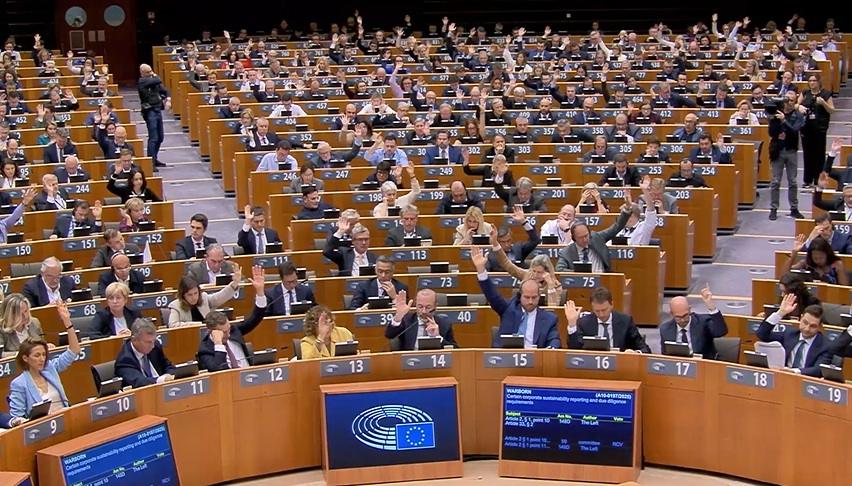
Lawmakers in the European Parliament agreed today to dramatic cuts to the EU’s sustainability reporting and due diligence laws, including significant reductions in the number of companies to be covered by the Corporate Sustainability Reporting Directive (CSRD) and Corporate Sustainability Due Diligence Directive (CSDDD), and the elimination of the obligation for companies to prepare climate transition plans.
The vote, with 382 MEPs in favor and 249 opposed, follows the rejection last month by lawmakers of a compromise deal on the European Commission’s Omnibus I initiative, which would have seen less significant changes to the sustainability regulations, leading the European People’s Party (EPP) turning instead to farther-right parties to form Parliament’s official negotiating position.
The Commission’s initial proposal would have reduced the number of companies covered by the CSRD by approximately 80% by moving the regulation to cover only companies with more than 1,000 employees from the current 250 employee threshold, while retaining the CSDDD’s 1,000 employee threshold, in addition to shifting due diligence requirements to focus primarily at the level of direct business partners, unless the company has plausible information of adverse impacts further down the value chain. The initiative also introduced limits to the amount of information that could be requested from smaller value chain companies.
In negotiations in Parliament, however, lawmakers had been sharply divided on the direction of Parliament’s position, with left-leaning parties pushing for smaller cuts to the regulations, farther-right parties looking to scrap the CSRD and CSDDD altogether.
In October, after the EPP threatened to align with farther-right parties, left and center parties agreed to a “compromise” package with the EPP, which retained the CSRD’s 1,000 employee scope, but added a €450 million revenue threshold, while dramatically increasing the threshold of the CSDDD to cover only companies with 5,000 employees and more than €1.5 billion in revenues. The compromise position was narrowly defeated in a 309-318 vote, with Omnibus rapporteur Jörgen Warborn of the EPP blaming the center-left parties’ MEPs for failing to support the deal.
Omnibus rapporteur Jörgen Warborn said:
“Today’s vote shows that Europe can be both sustainable and competitive. We are simplifying rules, cutting costs, and giving businesses the clarity they need to grow, invest, and create well-paying jobs.”
COP30 delegates dig into toughest issues as climate talks enter final week
By Lisandra Paraguassu — Kate Abnett — Sudarshan Varadhan
Reuters
Nov 18, 2025 BELEM, Brazil –
Government ministers from around the world were preparing for a final few fraught days of talks at the U.N. climate summit as they bid to secure a deal that demonstrates global resolve amid increasing assertiveness from developing nations.
The job will not be easy. Countries are now digging into some of the toughest issues — many of which have been left off the formal agenda to ensure the talks keep moving even if one issue gets hung up.
"The time for performative diplomacy has now passed. Now is the time to roll up our sleeves, come together and get the job done," U.N. climate chief Simon Stiell told delegations in a speech opening the second week of the conference.
Brazilian President Luiz Inácio Lula da Silva is expected to arrive on Wednesday to help rally consensus among parties at the summit in the Amazon city of Belem ahead of Friday's final scheduled session.
Asked if there was any one issue dominating the talks, COP30 President Andre Correa do Lago replied: "Everything, everything. It's very complicated."
New dynamics in climate diplomacy have seen China, India and other developing nations flex more muscle this year, while the European Union is hobbled by weakening support back home and the once-dominant United States has skipped out altogether.
Danish climate minister Lars Aagaard said the European Union was showing leadership but that it was still early in the negotiations.
"Today is Monday, so I think it's a bit early to say who is active and who is leading in these negotiations. We can evaluate that when we come to the end," he said.
Brazil's top goal for COP30 is to deliver an agreement that reaffirms the 2015 Paris Agreement, which aimed to limit global warming, while acknowledging its shortcomings by laying out clear plans for future climate action.
Global Report Finds Climate Change Now Central to Institutional Investment Strategies
A new global analysis of more than 220 institutional investors reveals that climate change has become a defining factor in how the world’s largest asset owners and managers assess risk, allocate capital, and engage with policymakers. Released ahead of COP30 in Belém, the Global State of Investor Climate Action report finds that while investors increasingly integrate climate into decision-making, significant ambition and disclosure gaps persist across regions.
Climate risk becomes financial risk
According to the report, 75% of investors now assess the financial risks and opportunities that climate poses to their portfolios, with an equal share instituting board-level oversight of climate strategies. This marks a shift from viewing climate change as a reputational issue to recognizing it as core to financial governance.
Transition planning is also maturing. Nearly two-thirds of investors (65%) track and disclose at least one portfolio emissions metric, and over half have adopted targets for net-zero portfolio emissions by 2050. More than 50% now publicly disclose transition plans or elements of their strategies.
“Climate-related considerations are now widely understood as financially material by institutional investors, who have deeply embedded them in their decision-making,” said David Atkin, CEO of PRI. “Where governments provide clear policy signals, investors have demonstrated they will respond decisively.”
Momentum builds, but investment gaps remain
Despite broad recognition of climate risk, barriers to scaling climate solutions persist. Seventy percent of investors surveyed reported making climate solutions investments, yet fewer than one-third have committed to increasing these allocations.
“Investors are acting on climate risks because they’re real and they’re already material to financial returns,” said Rebecca Mikula-Wright, CEO of AIGCC and IGCC. “If governments want to meet their development and climate goals, they’ll need to accelerate big investments into sustainable energy, resilience, and climate solutions — especially in the Asia Pacific.”
Regional disparities remain a defining challenge. The report warns that uneven ambition and inconsistent regulatory environments threaten to undermine global progress. While European and North American investors continue to lead on transition planning and disclosure, gaps persist in emerging markets where access to data and policy stability are limited.