Are the SDGs just a list of 17 goals, or a revolution in global responsibility? In this episode of Radical Truth, host Robert Rubinstein is joined by Paula Caballero, the "Mother of the SDGs" and Regional Managing Director at The Nature Conservancy.
Paula reveals the "radical truth" behind the genesis of the Sustainable Development Goals. She explains how a small team from the Global South upended the traditional UN power structure to create a truly universal agenda—one that shatters the artifice between "developed" and "developing" nations. We explore why SDG 12 (Consumption and Production) is the "mother of all goals" and what is urgently needed to move from policy rhetoric to on-the-ground implementation by 2030.
What You Will Learn:
The Paradigm Shift: Moving from paternalistic aid to shared global responsibility.
MDGs vs. SDGs: Why the environment is the core of the development equation.
The Power of SDG 12: How changing consumption patterns fixes the system.
Implementation Realities: The technical, science-based approach to meeting the 2030 targets.
Oh good, another "impact investing summit." Can't wait to fly halfway around the world, breathe recycled airplane farts for eight hours, and arrive at a hotel conference room that smells like disappointment and croissants.
You know the drill: Some guy named Chad or Trevor will corner you by the coffee station and spend twenty minutes explaining his "disruptive blockchain solution for sustainable artisanal water" while you're just trying to get caffeine and escape. He'll say "let's circle back" fourteen times. You will never circle back. He will never circle back. The circle remains incomplete, floating in the void of bullshit promises.
And the panels! Oh, the panels. Five people who violently agree with each other, nodding like dashboard bobbleheads, saying absolutely nothing for forty-five minutes. "We need to leverage synergies." "It's about impact, not just profit." Yeah, no shit, Sherlock. That's literally why we're all here. Got any actual IDEAS, or are we just going to masturbate with buzzwords until lunch?
Then there's the networking. You'll collect 47 business cards from people whose eyes are already scanning the room for someone more important while they're shaking your hand. "We should definitely collaborate!" Translation: "I will put your card in my pocket, forget about you by dinner, and eventually use it to scrape something off my shoe."
OR...
You could show up to the TBLI Virtual Mixer on January 30th at 16:00 CET in your sweatpants. No flight. No jet lag. No pretending to be interested in Trevor's water blockchain. Just real people, real conversations, and if someone's full of shit, you can literally just close the tab.
Same impact investing. Zero extractive small talk. Actual follow-through because nobody had to blow their travel budget pretending to care. Join here; https://luma.com/s00apk85
Join us. Or don't. Either way, we're not collecting your business card.
The platform VCs never wanted. The tool founders always needed.
You think finance is broken? It's not broken. It's working EXACTLY as designed.
To extract. To delay. To preserve power while pretending to change.
But here's the thing about systems: they don't reform themselves. They get replaced.
While the industry hosts another panel on "The Future of ESG," TBLI Circle members are building the goddamn future.
Not talking about it. Not debating it. Not waiting for permission.
TBLI Circle members:
→ Write the standards your competitors will pretend they invented
→ Deploy capital while others are still spell-checking their sustainability reports
→ Shape markets while the old guard argues about definitions
Here's what nobody tells you: The transformation isn't coming. It's already here. The only question is whether you're architecting it or getting run over by it.
The table is set. The players are moving.
Are you still in the audience, or are you finally ready to play?
Oh good, another "impact investing summit."
Can't wait to fly halfway around the world, breathe recycled airplane farts for eight hours, and arrive at a hotel conference room that smells like disappointment and croissants.
You know the drill: Some guy named Chad or Trevor will corner you by the coffee station and spend twenty minutes explaining his "disruptive blockchain solution for sustainable artisanal water" while you're just trying to get caffeine and escape. He'll say "let's circle back" fourteen times. You will never circle back. He will never circle back. The circle remains incomplete, floating in the void of bs promises.
And the panels! Oh, the panels. Five people who violently agree with each other, nodding like dashboard bobbleheads, saying absolutely nothing for forty-five minutes. "We need to leverage synergies." "It's about impact, not just profit." Yeah, really, Sherlock.
That's literally why we're all here. Got any actual IDEAS, or are we just going to masturbate with buzzwords until lunch? Then there's the networking. You'll collect 47 business cards from people whose eyes are already scanning the room for someone more important while they're shaking your hand. "We should definitely collaborate!"
Translation: "I will put your card in my pocket, forget about you by dinner, and eventually use it to scrape something off my shoe."
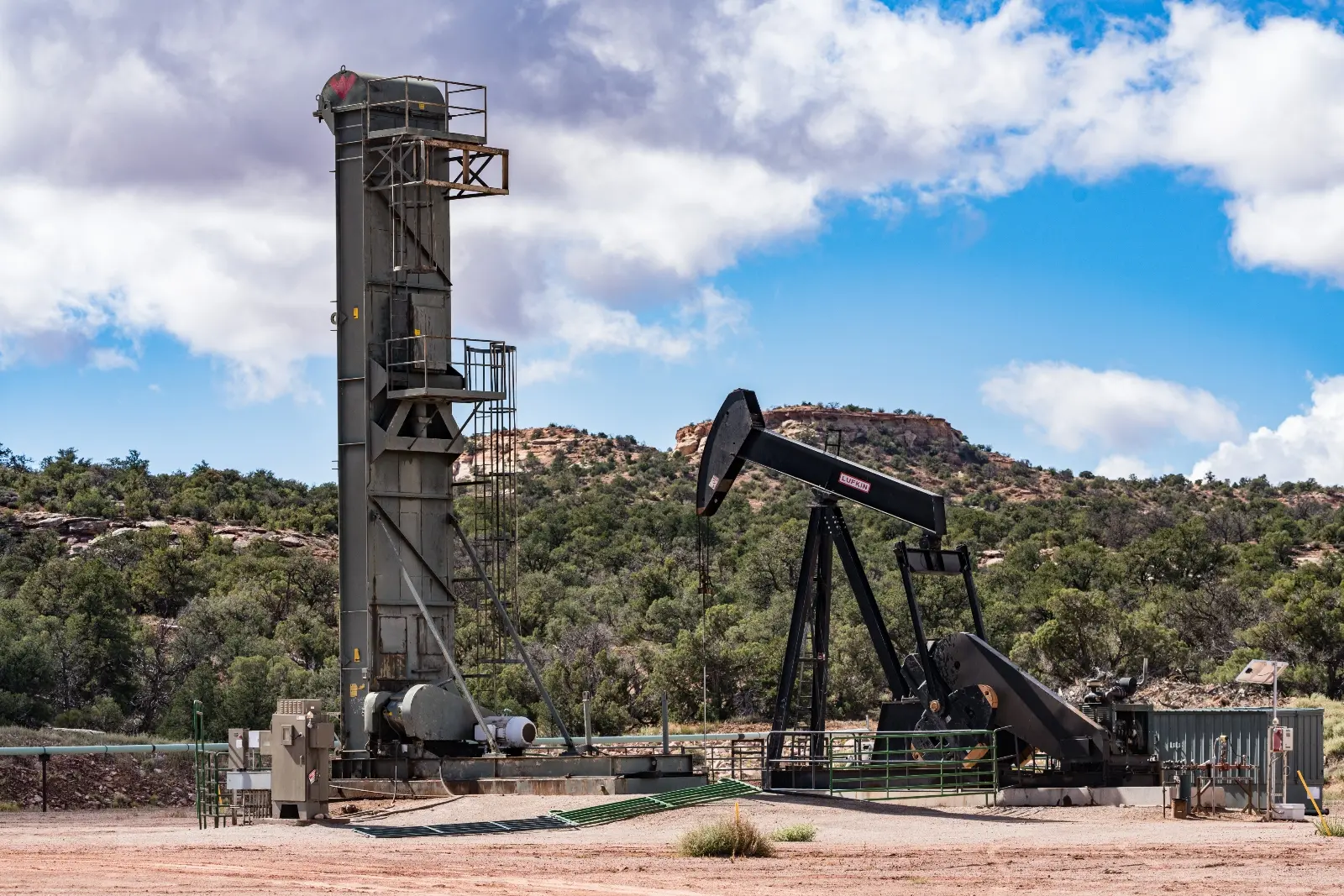
If enacted, the Utah and Oklahoma measures would restrict litigation against oil companies over their role in the climate crisis.
This story was originally published by The Guardian and is reproduced here as part of the Climate Desk collaboration.
U.S. lawmakers in two red states are attempting to shield the fossil fuel industry from climate liability.
In Oklahoma, a newly introduced bill would bar most civil lawsuits against oil companies over their role in the climate crisis, unless plaintiffs allege violations of specific environmental or labor laws. A similar proposal in Utah would block lawsuits over climate-warming emissions, unless a court finds the defendant violated a statute or permit.
“I think anyone in America who breathes the air around them and also believes in corporate accountability ought to be very concerned about these types of end-runs against accountability,” said Jay Inslee, the former governor of Washington state and a former trial attorney.
The proposals appear designed to prevent parties in either state from joining the growing wave of U.S. climate accountability litigation, which has seen more than 70 states, cities and local governments sue major oil companies for allegedly misleading the public about climate risks.
The Guardian has contacted the bills’ sponsors for comment.
The measures come as fossil fuel companies and their political allies push for broader protections from climate lawsuits nationwide. Last year, 16 Republican state attorneys general urged the justice department to provide a “liability shield” for oil companies, while lobbying disclosures show that ConocoPhillips and the American Petroleum Institute pressed Congress on draft legislation to limit climate liability. Lawmakers have also pursued narrower efforts, including a failed attempt to block Washington, D.C., from enforcing consumer protection laws against oil companies, and a Maryland bill last year that would have barred state and local climate lawsuits but never reached a vote.
Both Oklahoma and Utah are oil-producing states where the fossil fuel industry wields significant political influence. The Guardian has asked the American Petroleum Institute and the bills’ sponsors whether industry groups lobbied for the proposals.
“These proposals are clearly part of a larger coordinated effort to strip communities and states of their right to hold Big Oil accountable,” said Richard Wiles, president of the Center for Climate Integrity, a nonprofit supporting climate accountability litigation. “If you have not violated the law, there is no reason to seek immunity.”
Decades of water depletion, dam building, and repression of scientists and environmentalists have driven Iran toward ecological crises that are fueling the protests rocking the country.
This story was originally published by Inside Climate News and is reproduced here as part of the Climate Desk collaboration.
The anti‑government protests sweeping across Iran, from major cities to rural towns, are fueled by anger over economic collapse and political repression. But beneath the headlines of currency devaluations and street clashes lies a deeper, more permanent driver of dissent: ecological calamity.
Decades of ignoring scientists, persecuting activists and greenlighting corrupt development schemes have triggered a water crisis so severe that President Masoud Pezeshkian warned in November that Tehran’s residents may eventually have to evacuate the capital city, which is sinking as dried-up aquifers give way.
The devastation extends far beyond Tehran. Lake Urmia, once one of the world’s largest salt lakes, has shriveled to less than 10 percent of its volume, while the iconic Zayandeh River has sat dry for years. Wildfires have ravaged the parched Hyrcanian forests, a UNESCO World Heritage site. In the oil-rich Khuzestan province, home to Iran’s Arab minority, state-led water diversion has devastated the local economy and inflamed ethnic grievances.
Iranians, and many experts, blame the government, one of the world’s most repressive regimes.
Environmental issues tie “into all the other grievances that activists and citizens and protesters have over economic and political issues,” said Eric Lob, a nonresident scholar at the Carnegie Middle East Program and an associate professor at Florida International University. “It’s all interconnected.”
The human cost is staggering. Crumbling infrastructure, poorly designed irrigation systems, and overdrawn aquifers have left farmers unable to plant crops and cities forced to ration supplies. Tens of thousands of people, including children, die prematurely each year from severe air and water pollution. Water shortages and power outages have shuttered businesses and left ordinary Iranians “worried about whether they’ll have enough water for drinking, bathing, and cleaning,” Lob said.
The International Chamber of Commerce (ICC) and carbon accounting coalition Carbon Measures announced today the selection of an initial cohort of experts, aimed at supporting an initiative to develop a new global ledger-based carbon emissions accounting system, capable of tracking product-level emissions across the value chain.
The selection of the panel follows the launch of Carbon Measures in October 2025, creating a new coalition aimed at advancing a more accurate and consistent accounting framework to track carbon emissions at the company and product level, and carbon intensity standards for key industrial products. Led by former EY Global Vice Chair of Sustainability Amy Brachio, launch members of Carbon Measures included ADNOC, Air Liquide, Banco Santander, BASF, Bayer, CF Industries, EQT Corporation, ExxonMobil, EY, BlackRock’s Global Infrastructure Partners (GIP), Honeywell, Linde, Mitsubishi Heavy Industries, Mitsui & Co., Mitsui O.S.K. Lines, Ltd., NextEra Energy, Nucor, the Port of Rotterdam, and Vale.
According to ICC and Carbon Measures, the responsibilities of the new panel will include defining the principles, scope and real-world applications of the new carbon emissions accounting system.
Members of the new panel span industry, science, civil society and academia, and include Amy Luers, Head of Sustainability Science and Innovation at Microsoft; Armin Knors, Former Head of Engineering and Technology at Bayer; Benedikt Plümper, Head of ESG Portfolio Management CIB at Banco Santander; Billy Pizer, President and Chief Executive Officer at Resources for the Future, Jakob Stausholm, Fellow at Blavatnik School of Government, University of Oxford, and Former Chief Executive Officer of Rio Tinto; Kate Maher, Professor at Stanford University; Koushik Chatterjee, Executive Director and Chief Financial Officer, Member of the Board at Tata Steel Limited; Rachel Teo, Managing Director, Private Family Office (Singapore), and; Tatsuya “Todd” Hoshino, Executive Strategist, Methanol & Ammonia Div. at Mitsui and Co.
Amy Brachio, CEO of Carbon Measures, said:
“Each of these experts brings deep technical knowledge and a long-standing commitment to reducing emissions. What’s been most striking is the calibre of interested candidates we’ve seen globally – lifelong leaders who want to lend their experience to help get this right.”
ICC and Carbon Measures said that more experts will be named to the panel prior to the groups’ first meeting later this quarter, with ICC leading the selection process and ICC and Carbon Measures jointly agreeing on the final composition.
Andrew Wilson, Deputy Secretary General of ICC, said:
“The initial appointments to the panel bring an exceptional depth and range of experience – reflecting the diversity of expertise that will be required to unlock carbon accounting as a tool to accelerate decarbonization across the economy.”