TBLi Radical Truth:
Beyond Checkbox ESG: Embedding Sustainability in Institutional Investing | Matt Christensen
Welcome to the TBLi Radical Truth Podcast, where we challenge the fundamental assumptions shaping how we lead, organize, and create value in a rapidly changing world.
Is ESG just a checkbox, or a core driver of value? In this TBLI Radical Truth Podcast, we sit down with Matt Christensen, Global Head of Sustainable and Impact Investing at Allianz Global Investors. As a pioneer in the field, Matt moves past "glossy reports" to discuss the reality of integrating sustainability at the institutional level.
What You'll Learn:
Beyond ESG Screening - How to embed sustainability into risk management and investment processes, moving from superficial ESG screening to deep integration that actually influences portfolio construction and capital allocation
Institutional Impact - Moving from intention to measurable results in global capital markets: how asset managers translate sustainability commitments into investment decisions that deliver real-world environmental and social outcomes
The Future of Asset Management - Sharp insights on policy changes, evolving investor expectations, and regulatory pressures reshaping how institutional capital approaches ESG and impact investing
Value Creation - Why capital must serve both people and planet to ensure long-term financial success, and how sustainability integration protects returns rather than sacrificing them
From Passive Compliance to Active Impact - How institutional investors can shift from checking regulatory boxes to actively driving corporate behavior change and measurable sustainability outcomes through capital deployment
Real experience. Real results. No greenwashing. For over 25 years, TBLI Group has been the world’s leading ESG and impact investing network—educating, advising, and connecting investors to build a sustainable and equitable future.
You already know the mission. Now find the people who share it.
TBLI CONNECT is the monthly virtual mixer where values-aligned investors, entrepreneurs, and impact leaders meet — through smart matchmaking that skips the small talk and gets straight to what matters.
One hour and thirty minutes. The right people in the room. Real conversations that go somewhere.
📅 Next mixer: APRIL 24 | 16:00–17:30 CET No fluff. No travel. Just real, purpose-driven conversations. Limited space — join early!
💬 Speed networking with values-aligned peers. Our matchmaking system connects you.
📅 April 24 | 16:00–17:30 CET ⚡ Limited seats — First 5 registrations free
👉 Claim yours
🔍 The Deal Room Has a Dirty Secret. Founders Are Done Keeping It.
You prepared for months. You nailed the pitch. You answered every question.
Then silence.
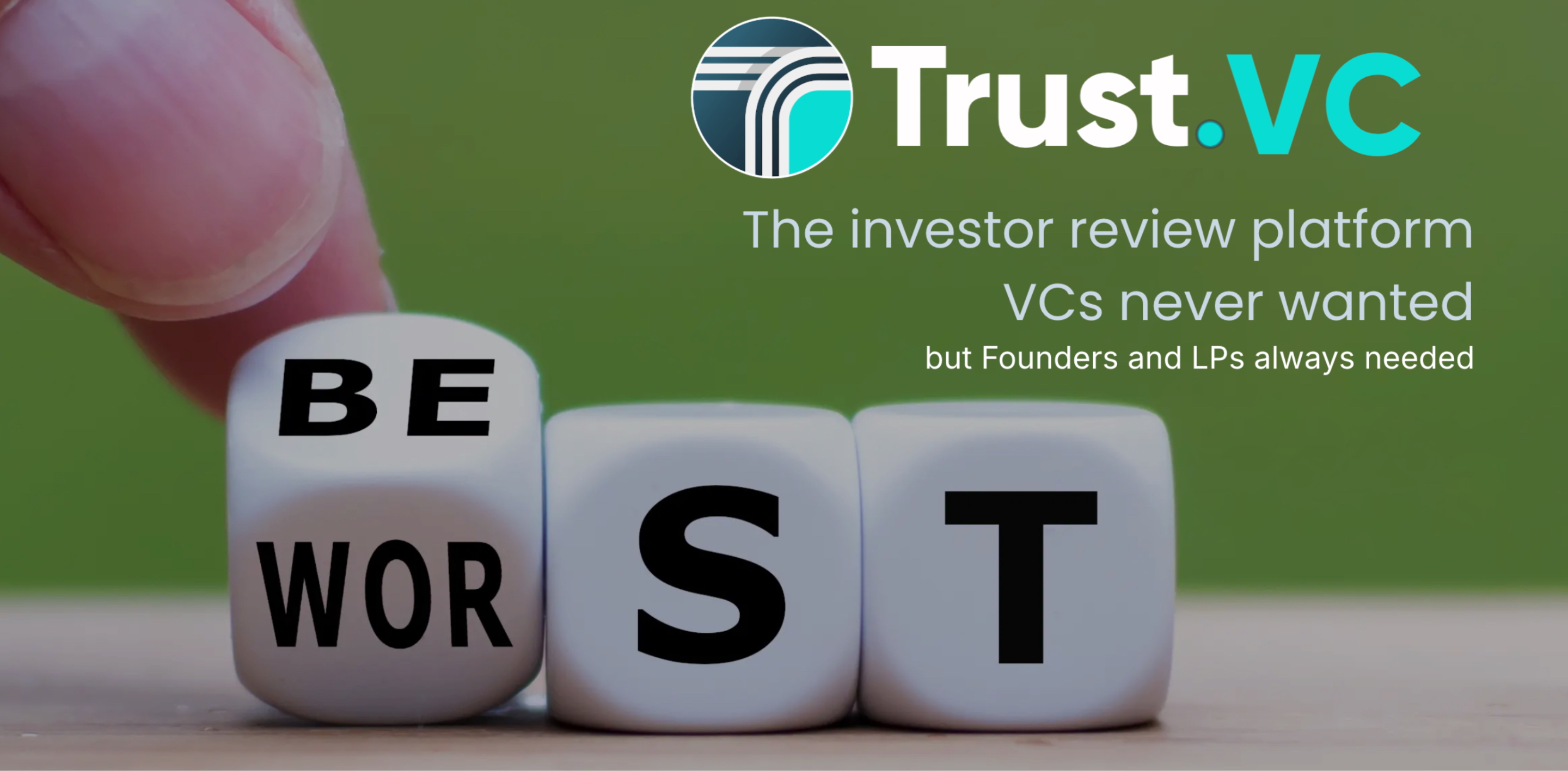
Venture capital has always run on asymmetric information — investors know everything about you, and you know almost nothing about them. Who actually writes checks. Who ghosts after a soft commit. Who disappears the moment the wire clears.
That asymmetry ends now.
TrustVC.org is the founder community's answer to a system that was never designed with them in mind. Real reviews. Real patterns. Real accountability.
Because due diligence should go both ways.
🌐 Check the record before you take the meeting:trustvc.org ✍️ Had an experience worth sharing?trustvc.org/rate
🌍 25 Years In. Still the Only Network That Isn't One.
Most networks are built on extraction. They reward volume over value. Connections over convictions. They leave you with a full inbox and an empty sense of purpose.
TBLI Circle was built on a different premise — one that was considered radical 25 years ago and is now considered essential:
Capital should serve people and the planet. Full stop.
We didn't just talk about the Triple Bottom Line. We built a global community around it — investors, founders, and practitioners who show up not to take, but to build. Not to network, but to move things forward together.
If you work in impact investing, ESG, or you're simply asking "why can't finance do better?" — this is the room where that question has been answered, over and over, for a quarter-century.
What you get inside:
Zero noise. No grifters. No performative sustainability. Just serious people doing serious work.
High trust. A private, candid space where real conversations happen.
Collective intelligence. 25 years of relationships, insights, and values-aligned capital — at your fingertips.
Make 2026 the year you stop circling the edges and step into the community that's been doing this longest.
🔗 Join the Circle:tblicircle.com 🎯 2-week free trial — no commitment, full access
"The right network doesn't drain you. It builds you."
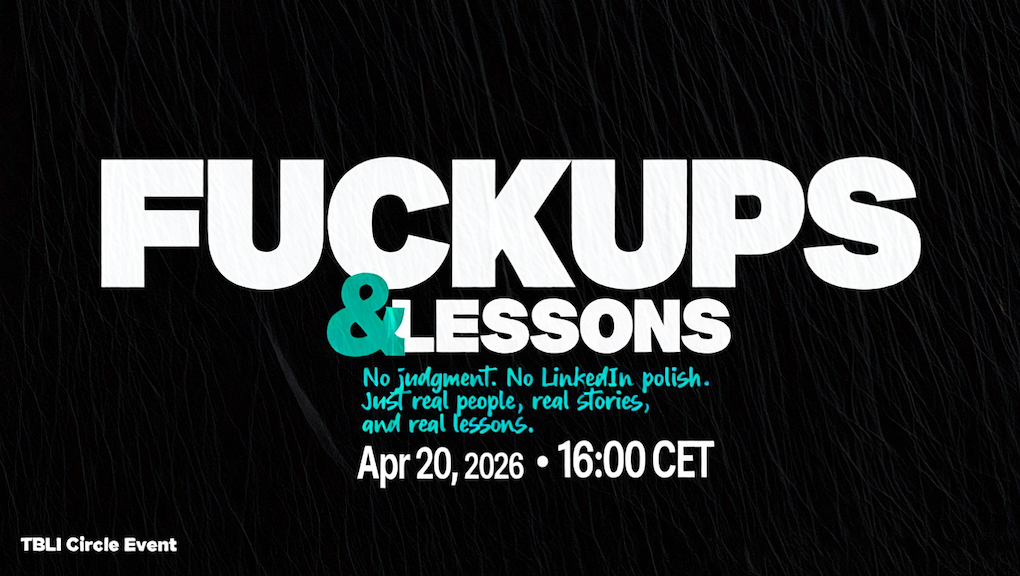
We spend too much time curating our wins and burying our failures. This TBLI Circle event flips that completely.
Bring your most honest story — the career move that blew up, the decision you still cringe at, the moment everything went sideways — and share it in a room full of people who've been there too.
No judgment. No LinkedIn polish. Just real people, real stories, and real lessons.
This is where trust is built and where a real community begins.
Date: April 20
Time:16:00 CET Join us
Less Two months away!
Looking forward to being a speaker at the 2026 Impact Investor Global Summit in London, 19-20 May.
You can check out the agenda here, a great line up of speakers: www.peievents.com/en/event/impact-investor-global-summit
If you want to sign up, use the speakers’ colleague discount code for 10% off on the cost of a pass.
Please use the discount code: impact26_spk10
#ImpactSummit24 #ImpactInvestment #PrivateMarkets #NewPrivateMarkets Program and Registration www.peievents.com/en/event/impact-investor-global-summit
ENOUGH
Or: How I Spent 30 Years in Sustainable Finance Watching Smart People Do Stupid Things With Money
This is an adaptation from the upcoming book, "Radical Truth-Financing our Collapse, Funding our Survival." Think your network needs to hear this? Share it. Let's start a real conversation.
Let me start with a confession: I almost died. Emergency heart valve surgery. My wife was running our conference alone in Bangkok. Our teenage son sat nearby, terrified.
And while I was in that hospital bed — while Rieki was holding everything together across eight time zones — one of our speakers called.
Not to ask how I was doing.
To request extra hotel nights.
For sightseeing.
On our dime.
I want you to sit with that for a moment. The man spoke at a sustainability conference — a conference about doing better, being better, building better — and his primary takeaway was: "Can I squeeze a free vacation out of these people?"
Ladies and gentlemen: this is civilization in 2026 (actually occurred 2007). This is us. This is what we've become. And if you think that's an outlier — a single bad apple — you haven't been paying attention.
WE ARE RUNNING THE WORLD'S MOST ELABORATE SCAM ON OURSELVES
Here's the deal. We have constructed, over several generations, the most sophisticated system of psychological manipulation in human history. We call it "the economy." We worship it. We sacrifice our health, our time, our relationships, and occasionally our souls to it.
And what does this magnificent engine produce?
A $400 water bottle.
With Bluetooth.
That blinks at you when it's time to drink water.
Because apparently, thirst — that ancient, evolutionarily-refined signal that has kept human beings alive for 300,000 years — is no longer trustworthy. No. You need an app. You need connectivity. You need a notification on your wrist from a device manufactured by underpaid workers in conditions that would make a Victorian factory owner blush, reminding you to consume a resource that covers 71% of the planet.
That's where we are.
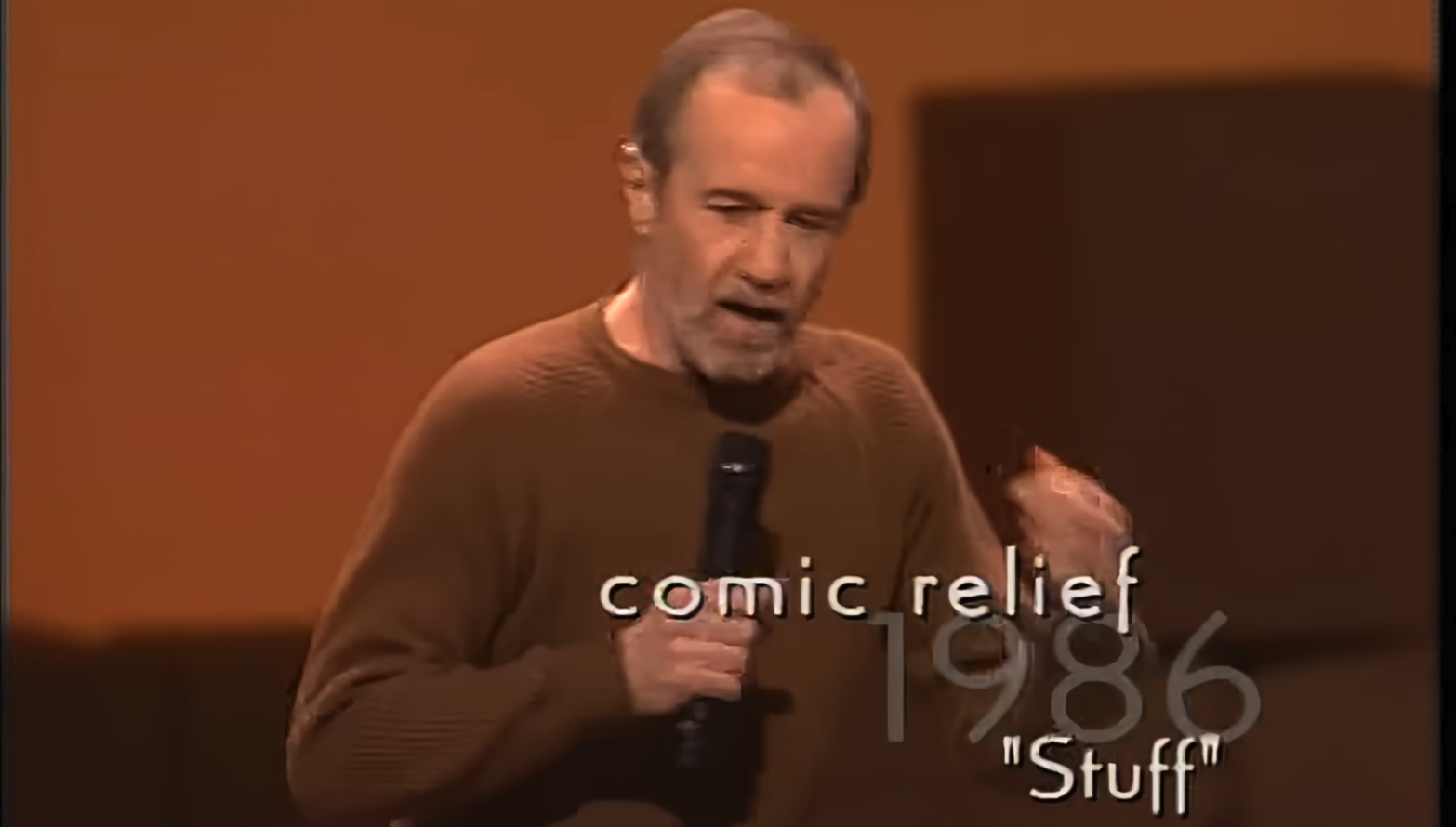
George Carlin once said, "The reason they call it the American Dream is because you have to be asleep to believe it." Thirty years in finance, and I'd add: you have to be heavily sedated to believe the dream includes an avocado slicer, a banana cutter, a mango splitter, and a strawberry huller — all living in separate drawers, all used twice, all decomposing in a landfill for the next five centuries.
God forbid a human finger touch a piece of fruit.
And don't even get me started on the $10,000 luxury watch that tells time less accurately than the free clock on your phone. But hey, it "makes a statement about who you are." And that statement is: "I have more money than I have questions about my choices."
Last month, President Trump sat alongside executives of the largest tech companies in the country as they pledged to pay a fair share of the energy costs of their data center buildout. “Data centers … they need some PR help,” Trump said at the gathering. “People think that if the data center goes in, their electricity is going to go up.”
It’s not an entirely unfounded assumption.
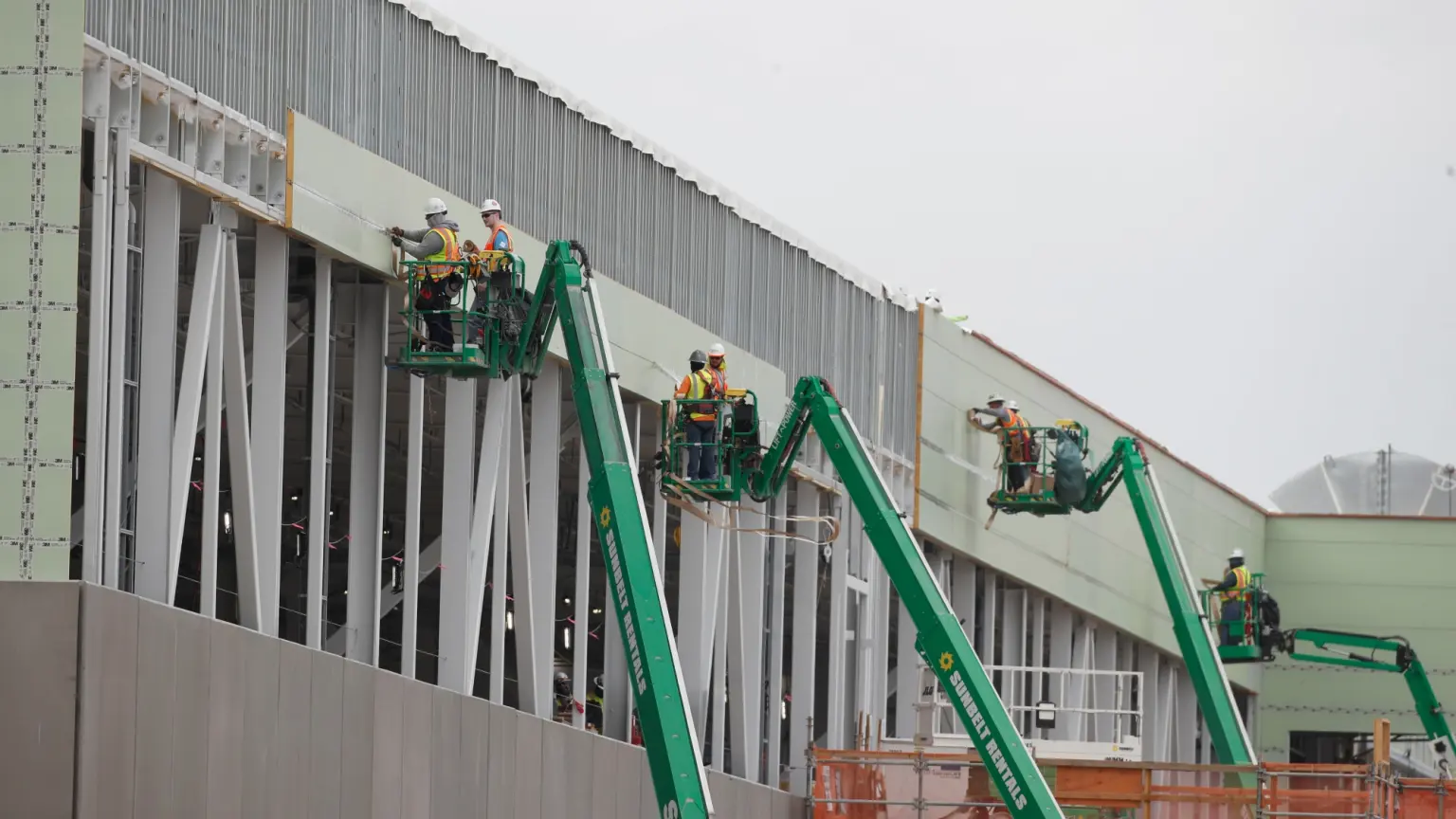
As the tech industry has funneled billions of dollars into the AI boom over the last several years, it has simultaneously been expanding its fleet of computing powerhouses, which require vast amounts of energy to run. These facilities have been cropping up all over the country, from rural communities in eastern Pennsylvania to the cities of northern Utah.
This boom coincides with a dramatic rise in U.S. electricity prices, driven by inflation and the rising cost of adapting to wildfires, hurricanes, and other extreme weather. But these massive facilities have also strained the grid — and in some cases — contributed to rising prices. For instance, last year, an independent monitor for PJM, the grid operator that serves 13 northeastern states and Washington, D.C., projected that powering data centers would result in higher electricity generation costs, which would ultimately be passed on to consumers. And in cases where the buildout hasn’t yet led to price hikes, utilities and grid operators expect that it’s just a matter of time if tech companies follow through on their plans. Indeed, the Federal Reserve Bank of Dallas estimates that with data center electricity demand expected to double in the next five years, wholesale power prices could rise by as much as 50 percent.
At a time when the cost of living has become untenable for many Americans, and consumers are setting aside ever greater shares of their income to pay energy bills, the possibility of further rate hikes to line the pockets of tech companies has prompted a massive backlash across the country. The White House gathering of tech executives appeared to be a response to the backlash. On March 4 at the event, they signed onto the “Ratepayer Protection Pledge.”
The pledge itself has few specifics or teeth. It’s a voluntary agreement by several prominent tech companies — including Microsoft, Meta, OpenAI, and Amazon — to secure their own power for data centers, pay for any powerlines or other infrastructure that utilities may need to build to move that power, and hire locally from the communities they build in. While in theory the agreement could help prevent Americans from having to bear the cost of the data center expansion, the White House hasn’t set up oversight mechanisms to ensure that they do. Several consumer and environmental advocates called the agreement “meaningless,” “unenforceable,” and ultimately, “nonsense.”
The United States has become ground zero for the global data center boom. The rapid buildout has left developers, tech companies, and the utility industry scrambling to secure more power. As a result, the wait for a data center to connect to the grid can be years in many parts of the country. Hyperscalers — companies that operate large data centers and provide vast computing power — have been trying to get around these wait times by signing long-term power purchase agreements with solar developers, building their own natural gas plants, and even retrofitting jet engines to generate electricity.
Outside of the White House, utilities, local regulators, and lawmakers have also been proposing various solutions to address the community backlash and allow for the continued building of more data centers. Some have implemented measures requiring data centers to pay the costs of generating and moving the electricity they use. Others have suggested that data center developers install solar and battery systems on-site, or that rates should be frozen for residents while utilities figure out how to handle the additional costs. And at least 11 states are considering legislation to temporarily ban new data centers while their impact on electricity prices and other concerns are addressed.
Nature-based soil carbon removal solutions provider Grassroots Carbon announced a new multi-year deal with Boeing, with the aerospace giant agreeing to offtake a minimum of 40,000 tons of durable carbon dioxide removal (CDR) credits.
Launched in 2021 through the merger of grazing management software company PastureMap and carbon credit aggregator Soil Value Exchange, Texas-based Grassroots Carbon partners with ranchers across the U.S. to store carbon through regenerative grazing, providing soil measurement, land management support, and carbon credit verification, while connecting projects with corporate buyers. The company provides soil measurement, land management support, and carbon credit verification, while connecting projects with corporate buyers.
Under the new agreement, Boeing will purchase CDR credits generated from Grassroots Carbon’s soil carbon program, which sequesters carbon in soil from regenerative ranching and improved grassland management across the U.S. The program is built on direct one-meter deep, field-level soil measurements and laboratory analysis, and includes third party verification and certification of the measurements using recognized carbon standards to validate the atmospheric carbon stored in healthy soils.





.png)